

Beyond Pink Aisle Marketing: Real Trekking Outfits For Women

The Women’s Gear Myth
You want validation that buying “women’s” versions of gear proves you’re taking this seriously. Here’s the mechanism: brands created a separate category not because physics changes based on gender, but because they discovered they could charge more for the same function with different colors and marketing language. The actual design differences that matter for petite bodies have nothing to do with whether the label says “women’s” or “men’s.”
A petite woman’s real constraint is proportions, not gender. Arm length, torso ratio, and shoulder width don’t track neatly with marketing categories. Standard “women’s” medium might have sleeve length that drowns you, while “men’s” XS could fit your frame better. The gear works because it fits your body, not because someone printed a particular word on the tag.
Function Over Category Labels

Ignore the gendered sales pitch and measure against actual body geometry. Start with torso length and arm span, not your clothing size in regular life. A fitted jacket works better than a loose one for layering efficiency, which matters more in variable fall weather than whether marketing called it “designed for women.” The insulation type, weight rating, and weather resistance determine performance—these have no gender.
Test fit by moving through your actual hiking motions: reaching for branches, climbing, bending to adjust gear. If the jacket rides up when you hike, it fails, regardless of which aisle it came from. Your layers should stay in place during movement, breathe during exertion, and shed rain without bunching at seams. Buy what fits your dimensions and performs under load, then stop paying the pink tax markup.

The Layering Protocol: Your Petite Women Mountain Outfit Advantage
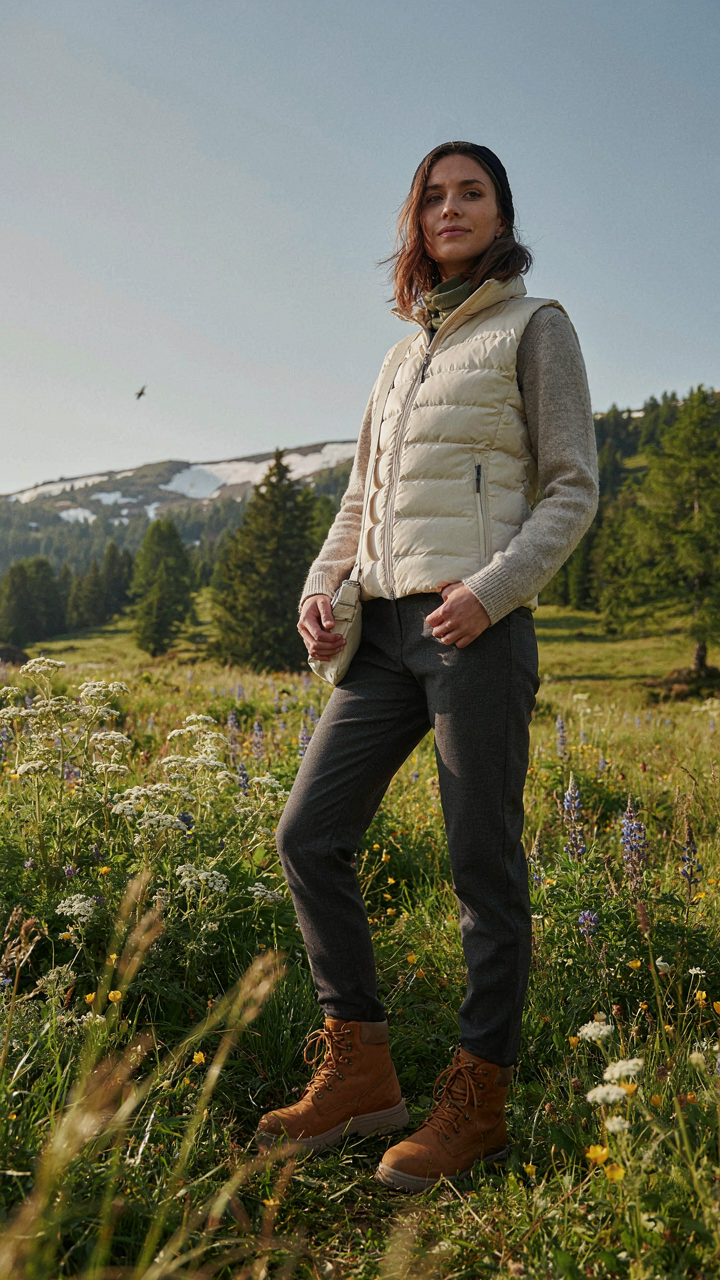
Start With Skin Contact, Not Padding
You want to feel warm without looking like you’re wearing a sleeping bag. That’s the real motive here. Base layers work through physics called “capillary action”—moisture moves away from your skin instead of pooling against it. For petite frames, this matters more because bulk destroys your silhouette and restricts movement. Synthetic materials like polyester or merino wool pull sweat outward. Cotton does the opposite and kills heat retention when wet.
Pick a fitted base layer in merino wool or synthetic blend rather than oversized cotton. Merino regulates temperature better across fall’s temperature swings. The fit matters more for smaller frames because loose fabric creates dead air that doesn’t insulate efficiently. Look for brands that cut specifically for women’s proportions rather than scaling down men’s sizes. Your base layer should feel snug against skin, not loose.
Midlayer Density Over Volume
Fleece and lightweight insulation do the actual work, not the number of layers you stack. Thermodynamics teaches us that trapped air creates insulation, and for petite women, a single smart midlayer beats two bulky ones. A 100-weight or 200-weight fleece adds warmth without the padding that overwhelms a smaller frame. Avoid thick synthetic puffy jackets unless temperatures drop below 40 degrees consistently.
Choose a fitted fleece or a lightweight synthetic jacket that lets you move freely without excess fabric gathering at the wrists and waist. Hybrid jackets with stretch side panels give you insulation where you need it while reducing bulk everywhere else. The midlayer stays on under your outer shell, so fit directly impacts whether you’re warm or suffocating. Test the range of motion before buying—your arms should move overhead without the fabric hiking up your ribs.
Outerwear For Petite Women: The Shell Game Strategy

Waterproof Versus Water Resistant
You want the label that makes you feel secure, but most people buy water-resistant jackets and call them waterproof because the marketing is identical. Here’s the mechanism: waterproof means the fabric blocks water entirely under pressure. Water-resistant means it repels water temporarily until saturation hits. Fall hiking gets wet. Rain doesn’t stop. You need actual waterproof material if you’re out for hours.
Petite frames matter here because your smaller surface area means less total fabric to seal. A single seam failure tanks the whole system faster on a compact jacket. Look for taped seams on every seam, not just main ones. Waterproof fabrics cost more because they demand precision construction. For petite women on fall trails, this isn’t premium. It’s the only choice that works.
Packability As The Ultimate Size Advantage
The physics term is compression ratio, and petite hikers own an unfair advantage most never exploit. A compact jacket that compresses to the size of a water bottle is useless to a tall person because tall people generate heat differently and need faster access to their layer. Your smaller frame reverses this entirely. A high-compression waterproof jacket becomes your emergency layer that stays in your pack without eating space.
Stop carrying heavy fleece as outerwear. Pack a waterproof shell instead, and wear merino wool underneath for insulation and wet-weather performance. When you get cold, your shell deploys in seconds. When you overheat, shed the fleece, keep the shell. This setup works because petite women don’t need the bulk traditional hiking outerwear forces on everyone. Your size is tactical advantage, not limitation. Test compression by hand before buying any jacket: fold it into a stuff sack and verify it fits in a regular backpack’s side pocket.
Footwear Fallacy: Why “Ankle Support” Is Overrated For Wander Outfit
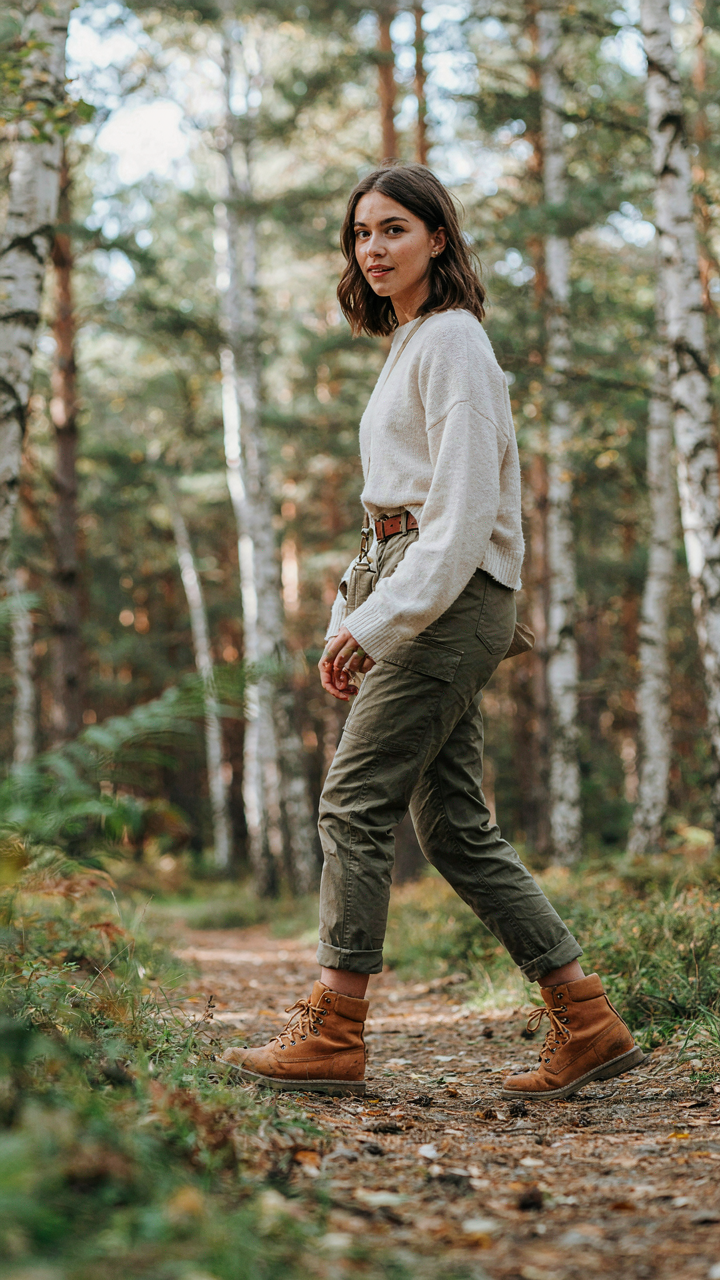
Trail Runners Beat Heavy Boots For Petite Frames
You want ankle support because you’re afraid of rolling your ankle and looking weak on the trail. Here’s what actually happens: the mechanism is leverage. Physics teaches us that force multiplies with distance from a fulcrum. Heavy boots push that fulcrum further from your ankle joint, making instability worse for smaller bodies, not better. A petite woman weighing 110 pounds in an eight-ounce boot experiences different rotational stress than a 180-pound man in the same model. Trail runners distribute your body weight closer to the ground and let your foot make micro-adjustments naturally.
Boot manufacturers sell ankle support as insurance against falls. It’s marketing disguised as safety. The real variable isn’t the boot’s height, it’s ground feel and foot proprioception. Trail runners force your feet to work, which strengthens the stabilizer muscles around your ankles over time. Heavy boots atrophy those muscles because the rigid structure does the work for you. For petite women hiking technical fall terrain, a lightweight trail runner with good grip outperforms a reinforced hiking boot every time. Lace them tight across the midfoot, not the ankle.
Merino Wool Kills Blisters Before They Start
Blister formation is a friction and moisture problem, not a foot problem. Merino wool solves both simultaneously while synthetics solve neither. The fiber structure of merino creates a moisture-wicking barrier that moves sweat away from skin faster than polyester blends. More importantly, merino doesn’t compress down into a thin, slick material the way synthetic socks do after three miles of hiking. That compression is where blisters originate. Your sock goes flat, friction increases, and heat concentrates on one spot.
Fit matters more than brand for petite hikers. A standard-size wool hiking sock designed for average feet will bunch and pool inside your boot, creating pressure points that merino can’t prevent. Buy children’s or youth-sized merino socks instead. Merino’s natural elasticity also means these socks won’t slip down during the hike, and they regulate temperature in fall’s 40 to 55-degree range better than anything else. Bring one extra pair and rotate between hikes so each pair fully dries before the next trip.
The Kinetic Energy Principle For Outfit Petite

Shorter Limbs Change The Physics
You want to look proportional on the trail because you’re tired of clothing swallowing your frame. Here’s the mechanism: physics describes rotational inertia as resistance to spinning motion around an axis. Petite women have shorter limbs, which means less mass distributed away from the body’s center. This reduces rotational inertia. Clothing that works on average-height frames creates excess fabric that rotates inefficiently around your shorter lever arms, draining energy and creating drag you don’t feel but your body does.
The consequence is functional, not cosmetic. Oversized sleeves and long hemlines shift your center of gravity slightly outward. On flat terrain this costs minimal energy. On elevation gain or uneven ground, your stabilizer muscles compensate constantly. Petite-specific cuts—shorter inseams, tapered sleeves, fitted torsos—keep mass closer to your axis. This isn’t vanity. It’s applied physics. Your outfit should match your body’s actual dimensions so energy goes into forward movement, not battling loose fabric.
Fit Enables Movement, Restriction Blocks It
The generic advice says layer loose for mobility. That’s incomplete. Loose layers that slip past your joints create micro-adjustments your body makes unconsciously. Tight layers that compress muscles restrict range of motion directly. The real principle is proprioceptive clarity: your nervous system needs to feel where your limbs are in space without fighting fabric interference.
Petite women need fitted enough that fabric moves with skin, loose enough that joints bend through full range. A fitted base layer under a slightly roomy mid-layer over a tapered shell works because each layer serves its function without competing for space on your frame. Test fit by raising your arms overhead and crouching deeply. Fabric should move with you, not bunch or gap. Seams should land where your joints bend, not halfway through your shoulder or arm. This is the protocol: move through your full hiking motion range, then buy for that fit.
Bottoms For Petite Women: The Unrestricted Movement Mandate
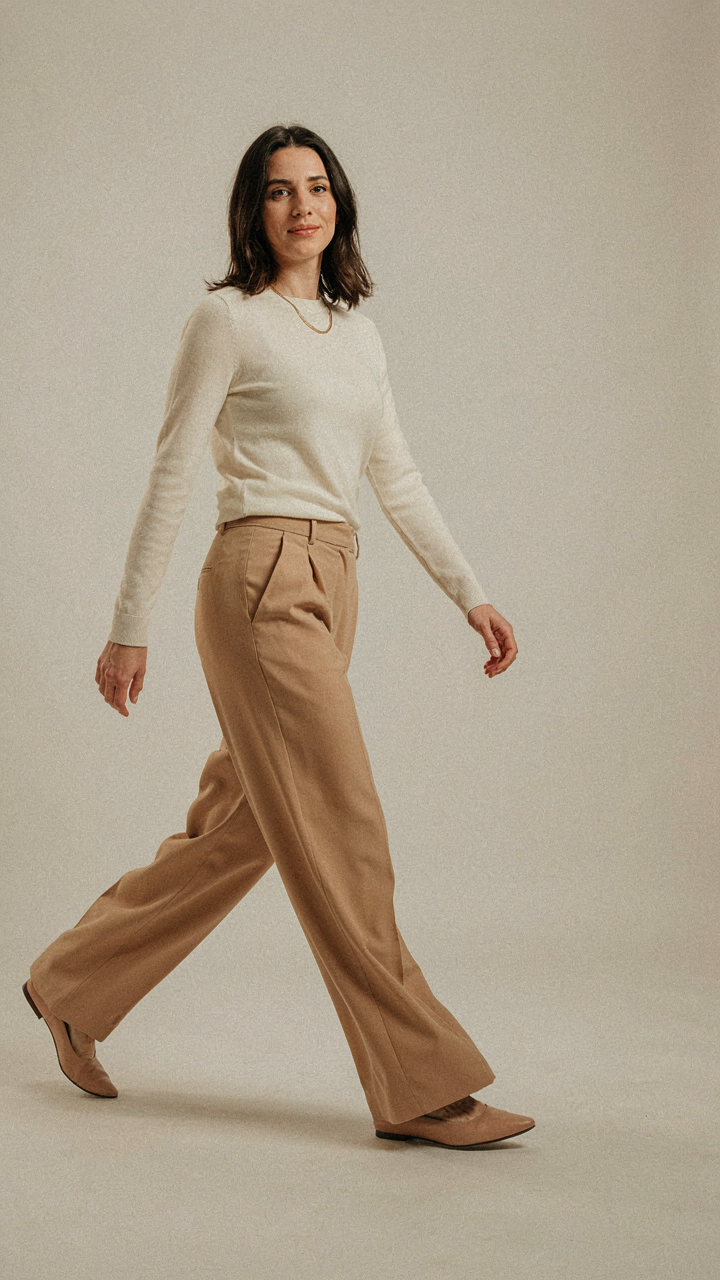
Leggings Vs. Hiking Pants: Performance Criteria
You want to look competent on the trail without looking like you’re trying too hard. Here’s what actually matters: the mechanism is fabric tension across the hips and thighs during steep descents. Leggings create compression without structure. Hiking pants create structure without compression. For petite frames, this distinction determines whether you move freely or fight resistance.
Leggings work for mild terrain and short distances because they move with your legs. Hiking pants work for technical descents because they anchor weight away from your joints. Most advice treats this as aesthetic preference. It’s not. Your inseam length matters more than the garment type. A petite woman in regular-length hiking pants compensates by hiking her waistband higher, which tilts her center of gravity forward on descents and taxes her knees.
Preventing Fabric Bunching And Chafing
Bunching happens because petite proportions mean standard cuts were designed for a longer torso-to-leg ratio than yours. The fabric pools at your ankles or creates excess material at the seat. Chafing happens where fabric moves against skin repeatedly, usually the inner thigh or back of the knee on longer hikes.
Buy petite-specific cuts when available. Brands like REI and Patagonia offer petite lines for hiking bottoms. If petite sizing isn’t an option, choose high-rise waistbands that sit at your natural waist, not your hip bones, and verify the inseam reaches your ankle bone without pooling. Wear moisture-wicking base layer underneath, not cotton. The protocol is simple: measure your inseam before ordering anything, and test the garment on stairs before taking it on a real hike.
Accessories That Actually Matter For Fall Hiking Outfits

Headwear For Warmth Sun Protection And Sweat
You care about this section because you’re worried a hat will throw off your proportions or make you look like you’re compensating for something. The real mechanism is thermal regulation, which operates on a physics principle: your head loses heat at a rate disproportionate to its surface area. For petite women, this matters more because total body mass generates less baseline heat. A hat isn’t decoration. It’s core temperature management.
Fall hiking demands headwear that handles three separate jobs simultaneously, and most people pick one and hope. A lightweight beanie traps warm air without bulk. A wide-brimmed hat blocks low-angle sun and stops sweat from dripping into your eyes on climbs. Merino wool blends manage moisture instead of holding it, which means you don’t cool rapidly when you stop moving. Choose one piece that solves the immediate condition for your specific trail, not a compromise hat that does nothing well.
Gloves For Dexterity And Thermal Regulation
The common advice here is garbage. Most guides suggest grabbing any glove that fits your hand size, then complain when you can’t grip trekking poles or adjust your pack straps. The mechanism you need to understand is tactile feedback loss, which starts the moment insulation thickness exceeds what your fingertips can sense through. Petite women often buy gloves sized down from standard adult sizing, which compounds the problem by reducing actual surface contact.
Touchscreen-compatible gloves solve nothing if the material is too dense. Your goal is a thin glove layer that lets you feel your equipment directly, paired with a mitten shell you remove for tasks requiring precision. Merino wool base gloves in sizes XS or S maintain dexterity while handling temperature swings common in fall. When you reach for a pole adjustment or phone, remove the shell. When you’re moving between locations, keep both on. This protocol prevents fumbling and keeps core temperature stable without sacrificing control.
The “Mt Rainier Outfit” Misconception: Adaptability Over Specificity

Dressing For Layers, Not Landmarks
You want a formula because formulas feel safe. They let you buy once, hike confidently, and avoid looking unprepared. The mechanism is simple: most fall hikes aren’t destination-specific problems. They’re thermal management problems. Your core body temperature is the variable, not the mountain’s name. A petite frame loses heat faster because surface area-to-mass ratio works against you. That’s physics applied to your actual body, not to some Instagram peak.
Stop collecting outfit ideas tied to specific trails. That’s borrowed thinking from gear companies selling you a new setup per season. What you need instead is a system that handles 40 to 65 degrees, wet leaves, sudden wind, and the fact that your torso is shorter so standard proportions bunch at the waist. Build for conditions, not destinations. A petite woman wearing the right base layer, insulating mid-layer, and wind shell can hike anything in fall. The outfit works because the layers respond to your actual temperature, not because you matched some influencer’s peak-day photo.
The Essentials That Actually Fit
Emergency kits fail for petite women because they’re designed for average frames. A standard emergency blanket sits loose on smaller torsos. Oversized first aid kits waste pack space. Minimal and functional means every item compresses small and serves multiple purposes.
- Compact emergency bivy sack: Lightweight thermal protection that wraps tight around a smaller frame. Polyethylene construction breathes without bulk, critical for petite proportions where fit determines insulation effectiveness.
- Ultralight first aid tape and blister pads: Pre-cut to petite-sized proportions prevents waste. Standard kits include oversized bandages that slip off smaller limbs during activity.
- Lightweight hand warmer packs: Two or three instead of five. Petite women generate less baseline heat but recover faster in moving situations, so minimal backup warmth suffices on day hikes.
- Compact utility knife or multi-tool under 3 ounces: Solves gear failures without carrying redundant tools. Weight on a petite frame compounds fatigue faster than larger hikers experience.
- Emergency whistle on pack strap: Takes zero space, audible for miles, requires no battery or calibration. Petite visibility is lower in brush, so audible signaling matters more.
Pack your kit into a small zippered pouch that attaches inside your main pack. Nothing loose. Check it before each season, not before each hike. When temperature drops and you’re stationary, you access warmth in under two minutes. Speed matters more than having excess options when your body mass loses heat quickly.
Pack Strategy For Outfit Petite: The Weight To Height Ratio

Pack Volume And Frame Fit For Petite Women
You’re worried a smaller pack will look wrong on your frame, like you’re not serious about hiking. Stop. The mechanism is simple: a pack sized for average women creates dead space on your torso, forcing you to cinch straps so tight they cut circulation and shift weight forward into your shoulders. Petite frames need packs with shorter torso lengths, typically 16 to 18 inches instead of the standard 19 to 22 inches found in most women’s models.
Volume matters less than fit. A 40-liter pack with proper torso length beats a 50-liter pack that rides too low on your hips. Most petite women hike successfully with 30 to 40 liters for day trips and overnight trips combined. Brands like Osprey, Gregory, and Deuter make petite-specific lines or XS sizing. Measure your torso from the C7 vertebra at your neck base to your iliac crest at your hip bone. Match that number to the pack’s torso spec, not the volume advertised on the tag.
Weight Distribution For Optimal Balance
Physics applies here: your center of gravity sits lower than a taller person’s, which means the hip belt carries more importance, not less. Most hikers know to load heavy items close to your back and centered at hip level. What gets missed is compression. Petite hikers need tighter compression on all four sides of the pack to prevent load shift. Loose straps let weight migrate upward into your shoulders on uneven terrain, tanking your endurance fast.
Test your pack loaded with your actual fall gear at home before the trail. Walk stairs. Bend over. Crouch down. Your pack should feel like one solid unit against your back, not rolling or shifting. If it moves, tighten every compression strap until it doesn’t. The goal is to make your pack invisible to your body’s balance system. When your hip belt takes 70 to 80 percent of the load weight and stays locked in place, your legs drive the hike, not your shoulders.
Washing & Care: Extending The Life Of Your Fall Hiking Gear
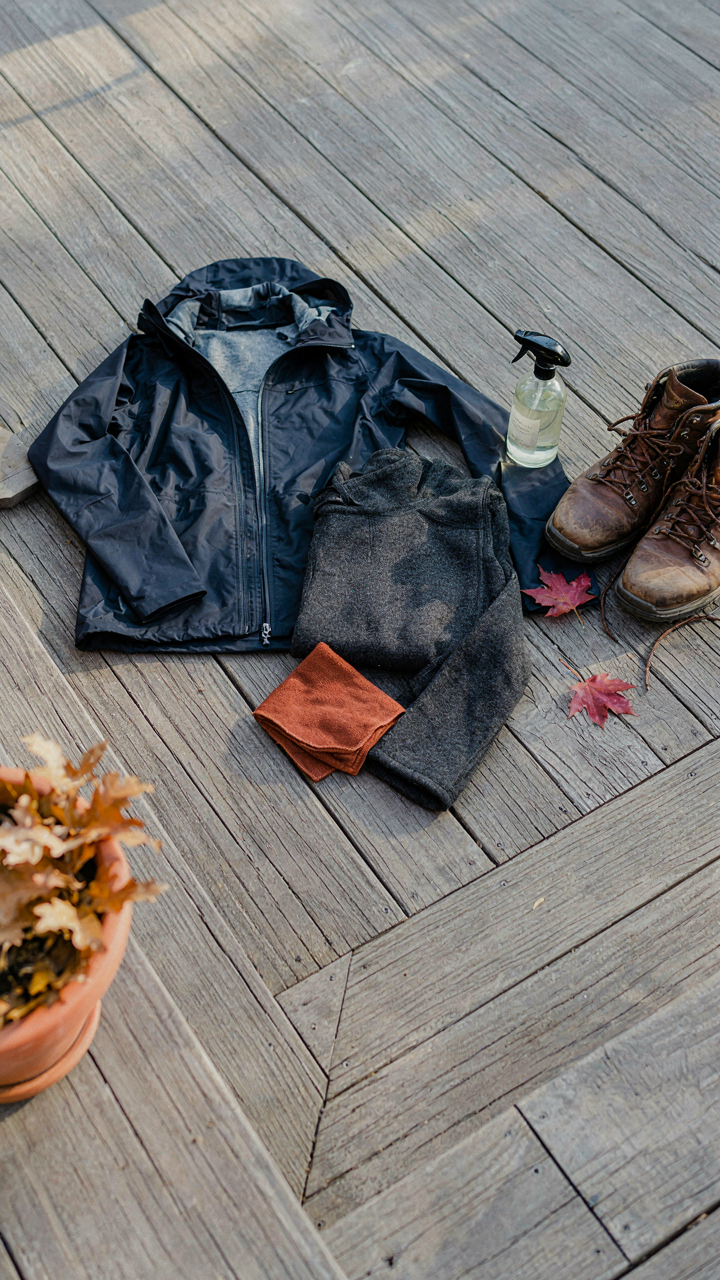
Technical Fabrics Need Specific Treatment
You want your gear to look new because replacement costs sting, but that’s not the real issue: you’re protecting your investment against a mechanism most people ignore entirely. Technical fabrics like merino wool, synthetic blends, and waterproof membranes degrade when you wash them wrong. Standard detergent breaks down the chemical treatments that make these materials perform. The finish erodes faster than the fabric itself.
Use a specialized cleaner designed for technical textiles. Wool-specific detergents work on merino pieces. For synthetic shells and insulated layers, grab a product formulated for technical gear like Hex Performance or similar brands. Cold water matters more than you think. Hot water accelerates membrane degradation and wool shrinkage. Wash on a gentle cycle or by hand, then air dry completely before storing anything away.
Storage Prevents Most Damage
Humidity and compression destroy gear silently between seasons. Most people shove jackets into closets and wonder why zippers jam or water resistance drops next year. The mechanism is simple: trapped moisture breeds mildew, compressed insulation loses loft, and trapped air corrodes metal hardware. Small women’s gear takes up less space, which tempts you to pack it tight. Resist that.
Store all fall hiking pieces in a cool, dry location with airflow. Use mesh or breathable storage bags instead of plastic, which traps moisture. Never compress insulated jackets or vests for long periods. Hang lightweight layers instead. For petite-sized pieces, a dedicated shelf or bin works better than stuffed drawers. Before storage, ensure everything is completely dry. Wipe down zippers and metal buckles with a dry cloth to prevent oxidation, then store in a temperature-stable space where humidity stays between thirty and fifty percent.
The Real Obstacle Isn’t Your Height; It’s Your Addiction To Generic Advice

Stop hunting for the “perfect” petite hiking fit. You don’t need it. You need to stop treating your body like a problem that fashion solves. Go buy one quality base layer today. Wear it. See how your actual frame moves in actual terrain. Then build from there. Your size isn’t holding you back. Your paralysis is.