
The Layering Fallacy: Why More Isn’t Always Better For Outdoor Kids
Stop Buying The Bulk Narrative
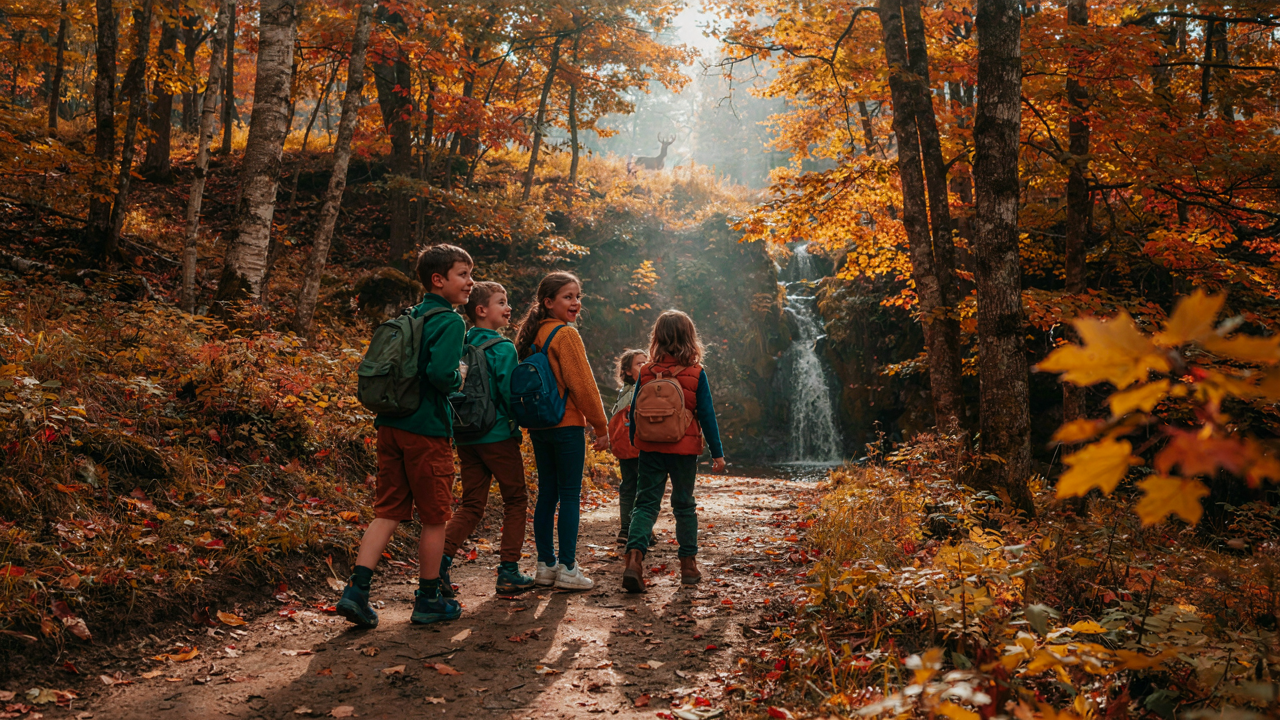
You want your kid warm and safe on the trail, which means you’re terrified of making the wrong call. The real mechanism is this: the outdoor industry profits when parents equate more layers with better protection. They don’t. A child moving uphill generates heat quickly. Too many insulating pieces trap sweat, which cools them faster than wind ever could. The math is simple: one quality base layer plus one insulating mid layer plus a wind shell covers every fall scenario. Anything beyond that creates a heat management problem disguised as a safety solution.
The layering system works in thermodynamics, not in piles. Kids shed heat three ways: evaporation, radiation, and convection. A heavy jacket stops convection but accelerates evaporation problems when your child works hard. The goal isn’t maximum insulation. The goal is sweat management. Pick materials that wick moisture away from skin, not materials that look more protective on a retail tag. Your kid’s comfort depends on removing layers fast when needed, not on having ten of them.
Function Replaces Quantity

Common advice tells you to layer everything, from socks to hats to base tights. That’s lazy. Kids hiking in fall need exactly three functional pieces: a merino wool or synthetic base layer that dries quickly, a fleece or lightweight down jacket they can shed at the first sign of effort, and a waterproof shell that handles wind and light rain. One base layer does the job of three mediocre ones. One mid layer that compresses small enough to stuff in a pack works harder than two bulky sweaters.
The real test is simplicity under pressure. When your kid overheats halfway through the hike, can they remove one piece and solve the problem in thirty seconds? If your outfit requires unlayering through a vest, then a sweater, then a thermal top, you’ve failed the function test. Stick to pieces that serve a single, clear purpose. A mid-layer that doubles as a pillow at camp is a distraction. Build the outfit so your child stays comfortable with minimal fussing, and you’ll see the difference on the trail.

The “Sweat Is The Enemy” Protocol For Toddler Hiking Outfit
Why Moisture Kills Heat Faster Than Cold Air
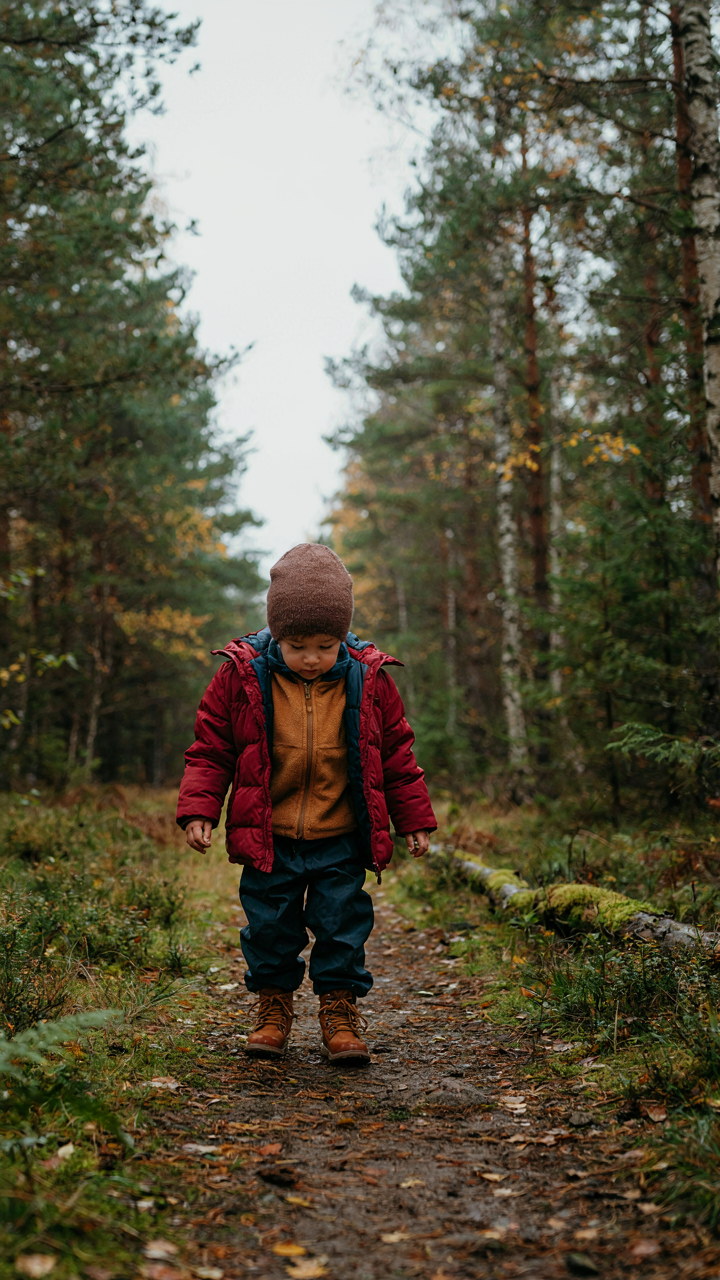
You want your kid to stay warm without layers shifting around or jackets coming off mid-hike. Here’s the mechanism nobody mentions: evaporative cooling from physics doesn’t care about air temperature. When sweat or moisture sits against skin, it transfers heat away faster than any breeze could. Fall temperatures make this worse—the air is already cool, so evaporation accelerates. A damp toddler loses core body heat rapidly, even when the thermometer reads 50 degrees.
The standard advice is “just use moisture-wicking layers.” Wrong. That’s incomplete. Moisture-wicking only works if the inner layer actually dries before the next layer traps dampness against skin. In fall hiking, kids generate sweat from exertion going uphill, then stop moving and cool down instantly. That’s when trapped moisture becomes dangerous. Your job is preventing sweat from accumulating in the first place, not just moving it around.
The Base Layer Choice That Actually Matters
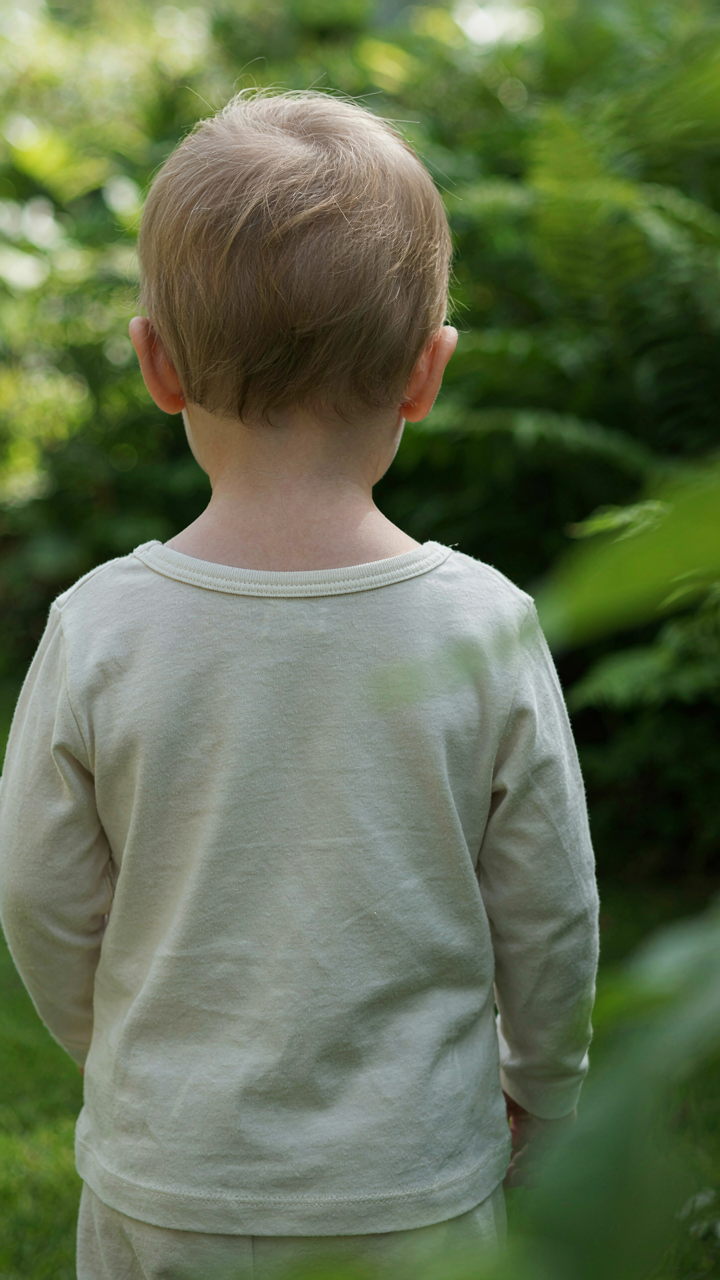
Forget cotton. It absorbs moisture and holds it. Synthetic base layers like polyester or polypropylene move sweat outward faster, but they’re not the real solution. The mechanism is fabric composition: tighter weaves and higher denier weights slow moisture absorption at the fiber level. Merino wool works differently—it absorbs moisture into the fiber itself without feeling damp against skin. This is biomechanical: wool fibers have a natural crimp that creates air pockets, keeping the layer from compressing against the body.
Pick a base layer one size loose enough that air circulates underneath. Compression against skin traps heat and moisture regardless of material. The layer should sit half an inch away from the body on all sides, allowing convection to move warm air between the base layer and mid-layer. This spacing is critical in fall because temperature swings are sharp, and you need that buffer zone working before the child gets cold.
Material Science 101: Beyond Cotton For Best Hiking Clothes For Kids
Why Natural Fibers Fail In Fall
You want to believe cotton works because it feels right and costs less. It doesn’t. Cotton absorbs moisture and holds it against skin, which is a thermodynamic liability in fall hiking—the evaporation process pulls heat from your child’s body faster than their core can replace it. When cotton gets wet from sweat or rain, it stays wet. There’s no recovery mechanism.
The performance gap widens in fall because temperature swings demand fast moisture management. A child hiking uphill generates sweat; stopping at a ridge to view the valley triggers rapid cooling. Cotton can’t transition between these states without creating dangerous humidity against the skin. Merino wool and synthetic blends shed moisture actively and dry in hours, not days.
Synthetics Versus Wool: Functional Advantages
Textiles operate on a principle from materials science called wicking capacity—the rate at which a fabric moves moisture away from the body to its surface where evaporation occurs. Polyester and nylon excel at this; they don’t absorb water the way cotton does, so moisture moves through the fiber structure rather than into it. Wool does this too, but through a different mechanism: it absorbs up to 30 percent of its weight in moisture without feeling wet to the touch.
- Polyester Base Layers: Move sweat off skin fastest; dry completely in 2-4 hours; synthetic structure prevents water absorption into fiber itself.
- Nylon Mid Layers: Durable and compress well for packing; dry faster than cotton; resist abrasion on rocky terrain where kids slip and catch clothes.
- Merino Wool: Regulates temperature across a wider range than synthetics; resists odor naturally; maintains insulation even when damp, unlike synthetic alternatives.
- Fleece Blends: Combine synthetic outer shell with brushed interior for air trapping; retain warmth in wind without bulk; dry in 3-6 hours.
- Synthetic Shells: Waterproof fabrics with taped seams block rain while allowing vapor transmission; prevent wind chill that accelerates heat loss in exposed areas.
The real choice isn’t synthetics versus wool—it’s matching the layer to the job. Base layers need synthetic speed because they touch skin. Mid layers can use wool for its temperature buffer. Outer shells must be synthetic for water blocking. Fall hiking demands layering precision because weather changes hourly; build your outfit with this rotation in mind, not aesthetics.
The Kinetic Energy Principle: Dress For Movement, Not Stasis
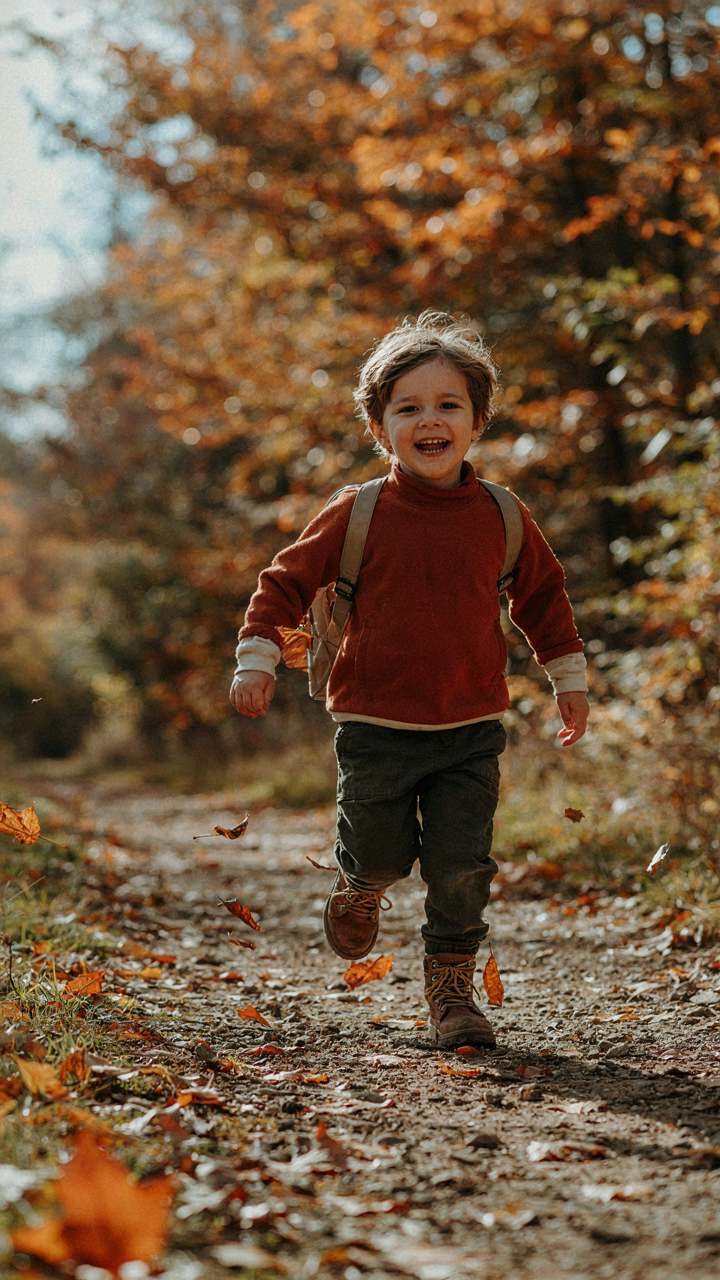
Heat Generation Outpaces Air Temperature
You want to feel like a good parent by nailing the outfit before you leave the driveway. The real issue is that kids generate heat through movement, and most parents dress them for the parking lot, not the trail. Physics calls this metabolic heat production. A child hiking uphill produces significantly more warmth than a stationary child in the same air temperature. Cotton absorbs sweat and cools the body through evaporation—the opposite of what you need when that sweat stops flowing at a rest stop.
Wear merino wool or synthetic base layers. These materials wick moisture away from skin while retaining warmth even when damp. Cotton feels soft in a store and ruins a hike. The moment your kid stops moving, trapped moisture turns cold. Merino regulates temperature across a wider range than any other common fabric. This is why it dominates in mountain guide kits, not because it’s trendy. Start with a fitted merino layer as your base, then add insulation on top.
Layering For Active Kids Hiking
Stop thinking of layers as a stacked armor system. Kids on a trail shed heat then regain it faster than adults. You need layers that come off and go back on in under thirty seconds without stopping the hike. Bulky jackets forced into backpacks create unnecessary friction and time waste. The standard advice of “bring an extra layer” misses the point: bring layers that function while moving, not after you sit down.
Use a thin merino long sleeve as your base. Add a lightweight fleece or wool sweater as your mid-layer. Top it with a wind-blocking shell that compresses small. This three-tier system lets you adjust in motion. Your kid gets cold descending a ridge, you slip off the shell. They warm up climbing the next section, the fleece comes down. Never force a child to choose between being too hot or stopping the hike to adjust. The system works only if adjustments take seconds, not minutes.
Weatherproofing Without The Weight: Smart Choices For Kids Camping Outfit
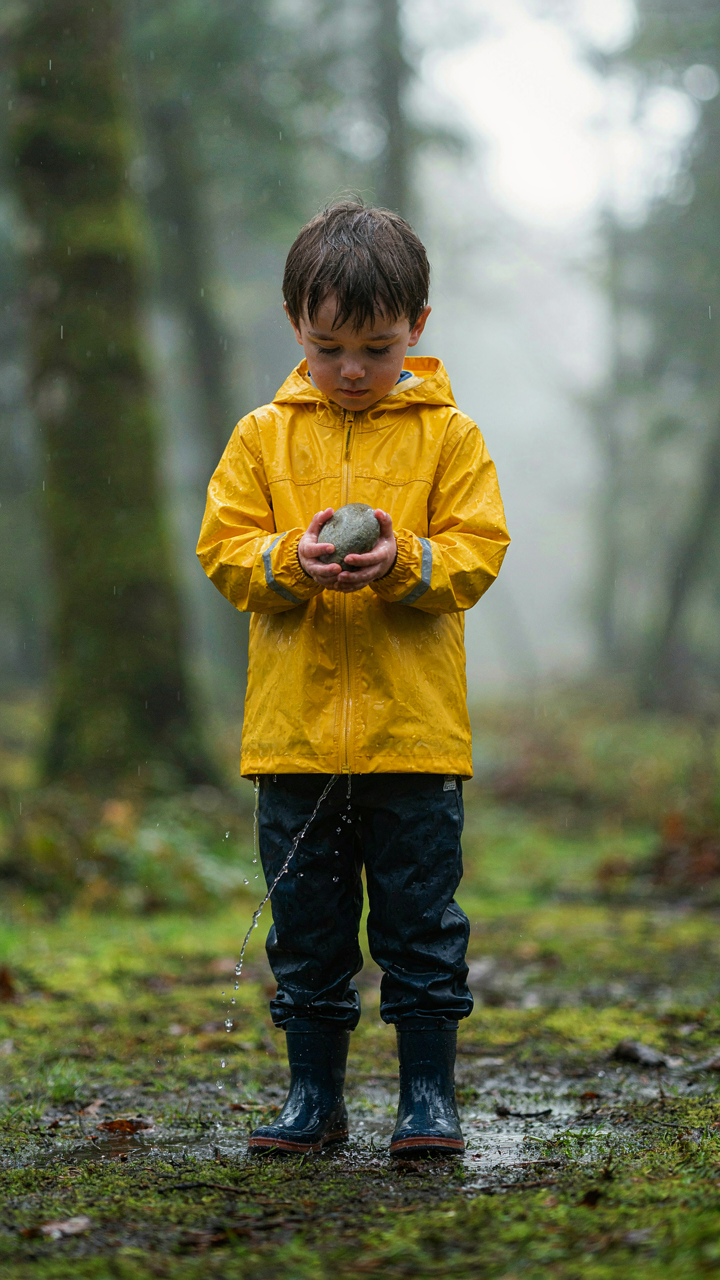
Waterproof Versus Water Resistant Matters
You want to believe one jacket solves everything because buying gear is exhausting and you’re tired of making decisions. That’s not how fabric physics works. Waterproof means zero water penetration under pressure. Water-resistant means water beads up until the fabric gets saturated or the seams give way. Kids hiking in fall rain need waterproof outerwear, not the marketing term that lets brands charge less.
Waterproof jackets use sealed seams and membranes like Gore-Tex or eVent that block water molecules while letting body moisture escape. Water-resistant jackets use durable water repellent coatings that eventually wash out. In fall conditions with active kids sweating inside and rain hitting from outside, water-resistant fails within hours. Spend the extra money on true waterproof layers and you eliminate the mechanism that kills comfort: trapped moisture plus cold air.
Layering Strategy That Actually Works
Stop buying special “waterproof breathable” base layers because they’re a category that doesn’t exist at scale. The real system works like a military supply chain: each layer has one job, no overlap, no confusion. Start with merino wool or synthetic moisture-wicking base layer. Add an insulating mid-layer of fleece or down. Top it with a waterproof shell that vents pit zips for heavy activity.
Kids shed layers when they warm up from hiking, then put them back on during breaks and descent. Build your outfit around this rhythm instead of fighting it. A backpack with external straps holds the mid-layer during warm climbing. The waterproof shell stays on from start to finish. When your kid sits for lunch, that mid-layer goes back on before body temperature drops. This prevents the chill cycle that makes kids miserable and slows the entire group down.
Footwear Foundation: Protecting The Paws Of Kids Hiking Gear
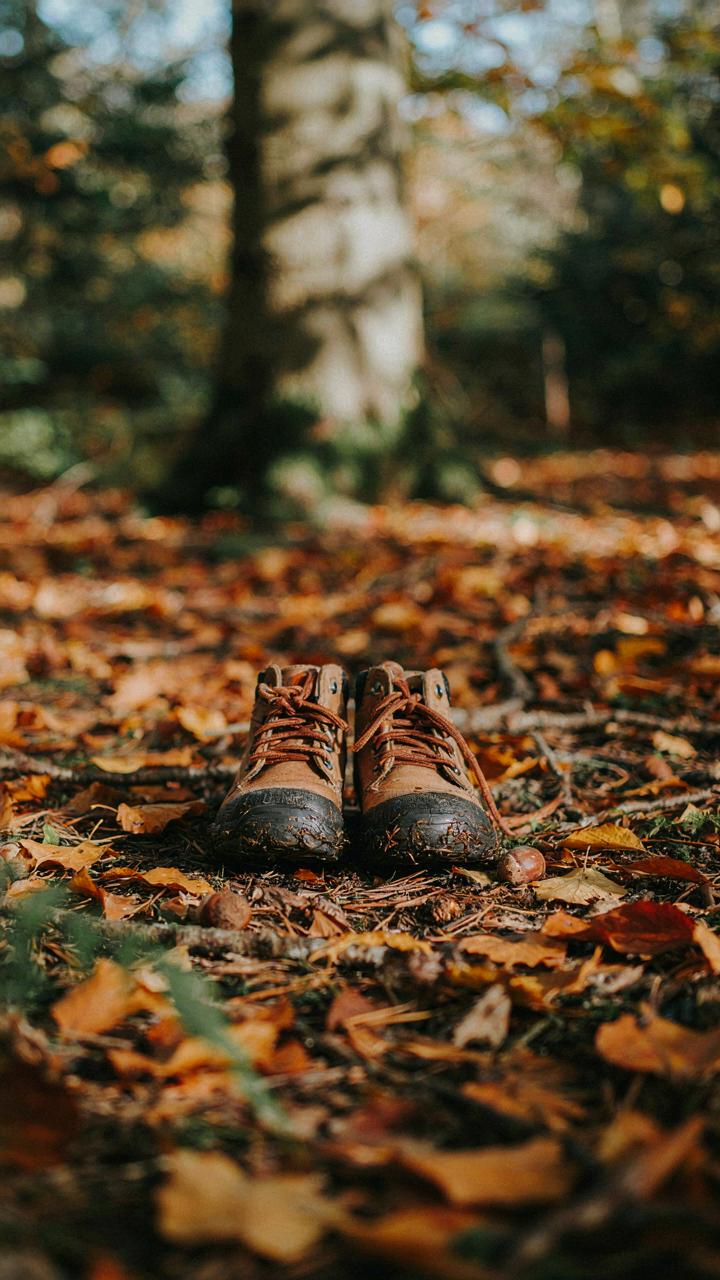
What Actually Matters In Hiking Boots
You want your kid’s feet protected because blisters end hikes, and you’ll blame yourself for not buying the right gear. Here’s what matters: hiking boots for kids need ankle support, a rigid sole, and a toe box wide enough that socks don’t compress the foot. Most parents buy boots too stiff or too loose. The mechanism is simple: a boot that doesn’t flex with the foot creates pressure points. A boot too roomy causes the foot to slide inside, generating friction at every step.
Kids’ feet grow fast, so don’t buy boots too large expecting them to last a season. A proper fit means a thumb’s width of space at the toe when the heel is seated in the boot. The sole matters more than cushioning. A stiff midsole distributes weight across the entire foot rather than concentrating force on the heel or ball. This prevents fatigue on rocky terrain. Waterproofing is useful but secondary to fit. A poorly fitting boot won’t protect the foot even if water stays out.
The Friction And Temperature Problem
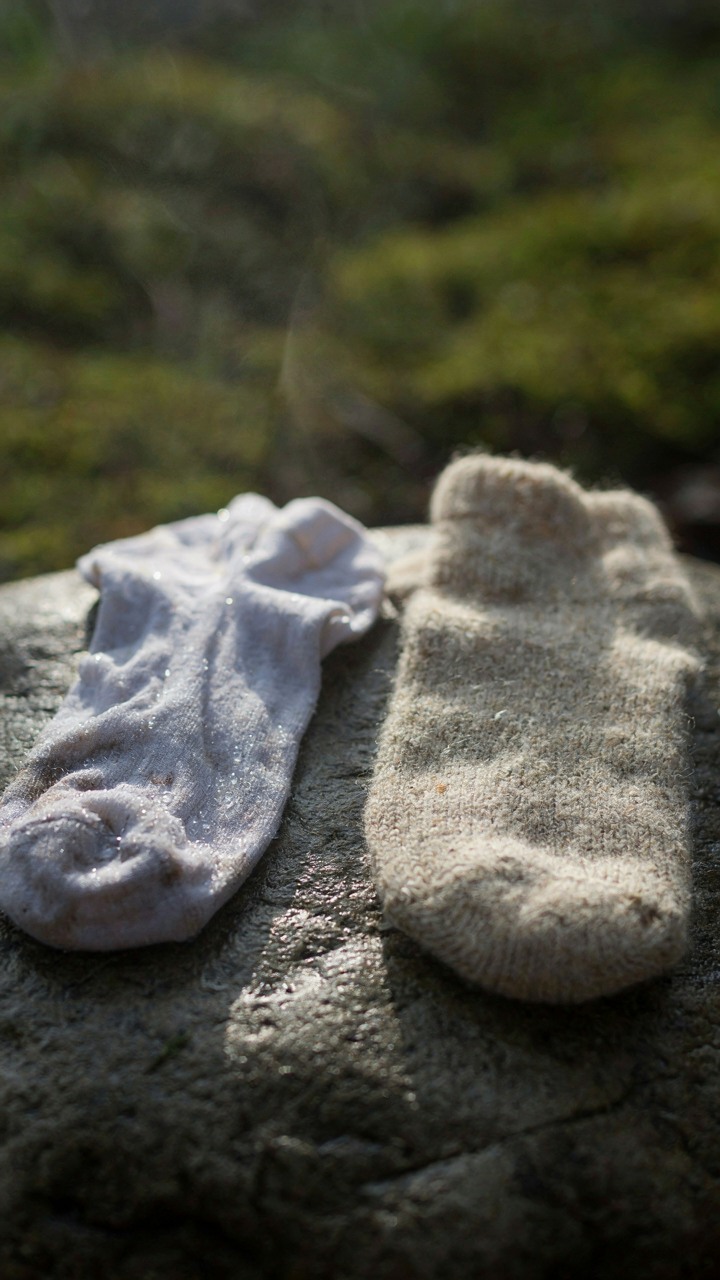
Nobody mentions this directly: the right sock stops two separate failures. Friction creates heat and blisters. Cold kills circulation and causes discomfort that makes kids quit hiking. You need socks that wick moisture away from skin while insulating in fall temperatures. Merino wool does this better than cotton because it manages both sweat and maintains warmth even when damp. Synthetic blends work too, but wool is more forgiving.
Sock height matters tactically. Crew-length socks protect the ankle and shin from boot edge rubbing. Three-quarter socks work if the boot collar is padded. Never use thin dress socks or athletic socks designed for running. Those compress under boot pressure and bunch inside the toe box. Buy socks one size up from your kid’s shoe size. The extra room prevents compression and lets the foot expand slightly during activity without creating pressure points that cause blisters.
The “Emergency Kit” Mentality: What’s Actually Critical For Girls Hiking Outfit
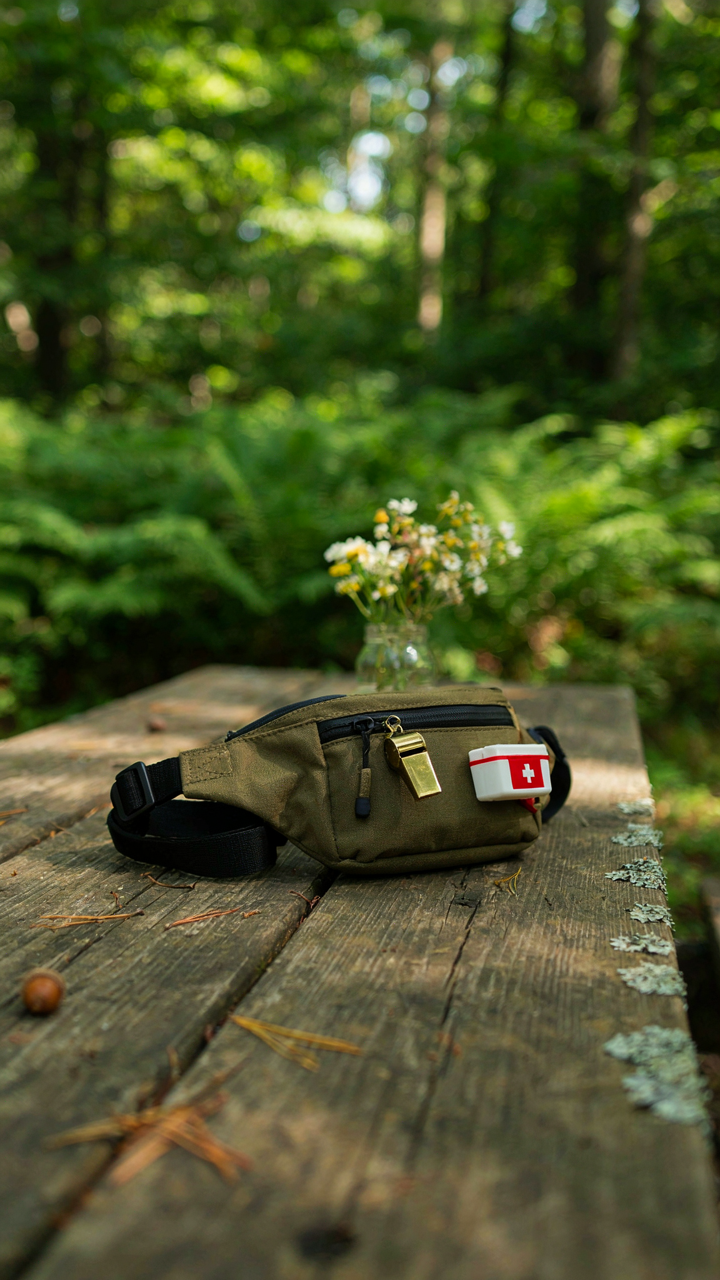
Stop Treating Your Pack Like Insurance Against Imagination
You’re packing extra layers because you’re afraid of looking unprepared, not because the weather will actually demand them. That’s the real mechanism at play. Most parents stuff kids’ packs with redundant items that create dead weight, slow movement, and teach children that discomfort requires gear solutions instead of adaptation. The trail doesn’t care about your backup plan.
Fall weather shifts fast, but “fast” doesn’t mean “unpredictable.” Temperature swings between 65 and 45 degrees Fahrenheit happen within hours during autumn hikes. A single mid-weight fleece layer and a wind-resistant outer shell handle this range without the bloat of three separate jackets. Girls need mobility more than options. Restrictive packing steals that.
The Physics Of Actual Necessity
In thermodynamics, thermal mass matters less than surface area and insulation type—which maps directly to layering strategy for kids on fall trails. One quality synthetic or merino base layer plus one fleece plus one wind layer covers 95 percent of scenarios. The remaining 5 percent you can’t predict anyway, so stop trying. Kids lose heat through extremities and wet fabric. Solve those two problems and you’ve eliminated the emergency.
Carry one lightweight emergency blanket, a small first aid kit with blister treatment, a headlamp with spare batteries, and water. That’s the actual critical list. Everything else is speculation dressed up as preparedness. A girl moving on a trail generates her own heat. Your job is preventing wind and wetness from stealing it. Keep the pack under 10 pounds and she’ll stay warm through movement alone.
Extending Existing Wardrobes: The Frugal Fall Hiking Fix For Kids

What Your Closet Already Has
You’re looking at this section because buying a whole new outfit feels wasteful, and you’re right to feel that way. The mechanism is simple: most everyday clothes fail on trails not because they’re the wrong material, but because they’re missing one functional layer. Your kid’s regular long-sleeve shirt works fine until sweat and wind hit simultaneously. Cotton t-shirts handle short hikes in mild fall weather without issue. Jeans trap moisture but work for low-elevation, dry-condition walks. The gap isn’t fabric type—it’s layering strategy and fit.
Fall hiking demands you stack garments in sequence, not replace them wholesale. A regular hoodie plus a windproof shell solves what a single “hiking jacket” promises. Leggings under regular pants add insulation without buying new bottoms. Your child’s existing shoes work if they have ankle support and decent tread. Most kids’ wardrobes already contain the base and mid layers needed. You’re not shopping for novelty—you’re stacking what exists into a functional system.
Making Clothes Work Harder With Small Changes
The common advice here is wrong: you don’t need special “hiking gear” modifications. You need to understand basic textile mechanics. Sealing a cotton hoodie’s cuffs with elastic bands or stitching reduces wind penetration at joints. Adding elastic to pant cuffs prevents dirt entry and keeps ankles warmer. Sewing a simple drawstring into the waistband of loose-fitting pants keeps them from sliding during climbing. These aren’t permanent upgrades—they’re reversible fixes that transform a regular shirt into trail-functional gear.
Start with the joints: wrists, ankles, neckline, and waistband. Wind enters through gaps, so closing them matters more than fabric choice. A simple running stitch at the cuff takes five minutes and extends usable temperature range by ten degrees. Reinforce existing seams on hiking-worn items before they fail rather than replacing them. Test modified pieces on a short trail before committing to a longer hike.
Post Hike Protocol: Maintaining Gear For Longevity And Next Adventures
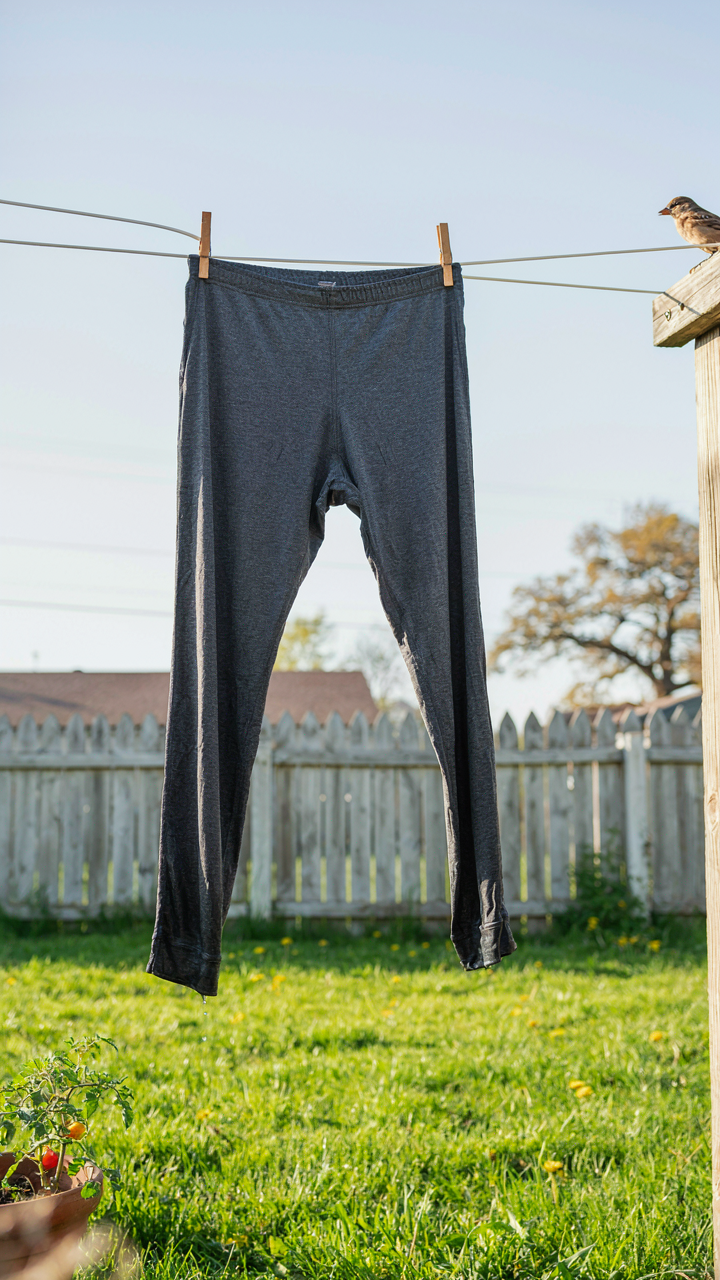
Washing Specialized Fabrics Without Breaking Them Down
You want your gear to last because replacing it costs money and time you’d rather spend elsewhere. The real mechanism here is osmotic pressure: moisture trapped in synthetic fibers degrades polymer chains the same way salt degrades cell membranes in biology. Most people throw hiking clothes in hot water with regular detergent, which accelerates this exact damage.
Merino wool and synthetic blends need cold water and mild soap designed for technical fabrics. Rinse until water runs clear, then squeeze excess water without wringing. Hot water opens fiber structure and lets detergent molecules embed themselves permanently. Machine drying adds heat that fuses synthetic materials together, reducing breathability. Air dry flat or hang to preserve fabric integrity and performance.
Storage That Stops Silent Degradation
Most hikers store gear damp or in dark closets, which creates the perfect environment for mildew and UV damage to begin their work. The issue isn’t just mold—it’s that stored moisture reactivates residual detergent particles in fibers, continuing the polymer breakdown cycle even when the gear sits unused. Your kids’ fall gear needs dry storage with airflow and indirect light.
Clean and fully dry garments before storage in breathable bags or open shelving. Avoid plastic containers that trap moisture and compress fabrics. Store in cool spaces away from direct sunlight, which yellows synthetics and weakens elasticity over time. Check stored items monthly during off-season to catch moisture problems early. This single protocol extends gear lifespan from one season to three or four, which shifts your cost per wear dramatically downward.
The Real Obstacle Isn’t The Weather; It’s Your Mental Model Of What Prepared Actually Means
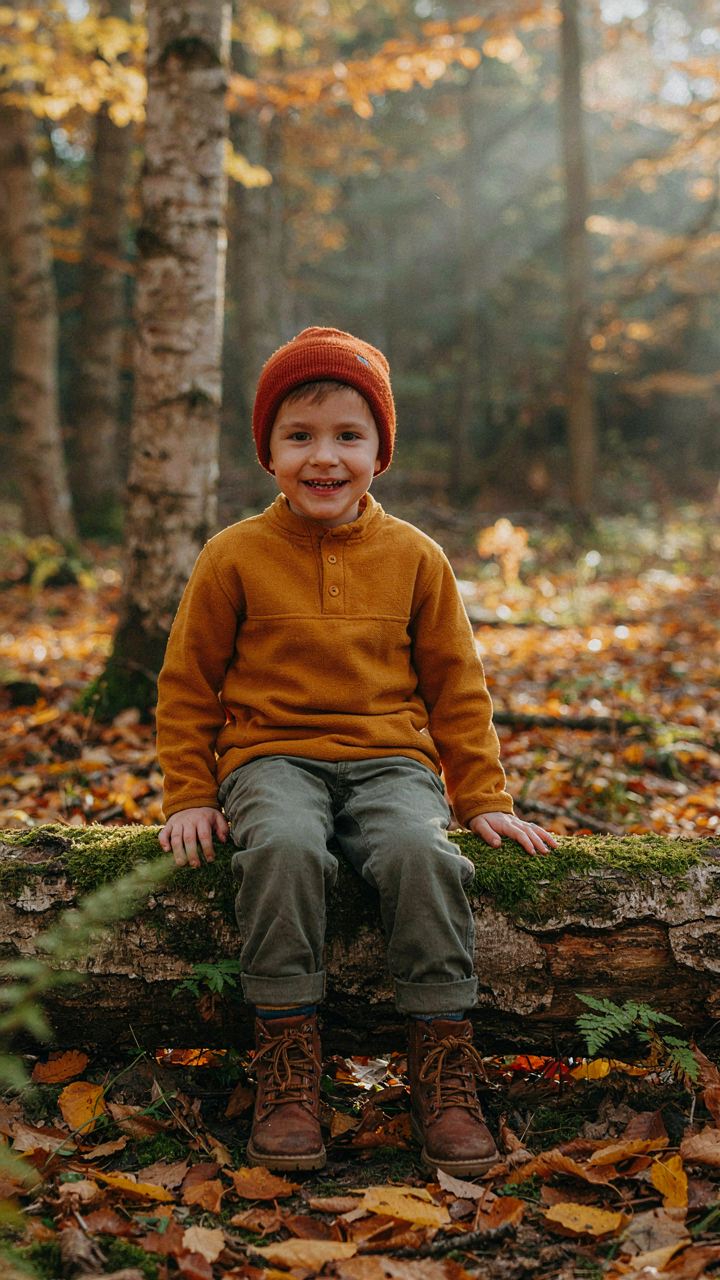
You think prepared means matching every piece of gear to every condition. It doesn’t. Prepared means your kid moves freely, stays dry, and actually wants to go back outside next weekend. Right now, go pull three pieces from your closet that layer and move with your kid’s body. Try them tomorrow. You’ll realize you’ve been overthinking this the entire time, and that layers beat perfection every single time.