

The Cold Weather Calibration: Fall Hiking Outfits For Adaptability

Start With Your Base Layer
You want to look put-together on the trail without admitting you’re actually scared of getting cold and looking unprepared. The mechanism is simple: your base layer traps or releases heat based on fabric choice and fit, not thickness. Cotton holds moisture and kills insulation. Merino wool and synthetic blends wick sweat away from skin while maintaining warmth even when damp. A tight base layer transfers heat efficiently. A loose one creates dead air space that works against you in variable conditions.
Fall temperatures swing thirty degrees between trailhead and summit, between sun and shade. Your base layer must work in both. Start with a fitted merino or poly blend that moves sweat off skin immediately. This single choice prevents the cascade of problems: chills from evaporation, layering confusion, excessive bulk. Test your base layer in cool conditions before hitting the trail so you know its actual performance, not marketing claims.
Insulation That Responds To Movement

The thermodynamics of layering treats your body as a heat source that generates or loses energy based on activity level and air gaps. Fall hiking demands insulation that compresses when you move and expands when you stop. Fleece and synthetic insulation do this. Down does not—it compresses under pressure and loses insulating value. Most college students grab a puffy jacket and wonder why they overheat on the climb then freeze during breaks.
Your insulation layer should be a mid-weight synthetic or fleece that packs down enough to stash in a pack without creating bulk. Avoid insulation that’s too heavy for movement-intensive climbing. A R3 or R4 weight fleece does the job without turning you into a swollen marshmallow. Wear it only when you stop or when the pace slows. Strip it during sustained climbing. This rhythm beats the all-day overdress that most people default to.

The “Trail Smart” Protocol: Beyond Chic Hiking Outfits
Your Feet Determine The Hike’s Outcome
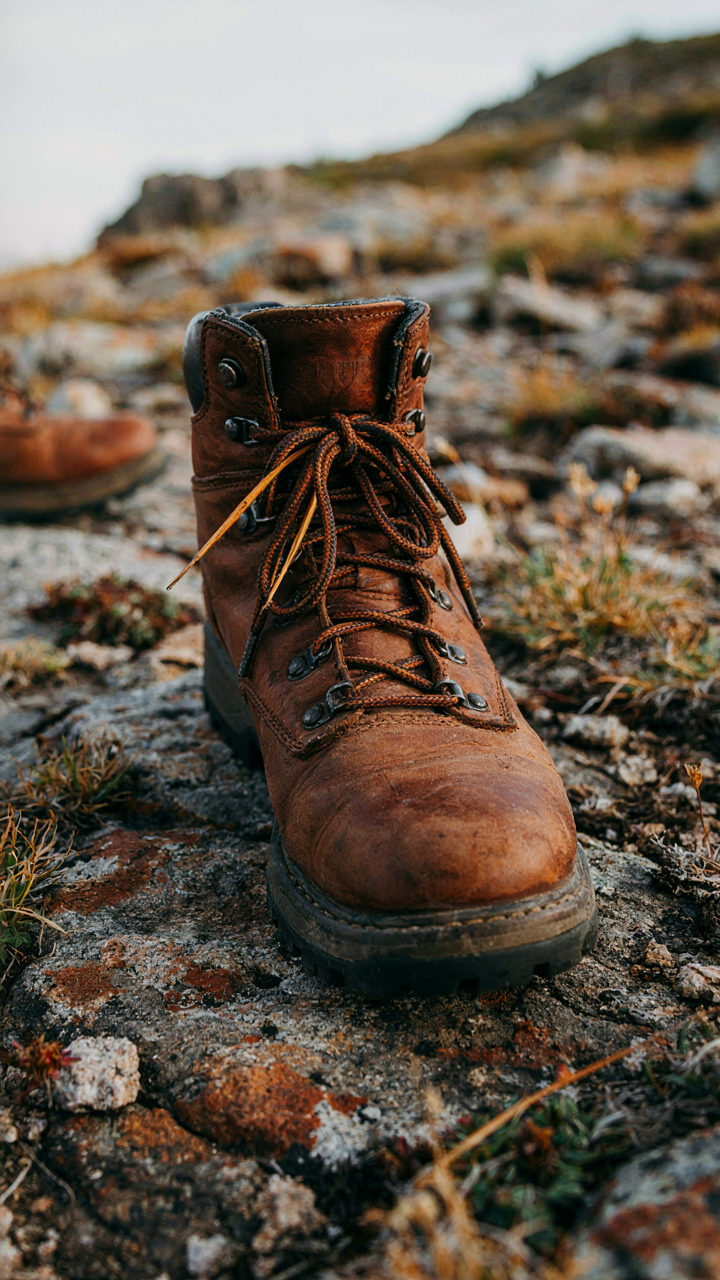
You want to look capable on the trail because a twisted ankle ends your semester. Here’s the mechanism: your foot strikes uneven ground at unpredictable angles. Ankle support prevents inversion sprains. Traction prevents slip-offs on wet leaves and loose rock. Generic sneakers fail at both. Trail-specific footwear solves this through rigid midsoles that resist twisting and aggressive tread patterns that grip wet surfaces.
Hiking boots or trail runners with high collars are non-negotiable for fall terrain. Leaves hide roots and rocks. Wet conditions intensify every misstep. Pick boots rated for hiking specifically, not casual outdoor shoes. Your ankle won’t strengthen itself on unstable ground, and swelling kills the trip fast. Test footwear on short slopes before committing to a full day.
Pack Weight Kills Momentum Fast
Physics governs this: load and distance create cumulative fatigue. A heavy pack forces your body to work harder on every incline, burning reserves faster. College students underestimate how quickly ten extra pounds compounds over hours. Minimal weight means you choose the route, not your pack choosing it for you. Maximum utility means every item earns its space through dual or triple function.
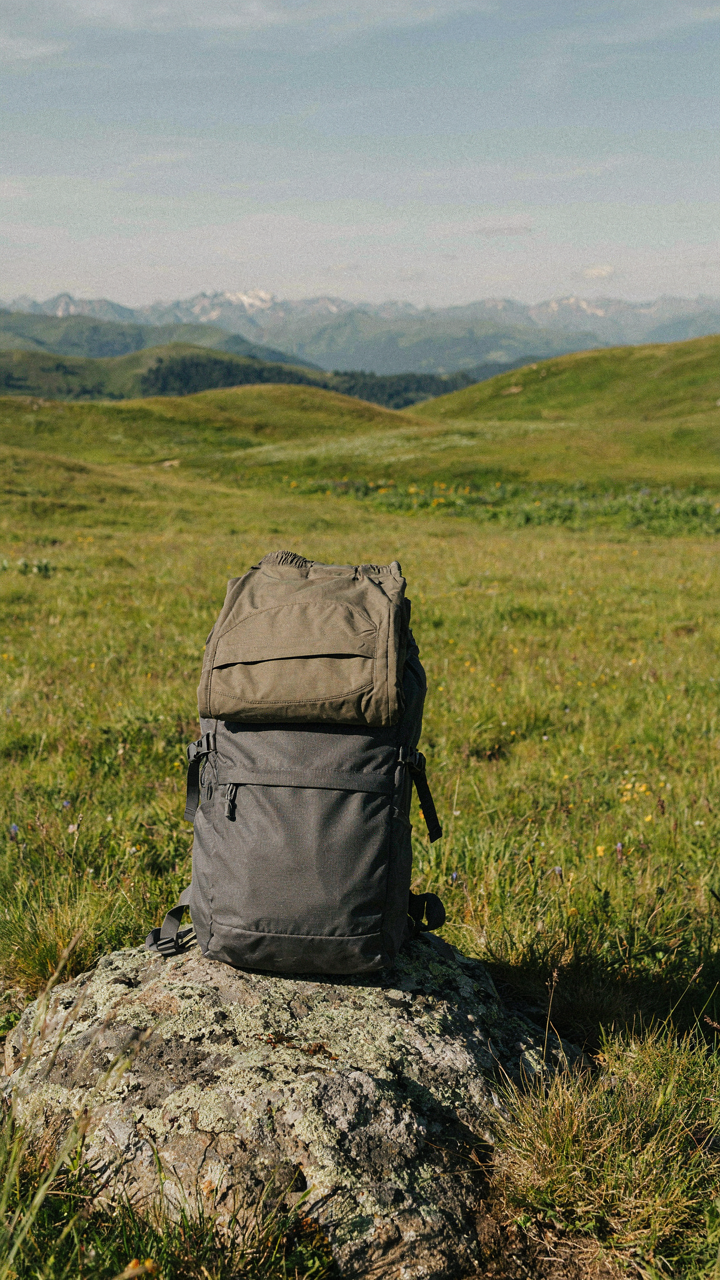
Start with a 20-liter capacity pack. Bring water, a map or phone with offline trails downloaded, a basic first aid kit, a layer for temperature drop, and snacks. Skip the extra camera, the full water bottle when a hydration bladder works better, and anything you might need but probably won’t. Your pack should feel light enough that you forget it’s there by mile two.
Durability Over Disposable: Investment For College Students

The Math Behind Cheap Gear
You want to believe cheap gear works because dropping $200 on a jacket feels safer than committing $400. Here’s the mechanism: budget brands use thinner fabrics and weaker seams to hit a price point. That $40 rain jacket tears at the seam or loses water resistance after two seasons. A $120 jacket from a brand that actually tests their materials lasts five to seven years. Cost per use flips the equation. Wear cheap gear twelve times before it fails. Wear quality gear sixty times across five seasons. One costs $3.33 per use. The other costs $2 per use. You’re already losing money by going cheap, and you haven’t factored in replacement time or the hike you miss because your gear failed.
Quality gear teaches you something cheap gear doesn’t: how a product should actually perform. Most college students compare price, not performance. You notice a $120 synthetic insulated jacket keeps you warm in wet conditions because the material resists moisture absorption better than cotton. A $40 alternative gets damp, loses insulation, and leaves you cold. The real cost is the experience gap, not the dollar gap. You learn what proper fall hiking gear feels like, which changes how you evaluate every purchase afterward.
Storage And Care As Durability Systems
Think of maintenance as a durability multiplier borrowed from engineering. In systems thinking, prevention beats replacement every time. Your fall hiking jacket gets wet. Most college students stuff it in a backpack corner still damp. That traps moisture, breaks down the fabric’s water-resistant coating, and seeds mold. Dry it fully before storage. Store it in a cool, dry space without compression. These two steps alone extend most quality jackets by two to three seasons.
Zippers fail more often than fabric. Keep them clean and dry after each hike. Run a dry cloth along the teeth to remove dirt. Lubricate sticky zippers with a graphite pencil rubbed along the track, not silicone spray, which attracts more debris. Seams separate when you force gear into spaces too small for it. Hang jackets on hangers instead of folding them in drawers. The physical protocol matters more than the product: intentional storage determines whether gear lasts one season or five.
The Environmental Physics Of Fall Hiking

How Your Body Loses Heat In Layers
You want this section because you’re terrified of being cold on the trail and looking incompetent in front of peers. Here’s the mechanism: thermodynamics teaches us that heat transfer happens through four pathways—conduction, convection, radiation, and evaporation. On a fall hike, your body bleeds heat primarily through radiation (55-60% of loss) and convection (25-30%). Conduction matters least unless you’re sitting on cold ground. Your outfit job is blocking these specific pathways, not trapping some vague “warmth.”
Cotton fails because it absorbs sweat, then conducts heat away from skin as wind hits you. This is why merino wool or synthetic midlayers work: they wick moisture and maintain insulation even when damp. Base layer, insulation layer, shell layer isn’t generic advice—it’s a direct response to how fall temperature swings and variable exertion create moisture. The layer system lets you shed or add gear as your metabolic rate changes, keeping you in the thermal sweet spot where you’re working hard but not overheating into sweat, then chilling down.
Movement Efficiency Under Load
Biomechanics reveals that carrying weight on your hips instead of shoulders reduces metabolic cost by 30-40% because your legs can handle vertical load better than your spine. Most college students strap a pack to their shoulders and wonder why their lower back aches by mile three. A proper hip belt transfers load weight to your pelvis and legs, the structures designed for it. Loose, oversized outfits create drag and require extra muscle engagement. Fitted layers that move with your body let your muscles fire cleanly without fighting fabric.
Fall hiking demands layering that compresses well and doesn’t bunch at joints. Tight sleeves, fitted waists, tapered ankles—these aren’t aesthetic choices. They reduce friction, prevent chafing, and let your knees and hips articulate without fighting your clothes. When your outfit works with your biomechanics instead of against it, you conserve energy for the trail instead of burning calories fighting your gear. Pack your base layer and midlayer tight enough that they move with skin, not separate from it.
The Unseen Hazards: Protection Beyond Fashionable Hiking Outfits

Tick Prevention Through Clothing And Repellents
You want this section because you’re scared of Lyme disease but don’t want to look paranoid on the trail. Here’s the mechanism: ticks climb. They don’t jump or fall from trees. They wait in tall grass and brush at ankle to knee height, then crawl upward looking for skin. Biology calls this “questing behavior.” In fall hiking outfit design, this means your socks and pant legs are your first defense line, not an afterthought.
Wear light-colored pants that let you spot ticks before they attach. Tuck your pant legs into your socks or boots. This sounds awkward. It’s the single most effective barrier you have. Pair this with permethrin-treated clothing or spray it on your gear before you go. Permethrin bonds to fabric and lasts through multiple washes. It kills ticks on contact. Skip the DEET-based repellents for your body if your clothes are treated. Apply DEET to exposed skin only where clothing gaps exist, like your neck and wrists. Check yourself and your hiking partners every two hours during the hike, then again thoroughly when you return. Don’t wait until you’re home.
Sun And Wind Exposure: Mitigating The Real Risks
Fall sun reflects harder off dry ground and reduced vegetation than summer sun does. Wind accelerates heat loss and dries your skin faster than you notice it happening. The physics here: wind chill is real, but so is solar radiation intensity. A clear October day feels mild because temperature is low, but UV exposure doesn’t drop until November. Your outfit needs to account for both threats separately.
Layer with a lightweight long-sleeve shirt under your base layer or wear it as your outer shell if temperatures stay above 50 degrees. This stops wind and reflects UV without trapping heat. A billed hat protects your face and neck. Wear sunscreen on exposed skin even on overcast days. Apply it 15 minutes before you head out and reapply every two hours. Bring a thin insulating layer like a fleece or wool mid-layer that you can shed quickly if you warm up from exertion. The mechanism that prevents problems: you adjust before you’re cold or burned, not after.
The “Kyrgyzstan” Mindset: Versatility In Extreme Conditions
Gear That Does Two Jobs
You want to pack light and look intentional without admitting you’re broke and can’t buy a full wardrobe. The real mechanism here is constraint breeds design. Convertible pants with zip-off legs aren’t lazy—they’re physics applied to your closet. You get trousers for morning cold, shorts by afternoon warmth. A heavy jacket becomes a pillow when you’re sitting on rocks. This isn’t minimalism cosplay; it’s eliminating decisions that don’t matter while keeping the ones that do.
Convertible gear forces you to choose pieces that actually work in isolation. A jacket stuffed behind your head on a log teaches you something: a good shell layer doesn’t need to be pretty, just functional across temperature swings. Most college hikers buy single-purpose items and carry dead weight. You’re after the opposite. Every item earns its spot by solving two problems. Pack once, adapt infinitely.
Accessories That Shift With The Day
Hat, gloves, and buff—these aren’t add-ons, they’re your control system for microclimate management. A single merino wool or synthetic buff transitions from neck gaiter to headband to wrist layer as conditions shift. Here’s what works:
- Wool Or Synthetic Buff: Transitions between neck, face, and head coverage without bulk. Merino or polyester both wick sweat and dry fast in fall humidity.
- Beanie With Brim Compatibility: Wears over a baseball cap for morning cold, removes when sun peaks. Choose one that stuffs into a jacket pocket flat.
- Lightweight Gloves In Synthetic Material: Dries faster than wool after stream crossings. Stash in your main pocket, not a side pouch you’ll forget.
- Baseball Cap Or Trucker: Sun control in September, brim keeps rain off your face. Lighter than a dedicated rain hat and works with layers underneath.
- Neck Gaiter With Hidden Mesh: Functions as dust barrier during dusty descents, sunscreen for your neck, insulation when pulled up. The mesh section prevents overheating on climbs.
The goal is to regulate temperature and sun exposure without adding weight. You swap accessories in thirty seconds as you climb or descend. A buff moves to your wrist when you warm up. Gloves go in a pocket the instant your hands heat. This is adaptation without excess gear. Stop before your backpack becomes a costume change station.
The “Outfit Tracking” Advantage: Data Driven Choices

What Actually Happens On The Trail
You’re avoiding this because tracking gear performance feels like extra work, and you’re already stretched thin. Here’s the mechanism: your brain doesn’t retain specific feedback about what worked. You hike once, forget the details by next week, and buy the same mistakes twice. The military calls this “after-action review”—documenting what succeeded and what failed in the field so patterns emerge. Apply it to your fall hiking outfit: log which layers kept you warm, which chafed, which dried fast, which soaked through. Without data, you’re guessing.
Most college students skip this step entirely. They buy gear, use it once, then repeat the cycle. You can’t optimize a system you don’t measure. Spend two minutes after each hike noting: did your base layer wick sweat, or did it cling to your skin? Did your outer shell shed water or bead it up and soak in? Did your socks bunch in your boots? Did your jacket cinch properly at the waist? These specifics compound. After three hikes, patterns emerge. After five, you know exactly what works for your body and your local fall conditions.
Building Your Gap Map
You don’t know what you’re missing until you see what you actually used. Start a simple document. List every item you wore on each hike. Next to each, note one detail: performed well, underperformed, caused discomfort, or wasn’t needed. After two to three hikes in fall conditions, gaps surface. Maybe your mid-layer is too thick. Maybe your gloves work until temperatures drop below 45 degrees Fahrenheit. Maybe you need a pack rain cover. Maybe your base layer dries too slowly for back-to-back weekend hikes.
The common mistake is assuming one outfit works for all fall conditions. Fall runs from September through November. A September hike at 65 degrees demands different layering than a November hike at 35 degrees. Your tracking document shows this. You see the exact temperature or conditions where each piece stopped performing. That data tells you what to replace, what to add, and what was wasted money. You stop buying random gear and start buying solutions to problems you’ve documented.
Beyond The Instagram Aesthetic: Real Hiking Outfit Fall Utility
Function Over The Flex
You want to look like someone who hikes, not someone who actually hikes. That gap is the real problem you’re solving for, and it costs you every time the trail gets technical or the temperature drops. The mechanism is simple: Instagram rewards visibility, but the trail rewards invisibility. When you dress for the feed instead of the conditions, you sacrifice the one advantage that compounds on every hike: the ability to move without thinking about your outfit.
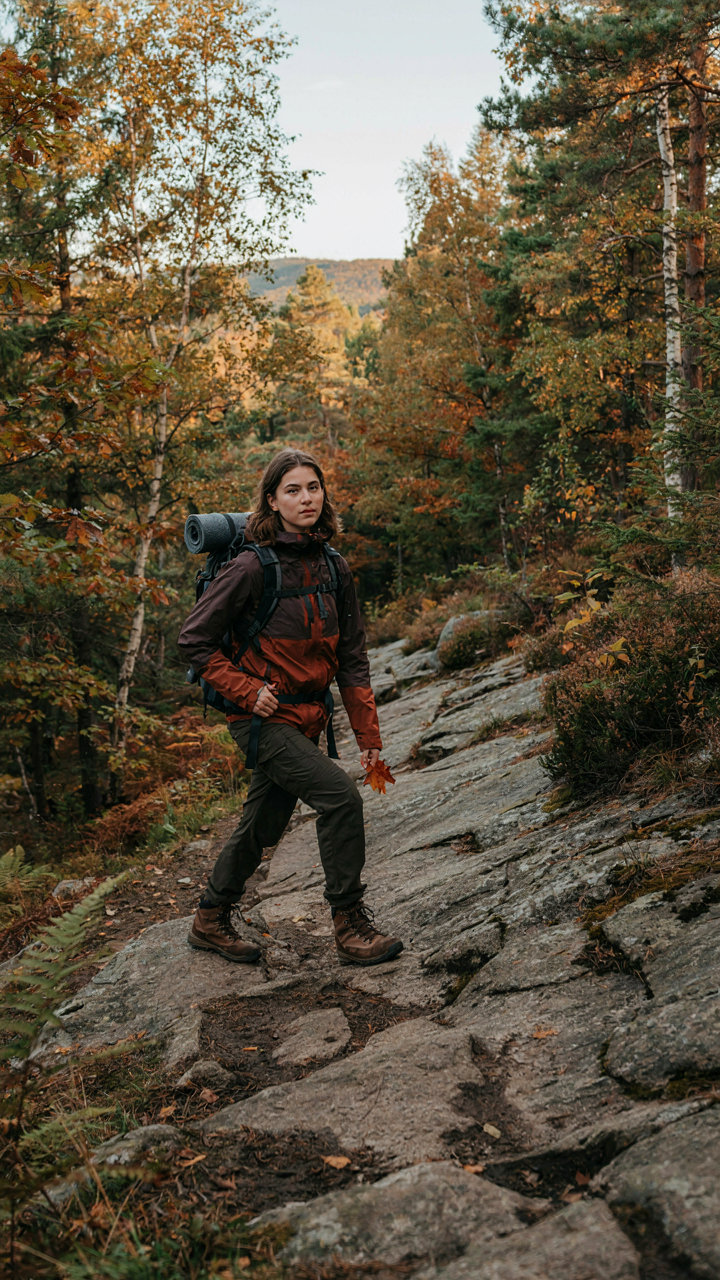
Fall hiking demands function-first layering because temperature swings are violent and unpredictable. A moisture-wicking base layer made from synthetic or merino wool isn’t trendy, but it prevents the wet-shirt-in-forty-degree-weather scenario that kills your hike. Cotton looks casual. It also traps sweat and becomes a liability the moment you stop moving. Your outfit should solve a mechanical problem, not pose one.
Competence Builds Through Repetition
This borrows from deliberate practice in skill development: you gain confidence through repeated small wins, not through looking competent before you’ve earned it. Most college students dress up first, then hope the outfit carries them. It doesn’t. Confidence comes from knowing your layers work because you’ve tested them, not because they photograph well.
Start by wearing the same fall hiking outfit multiple times on different trails and weather conditions. You learn what actually keeps you warm, what chafes, what pockets you use, and what gear you forgot to need. By hike five, you stop thinking about your appearance and start thinking about pace, terrain, and endurance. That shift is where real confidence lives. Track what works in a note on your phone after each hike.
The Real Obstacle Isn’t The Trail; It’s Your Resistance To Seeing Your Gear As A Strategic Asset, Not A Temporary Trend

Most college students treat their hiking outfit like a costume they wear once and forget. Stop. Your gear choices compound. A solid base layer, a reliable jacket, weatherproof boots—these aren’t purchases. They’re investments in your ability to show up repeatedly. Grab one piece you’ve been avoiding this week. Wear it on a short trail. The friction you feel isn’t the gear’s fault. It’s the friction between who you are now and who you’re becoming.