
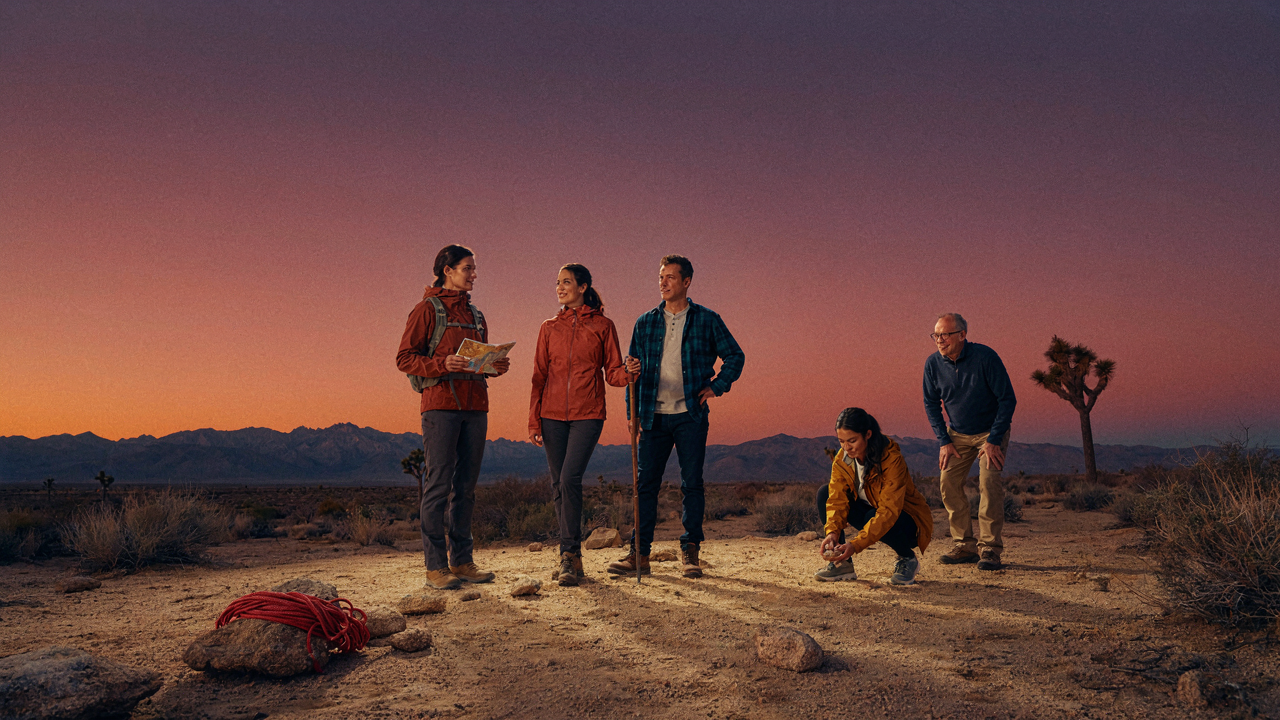
The Desert’s Unwritten Rules: A Primal Camping Guide
Your Mind Is The First Problem
You think desert camping is about gear and water. It’s not. You’re really asking whether you can handle being genuinely alone without distraction or ego scaffolding. The desert strips that away fast.
Psychology determines your choices before your brain consciously makes them. Heat stress, isolation, and sensory deprivation trigger predictable behavioral patterns: poor judgment, denial about resource consumption, and overconfidence. Respect the mechanism. Your body’s stress response will lie to you about how much water you’ve drunk, how hot it actually is, and how far away help truly sits. The Bedouin survived by accepting this vulnerability, not fighting it. Plan for the person you become under duress, not the person you are now at your desk.
The Landscape Speaks In Layers
Read topography like a military strategist reads terrain for defensive advantage. The mechanism is simple: water and shelter always occupy the same zones because life clusters where resources concentrate.
Look for dry washes first. They’re ancient highways carved by seasonal water flow, which means they mark underground aquifer paths. Check canyon floors and basin bottoms where runoff collects. Vegetation concentration signals moisture proximity even when you can’t see surface water. Rock formations that create shade and wind breaks appear on the leeward side of ridges. Your camp isn’t a random spot. It’s a calculated position where the land already solved the problem of exposure and hydration. Scout before dark. Set up before dusk. Never improvise shelter in the desert when daylight remains unused.
Beyond The Essentials: True Desert Camping Gear
Weight Discipline Wins Every Time
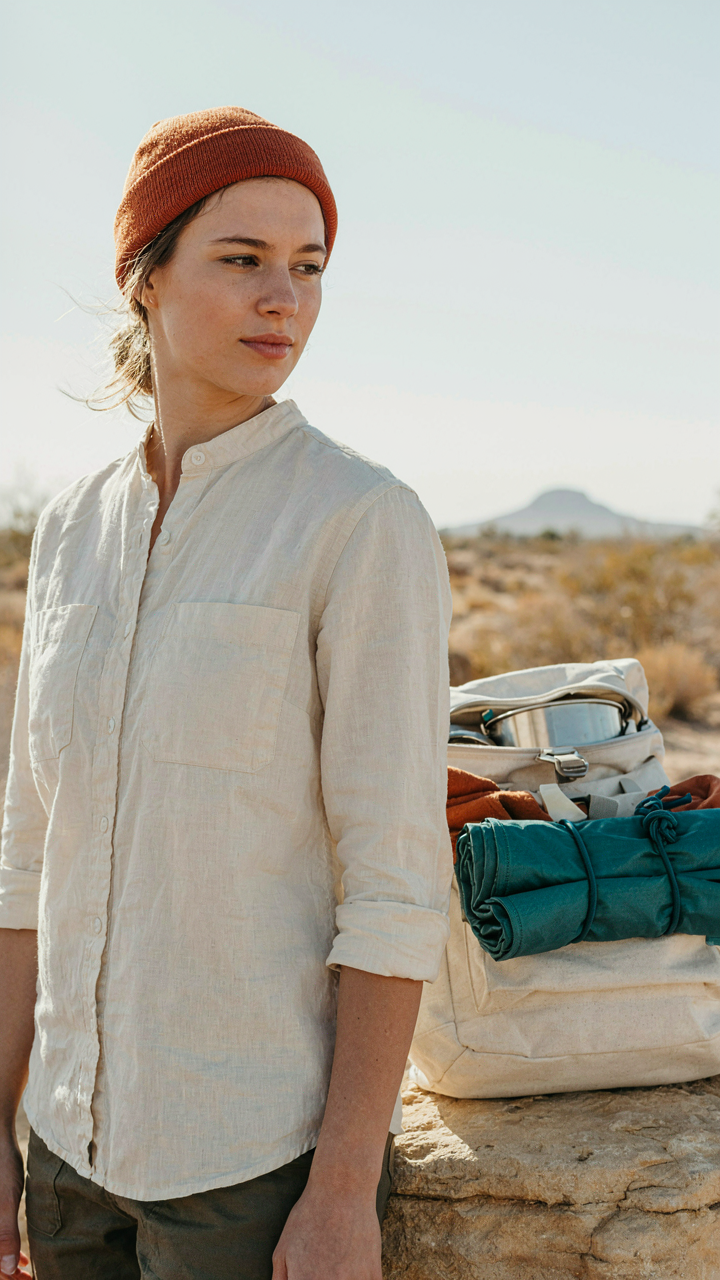
You want to feel prepared. That’s not preparation, that’s anxiety wearing a backpack. The real mechanism here is load capacity versus terrain difficulty. Every pound you carry reduces your decision speed when conditions shift. Most guides list gear. Nobody says what kills desert trips: overweight packs force you to camp where you collapse, not where conditions demand it.
The desert punishes dead weight instantly. Sand drains energy faster than other terrain. A ten-pound pack reduction means the difference between a controlled day and a forced march at dusk. Strip to the absolute minimum for your specific trip duration and water source spacing. Your gear list should shrink every time you camp, not grow.
Redundancy Through Overlap
Real multi-use design comes from military logistics, where a single tool failure in the field kills the mission. In desert camping, you’re applying that principle: one function per tool is luxury you can’t afford. Your knife becomes your fire starter, your repair tool, your food prep surface. Your tarp works as ground cover, wind break, and water collection. Your headlamp doubles as emergency signaling. Never carry a tool that does only one thing.
This isn’t about saving weight for aesthetics. Overlapping function means fewer items in your pack, faster item location under stress, and backup systems that already exist. A metal pot lid becomes a shovel. A carabiner secures gear and anchors rope. Test this before the desert. Know exactly which tools cover which roles so you never reach for something that isn’t there.
The Arid Zone Adaptive Protocol: Planning Your Trip
Desert Threats You Actually Need To Fear
You want this section because you’re afraid of dying in the desert and need someone to tell you which fears are rational. Desert danger isn’t random. It follows predictable patterns tied to one mechanism: your body loses heat and water faster than you can replace them, and the desert environment accelerates both processes simultaneously. Most people list generic threats. The real threat is dehydration compounded by sun exposure, which damages your cognitive function before you feel thirsty. Your brain shuts down gradually. You make worse decisions exactly when you need clarity most.
Identify your actual threats through terrain and season research before you arrive. Summer desert temperatures exceed 110°F regularly in the Southwest. Winter nights drop below freezing in the same locations. Wind amplifies water loss through evaporation on exposed skin. Navigation failure compounds everything because lost time means burned calories and depleted water reserves. Document what killed people in your specific desert region, then build redundancy around those failure points. Don’t plan for average conditions. Plan for the worst condition that occurs in that desert during your trip month.
Navigation Without Landmarks
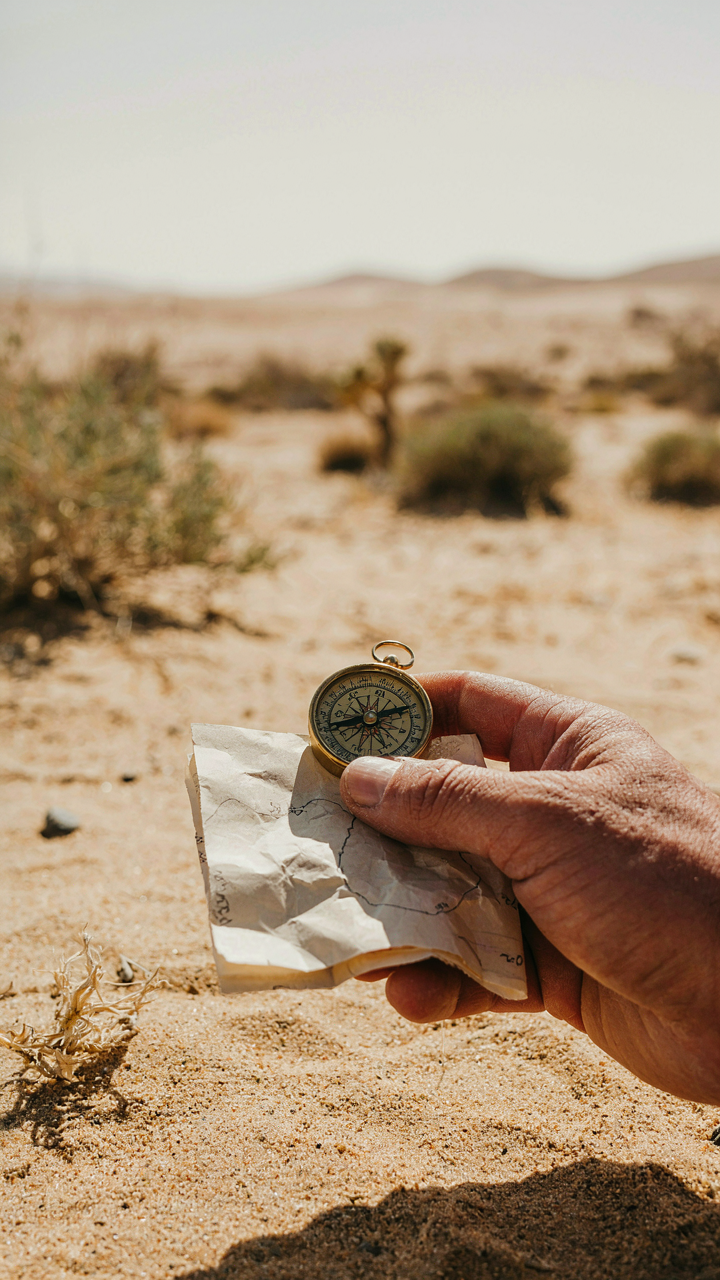
Most navigation advice assumes you can see mountains or distinctive peaks. Featureless desert terrain demands a different system. Military grid references apply here: you divide terrain into zones, then use bearings and distance to locate yourself within zones rather than relying on visual anchors. This transforms navigation from “find the obvious landmark” to “know your position mathematically.” Many campers skip this entirely and rely on GPS alone. That’s a vulnerability. GPS batteries die. Devices fail. Your backup must work without electronics.
Learn to navigate using shadow stick method for cardinal directions, natural sun position markers, and terrain contours that appear flat but shift gradually. Carry a compass with a baseplate, mark your route with bearing degrees before you leave camp, and verify your position every thirty minutes by cross-referencing your bearing against two known points. Establish waypoints at camp setup using GPS coordinates written on physical paper, not just stored in your phone. If electronics fail, paper coordinates and a compass keep you oriented while you navigate back to known territory.
The Desert Nomad’s Handbook: Shelter & Survival
What Animals Know That Campers Don’t
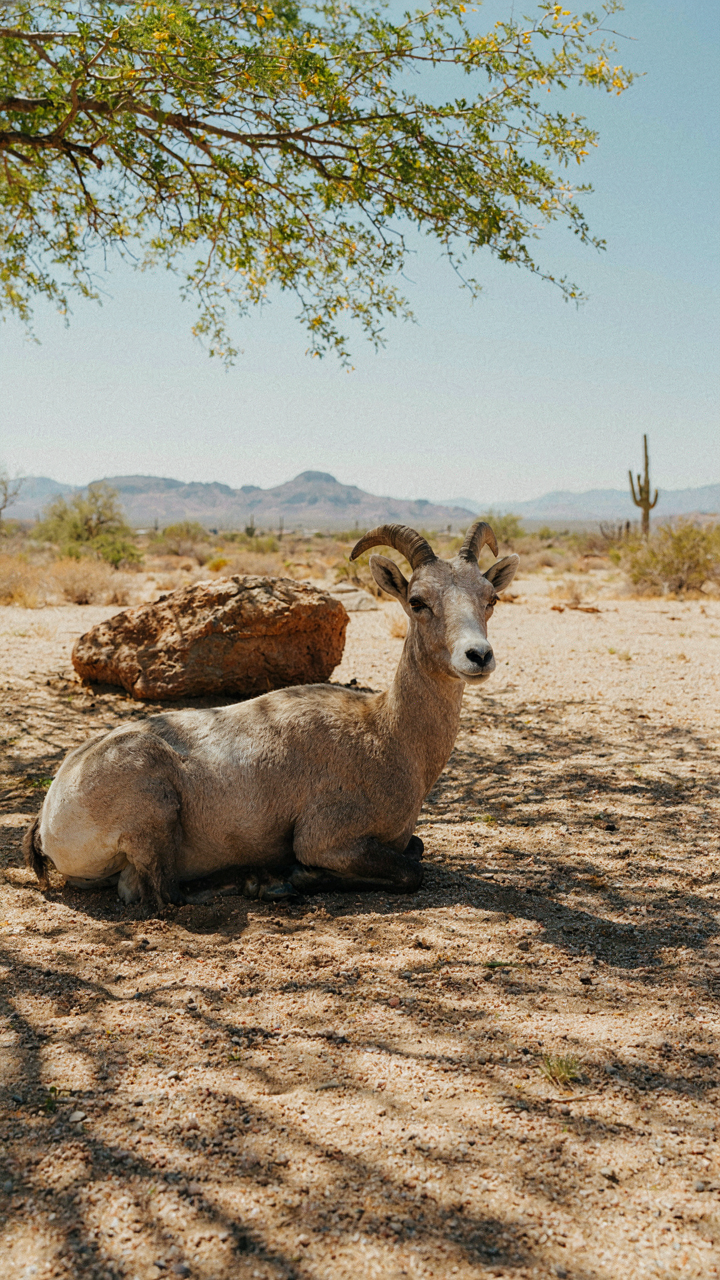
You want to look competent out here. That’s why you bought the tent. But the real mechanism is this: animals solve for wind and temperature through position, not just material. Biology teaches us about microhabitats—specific pockets where conditions differ from the surrounding environment. Desert mammals exploit these ruthlessly. A burrow isn’t just a hole; it’s a thermal buffer that stays 20-30 degrees cooler than surface sand. Study where pack rats nest, where coyotes den, where lizards vanish during heat hours. They’re reading the same topography you’re camping on. Arroyos collect cold air at night. Rock outcroppings block wind and radiate retained heat. The mistake most campers make is treating the desert as flat. It isn’t.
Natural windbreaks function as shields, not walls. A ridge 4-6 feet high blocks wind without creating dead zones that trap heat. Position your camp on the leeward side of terrain features, not in their shadow. Sandy soil on the north side of vegetation or rocks indicates prevailing wind direction—the wind has scoured away finer particles. Observe what grows where. Creosote bushes cluster in wind corridors; their density shows you air flow patterns before you pitch. Don’t fight the desert’s design. Use it.
Shade Engineering Without Gear
The common advice about tarps is incomplete. Yes, you need one. But shade isn’t about coverage alone—it’s about the air temperature differential between shaded and unshaded ground. A tarp hung at chest height blocks direct radiation but traps hot air underneath. A tarp elevated 8-10 feet above ground with open sides creates airflow that pulls convective heat away from your body. The difference is measurable: ground-level shade might reach 110 degrees while elevated shade maintains 95 degrees in the same location. Your body doesn’t care about air temperature as much as radiant heat load. This is the mechanism that changes everything about midday survival.
Without gear, work with excavation and vegetation. Dig 12-18 inches down in sandy soil and you hit cooler substrate that stays stable. Drape your tarp over the depression and secure the perimeter. This creates a microclimate 8-12 degrees cooler than surface level by combining shade with subsurface temperature. Natural vegetation like palo verde or smoke trees offers dappled shade that reduces direct radiation while allowing airflow. Position camp 20-30 feet downwind of dense vegetation to catch shade benefit without trapping stagnant heat. The goal is simple: reduce radiant input while maximizing air movement.
Hydration Hacking: Water Sourcing & Conservation
Extracting Water From Air And Ground
You want to believe you can survive on less water than you actually need. The real mechanism here is thermodynamics: temperature differential between air and surface creates condensation. Dew harvesting works because the desert floor cools rapidly at night while the air above retains heat longer. Lay absorbent cloth on the ground before sunset. The cloth collects moisture as temperature inverts. Wring it into a container at dawn. This yields roughly one liter per square meter of cloth on optimal nights, not enough to sustain you alone but enough to extend your reserve.
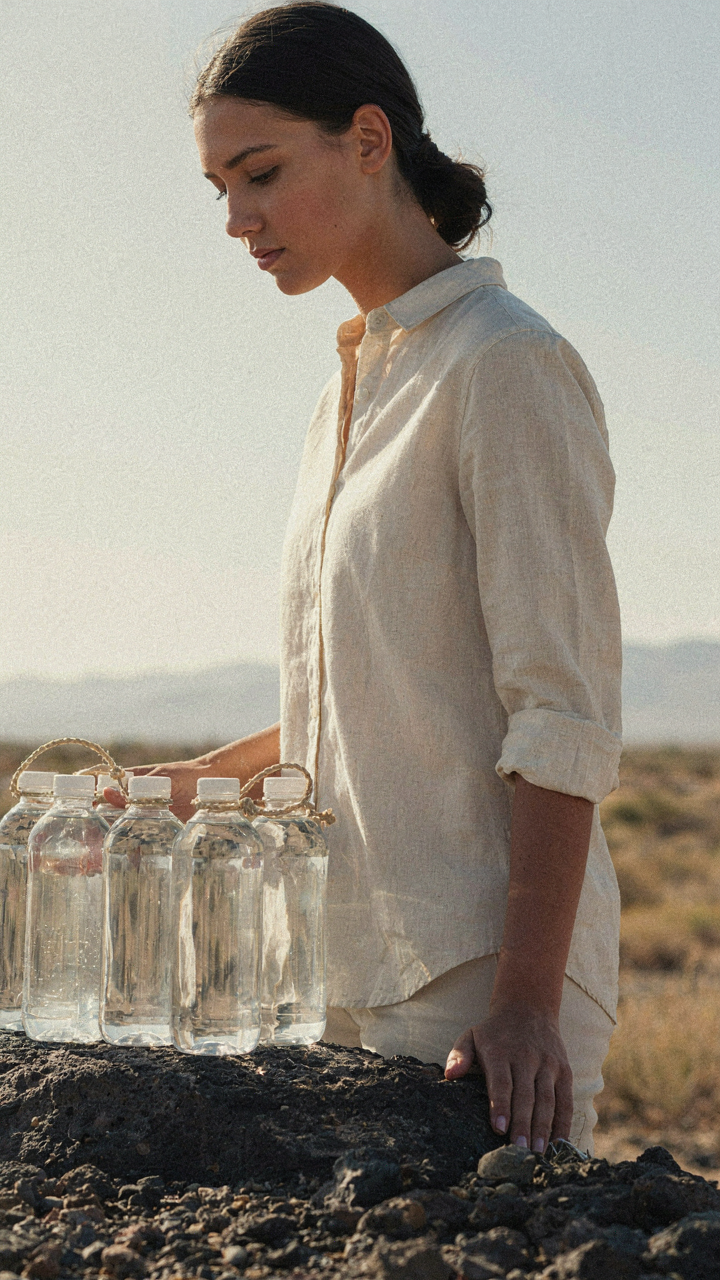
Primitive purification matters because desert water sources are contaminated, not because purity feels clean. Boiling for one minute kills pathogens. Solar disinfection requires clear bottles in direct sun for six hours minimum when UV radiation penetrates the water column. Dig shallow wells downslope from animal activity to access filtered groundwater. Sand naturally strains particles. Layer sand, gravel, and charcoal in containers for basic filtration before boiling or sun treatment. These methods don’t create pure water. They reduce pathogen load enough to prevent acute illness during a trip.
Operating Your Body As A Water System
Biology calls it metabolic water: the water your body produces when it breaks down carbohydrates and fat. Desert campers ignore this because it sounds theoretical. It isn’t. Your body generates roughly 200 milliliters of metabolic water daily through normal digestion. You reduce water loss by lowering sweat output, which means minimizing exertion during peak heat hours.
Activity between 10 AM and 4 PM doubles your water consumption. Move camp tasks to early morning or evening. Wear light, loose clothing to trap air gaps that slow evaporation. Cover your head and neck to reduce radiant heat absorption. Sleep during the day if your schedule allows. Eat calorie-dense food with high water content: dates, canned fruits, dried figs. These preserve longer than fresh alternatives and deliver both energy and metabolic water production. Reduce salt intake temporarily to lower osmotic pressure in your bloodstream, which decreases the kidneys’ demand to concentrate urine and conserve water.
Leave No Trace: Becoming Invisible In The Desert Environment
Desert Soil Regeneration Takes Decades
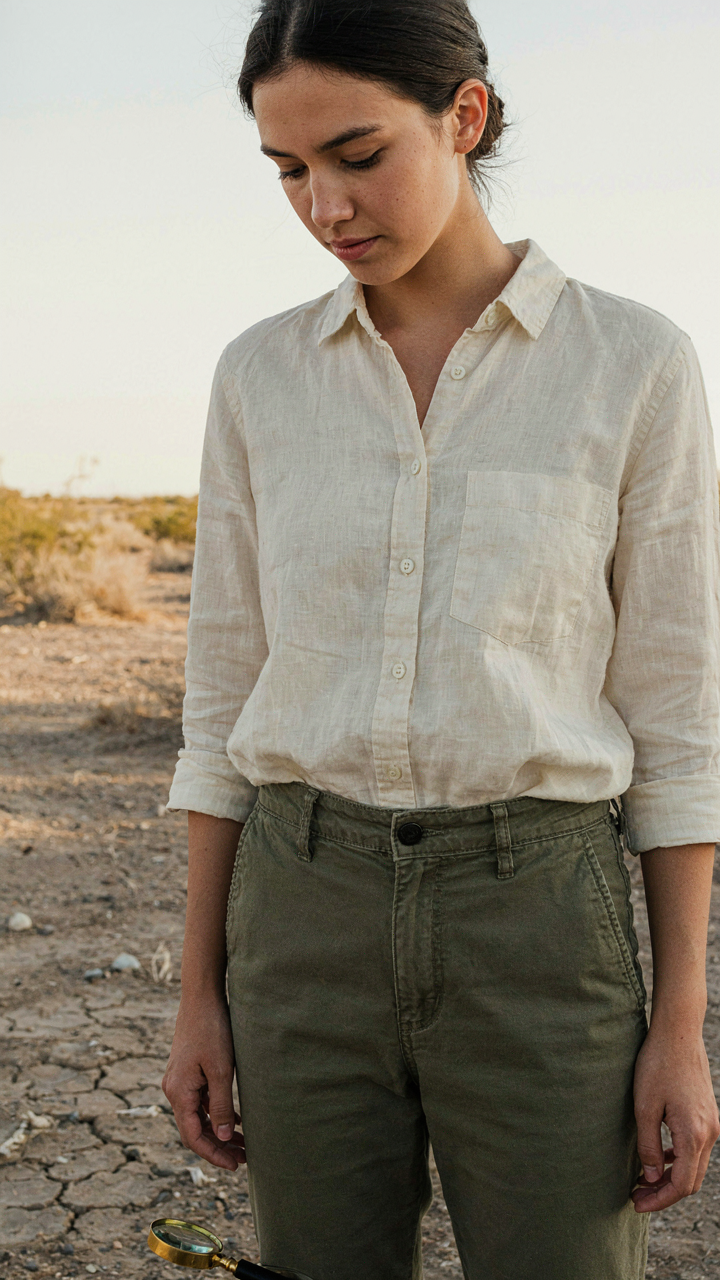
You want to believe your footprint doesn’t matter because admitting it does means changing how you camp. Here’s the mechanism: desert ecosystems operate on compressed timescales. A single boot print on cryptobiotic soil—the dark crust you see on the ground—can take ten to fifteen years to repair. That crust is living: it’s algae, fungi, and bacteria that stabilize sand, retain moisture, and prevent erosion. Stepping on it kills the organism.
The reason damage compounds is basic biology. Desert vegetation grows slowly because water is scarce. A creosote bush might take five years to recover from trampling. When you establish a social trail by walking the same route repeatedly, you’re not just compacting soil, you’re eliminating the plants that hold it together. Once the surface breaks, wind and rare but intense rain expose deeper layers and accelerate degradation. Stay on established trails and hardpan surfaces. Avoid vegetation clusters entirely.
Pack Out What You Pack In, Literally
The standard advice here is incomplete. Yes, remove trash. But the real problem is what you don’t see leaving. Uneaten food scraps attract wildlife and create dependency patterns that destabilize populations. Gray water from washing dishes doesn’t vanish—it pools in an arid environment where microbial decomposition moves slowly, creating a bacteria concentration that doesn’t belong. Biodegradable soap is still a chemical load the desert can’t process quickly.
Treat waste removal as a weight calculation, not a moral gesture. If you pack it in at five pounds, you pack it out at five pounds, or heavier if it absorbed moisture. Use airtight containers for all organic matter. Dispose of human waste in catholes at least two hundred feet from water sources, then pack the used toilet paper in sealed bags. The mechanism is simple: the desert has no capacity to handle modern waste volumes at the rate we deposit them.
Emergency Scenarios: When The Desert Fights Back
Getting Found Before It’s Too Late
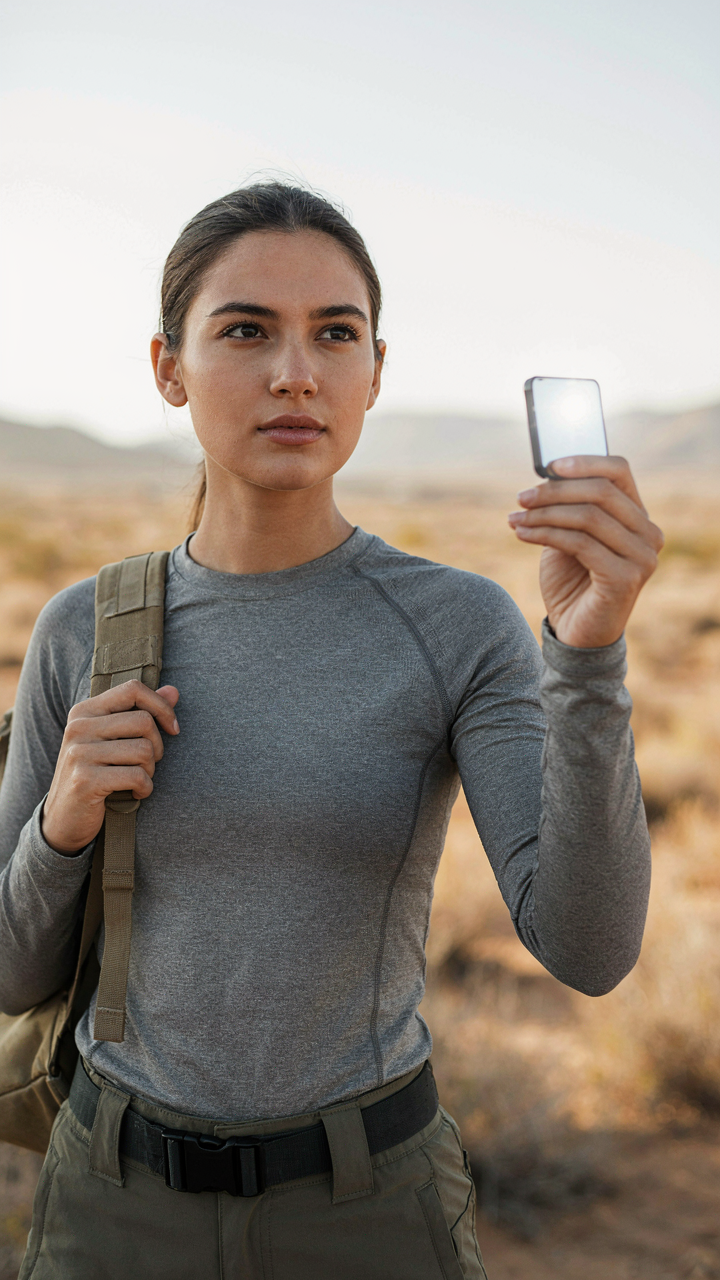
You want to believe rescue will arrive fast. It won’t. The mechanism that kills people in deserts isn’t exposure or dehydration alone—it’s invisibility. You’re a dot in an infinite landscape. Signal systems work because they break that invisibility by creating contrast: light, sound, or movement that stands out against the monotony. Three is the universal distress number across all search protocols, military or civilian. Three fires, three whistle blasts, three mirror flashes. Your job is making yourself detectable to searchers who operate under specific search patterns and altitude limits.
A signal mirror works in daylight because it creates a flash visible from 10 miles away in clear conditions—farther than any fire. Angle it so sunlight bounces toward aircraft or distant ground searchers. A whistle carries sound without depleting your voice or water reserves; three blasts every few minutes establishes rhythm that human ears recognize as intentional. Ground-to-air signals carved into visible terrain—large X or SOS using rocks—take time but work when aircraft pass overhead. Fire works at night if you have fuel, but signal fires demand placement on high ground and constant feeding. The priority order: mirror during day, fire at night, whistle when you hear search activity. Stay in place. Moving disperses rescuers’ search effort and burns water.
Wounds The Desert Weaponizes
Most first aid advice ignores how the desert corrupts standard injury response. The core problem: the desert’s heat, aridity, and contamination turn minor wounds into life threats fast. Infection doesn’t develop gradually here—it accelerates. A blister from friction becomes a portal for bacteria in sand and sweat. A small cut that would heal fine at sea level can necrotize within hours under direct sun and heat stress.
- Heat exhaustion in wound care: Don’t apply pressure bandages that trap body heat. Use loose cloth that allows evaporation while keeping contamination out. Tight bandaging causes localized heat buildup that accelerates infection and tissue damage.
- Sand granulation: Every grain that contacts an open wound is a potential infection vector. Rinse wounds with clean water only if available, then cover immediately with sterile material. Don’t leave wounds exposed to air-dry in the desert.
- Blister prevention and rupture: Drain blisters under skin without removing the skin layer itself. The skin acts as a natural sterile barrier. Puncture with a clean needle, drain fluid, apply antibiotic ointment, cover with blister tape or moleskin.
- Snake and scorpion bites: Immobilize the limb, remove constrictive items like rings, keep the bitten area below heart level. Most desert bites are dry or low-venom. Stay calm to slow venom circulation. Pressure immobilization bandaging—wrap firmly from bite site upward—delays systemic effects.
- Heat cramps and hyponatremia: Cramping means electrolyte loss, not just water loss. Drink small amounts frequently rather than large gulps. If you have salt or electrolyte powder, use it. Pure water alone during heat stress can trigger dangerous sodium imbalance.
The desert doesn’t give you time to improvise. Your first aid kit must include sterile gauze, antibiotic ointment, electrolyte powder, elastic bandages, tweezers for spine and cactus needle removal, and a pressure immobilization bandage for bites. Keep it accessible, not buried. Check it before every trip. Infection prevention beats treatment because the desert offers no medical infrastructure—you manage it alone or you deteriorate fast.
Beyond Instagram: The True Reward Of Desert Immersion

Comfort Is The Enemy Of Adaptation
You want to feel like you’ve “found yourself” without actually being uncomfortable. That’s the real reason you’re reading this. Discomfort is where adaptation happens. Your nervous system doesn’t evolve in climate control. Three nights in the desert without distraction forces your body to recalibrate its baseline. You stop needing constant input. Your anxiety doesn’t disappear—it gets redirected toward real threats instead of phantom ones. That shift is permanent if you let it be.
The mechanism is physiological, not mystical. Exposure to genuine stressors (temperature swings, silence, minimal food) triggers your parasympathetic nervous system to work harder during recovery periods. You sleep deeper in the desert than you do at home because your body is actually tired, not just bored. When you return, that nervous system remains more responsive. You’ve literally trained yourself to handle friction. The mental fortitude isn’t built by suffering—it’s built by surviving something you chose and then walking away intact.
Boredom Rewires Your Brain Faster Than Any Practice
Forget meditation apps. The desert has no entertainment algorithm. Boredom on demand is the rarest commodity now. Your brain, starved of input, starts generating its own content. This isn’t poetic—it’s neurology. When external stimulation drops, your default mode network activates. You think deeper because you have to. Problems you’ve been avoiding suddenly become solvable because there’s nothing else to do.
This is where genuine decision-making returns. You sit with discomfort long enough to hear your own thoughts without the noise filter. You realize most of your day is noise management, not actual living. The desert strips that away in seventy-two hours. When you rebuild your life after that experience, you’re less tolerant of meaningless busywork. You’ve tasted what clarity feels like. That taste doesn’t fade. Bring a journal. Write what surfaces. That’s your baseline for real thinking.
The Desert Reveals Not Your Preparation, But Your True Self-reliance

Most people romanticize the desert because they’ve never sat alone at night listening to nothing but wind and their own breathing. The desert doesn’t care about your gear checklist or your research. It strips away the noise and forces you to trust your own judgment. This is the real education. Stop planning the perfect trip and book a weekend. Your instincts will teach you more than any guide ever could.