

The Myth Of The “Perfect” Hiking Checklist

Weight Versus Staying Alive
You want the checklist because it makes you feel prepared, like you’ve solved the problem before you’ve even started. But that’s not how risk works. The real mechanism is load optimization, borrowed from physics: every ounce you carry trades against your ability to move, recover, and respond to actual emergencies. A 40-pound pack doesn’t make you safer than a 25-pound pack. It makes you slower, tired, and more likely to skip rest days when your body needs them.
The consensus says bring redundancy and backup systems. That’s incomplete advice. What actually matters is identifying which failures end your trip versus which ones just annoy you. A failed water filter is annoying. A torn ACL from overloading your knees for 1,500 miles is catastrophic. Your pack weight determines which category your mistakes fall into. Stop chasing completeness. Start eliminating what doesn’t prevent genuine disaster.
Essentials First, Then Everything Else

Gear marketing inverts your priorities. Companies sell you the exotic before you understand the mundane. Shelter, water, food, and navigation are non-negotiable. Everything else is optional until you’ve proven you need it. The test is simple: would missing this item force you off the trail? If not, question whether it earns its weight.
Most hikers pack rain gear they never use, repair kits for equipment that doesn’t break, and comfort items that feel necessary until mile 300 when you stop caring about comfort. Your actual cross country trip will reveal what matters. Document what you use and what you carry. The gap between those two lists is pure dead weight. On your next resupply, ruthlessly cut items from the second list. This protocol forces you to choose based on evidence, not fear.

Your Itinerary Is A Lie: The Adaptive Trekking Protocol

When Plans Become Anchors
You want your itinerary locked down because it feels like control. It isn’t. The moment you commit a detailed day-by-day schedule to paper, you’ve surrendered your actual power: the ability to respond to reality as it unfolds. Most hikers treat their itinerary as law. They hike injured because the plan says mile 22 today. They push through bad weather because they’re “on schedule.” The mechanism is simple: a fixed plan removes decision-making from the trail and transfers it to a desk. That’s backwards.
Real flexibility isn’t improvisation. It’s building margin into your structure so you can absorb shocks without collapsing. You need checkpoints, not deadlines. Think of your itinerary as a series of target zones spread across weeks, not a rigid sequence of daily assignments. This gives you three things: enough structure to resupply and communicate with people, enough slack to adapt without panic, and the permission to listen to your body and conditions instead of fighting them.
When Weather Runs Your Route
Military strategists call this the OODA loop: Observe, Orient, Decide, Act. On a cross country hike, you’re constantly cycling through this loop, and your itinerary either supports it or blocks it. Most people don’t adjust. They’ve seen the five-day forecast once and locked their route. Then they hit a storm and either power through damage or fall behind. Neither is acceptable.
The real protocol is this: every two to three days, you reassess weather, physical status, and trail conditions. You then adjust one of three variables: your daily mileage, your route, or your resupply stops. You don’t need to stay rigid about which route you take through a region. You don’t need to hit every marked waypoint. You do need to know your resupply locations so you can flex everything else around them. Build your itinerary with flexible segments between fixed supply points. Move mileage around, not the supply chain.
The Real Cost Of Saving Money On Gear

Durability Versus Cheap Disposables
You’re hoping budget gear will work because admitting it won’t means spending money you’d rather keep. Here’s the mechanism: cheap gear fails at predictable intervals, turning your hike into a logistics problem. Economics calls this the concept of elasticity, but applied to gear failure rates—the cheaper the item, the more times you replace it on trail. A fifty-dollar tent that tears after 200 miles forces you to resupply, backtrack, or abandon your route. A two-hundred-dollar tent lasts 2,000 miles. The math isn’t subtle.
The failure point of budget gear compounds. Your pack shoulder strap tears on day eight. Your sleeping bag loses loft. Your boots separate at the sole. Each failure interrupts momentum and creates decision friction. You stop hiking to problem-solve instead of moving forward. On a three-month cross country hike, that friction multiplies into weeks of lost time. Quality gear fails later, predictably, or not at all. That’s not a luxury. That’s a strategy.
Long Term Value Of Quality Investment
This isn’t about status. Quality gear holds resale value because it performs consistently across different conditions and user error. A 3000-mile-rated backpack from a reputable manufacturer doesn’t degrade to half-function at 1500 miles. It maintains load distribution, weatherproofing, and strap integrity. When you finish your hike, you sell it for 50-60 percent of what you paid. Budget gear has no secondary market because everyone knows it’s compromised.
Build your gear list around items that earn their cost through reliable performance, not ones you’re gambling on. Your shelter, pack, boots, and sleep system should be buys you’d make twice. The remaining items can be moderate investments. When you’re 1,500 miles from home and your shelter is your survival tool, the difference between adequate and reliable becomes your entire decision tree. Buy the gear that removes doubt from that equation.
Beyond The Camping Checklist: The “Base Camp” Psychology

Solitude Isn’t Romantic, It’s Neurological
You want to believe you’re built for this. That’s the fear talking. Most people romanticize solo hiking then collapse mentally by day four because they never trained their brain to handle the absence of stimulus and feedback. The neuroscience is straightforward: your mind generates anxiety when it lacks external input to process. Silence amplifies internal noise.
The mechanism is habituation through controlled exposure. Start with overnight solo trips three months before your cross country hike. Not weekends at a cabin with WiFi. Actual nights alone in a tent where boredom becomes the primary condition. Your nervous system needs to learn that understimulation isn’t danger. Each exposure raises your threshold. By month two, add 48-hour trips. By month three, a full week. The goal is training your brain to generate its own regulation, not waiting for rescue from discomfort.
Discomfort Stops Being An Emergency When You Schedule It
The standard advice says “prepare mentally for hard days.” That’s useless. What actually works is the inverse: schedule specific discomfort phases and treat them as non-negotiable data collection, not suffering to be endured. This flips your psychological frame from victim to researcher.
Build three- to five-day training hikes into your prep with intentional constraints. One hike at maximum load weight with minimal rest days. Another in harsh weather you’d normally avoid. A third with a caloric deficit to simulate supply chain delays. Document what happens physiologically and mentally during each. Your nervous system learns these states are survivable because you’ve chosen them before. When the real hardship hits during your trip, your body recognizes the pattern. Uncertainty becomes predictable. That single shift erases most panic responses and turns discomfort into a manageable variable you’ve already quantified.
Training For The Trail: More Than Just Miles

Build Strength Where It Actually Matters
You want to believe training is mostly running. It’s not. You’re afraid of looking unprepared on the trail, so you gravitate toward the visible metric: mileage. The real mechanism is load bearing under fatigue. Your body needs to move weight across uneven terrain for weeks straight without breaking down. This requires targeted strength in hip stabilizers, glutes, core, and ankles, not just aerobic capacity. Thru-hikers who blow out knees typically have weak glutes and poor ankle stability, not weak hearts.
Most training plans skip this. Build eccentric strength through loaded hiking on hills, single-leg work, and resistance training two to three times weekly for eight weeks before your trip. Your quads need to decelerate your body going downhill. Your glutes need to power you uphill. Your ankles need to stabilize on rocks. Hit these patterns directly. Don’t just run flat ground and hope adaptation happens.
Toughness Is Built In Discomfort, Not Removed From It
Pain tolerance in hiking isn’t about being tough. It’s about becoming desensitized to specific discomforts through repeated exposure, a concept borrowed from neurobiology called habituation. Your nervous system learns to stop treating blister pain, foot soreness, and muscle fatigue as emergencies. You can’t phone this in. Most people train in ideal conditions: dry trails, perfect weather, rested legs. Then they hit the trail and their nervous system treats day three soreness like a crisis.
Train in conditions that suck. Hike with a loaded pack in heat. Go on back-to-back long days when your legs are already tired. Do a shakedown trip over a weekend where you sleep poorly and deal with cold. Your body learns the stimulus is survivable. When mile 600 hits and your feet hurt and you’re tired, your brain doesn’t panic because it’s already integrated that state as normal. The training isn’t preparation. It’s inoculation.
Nutrition For The Long Haul: Fueling, Not Feasting
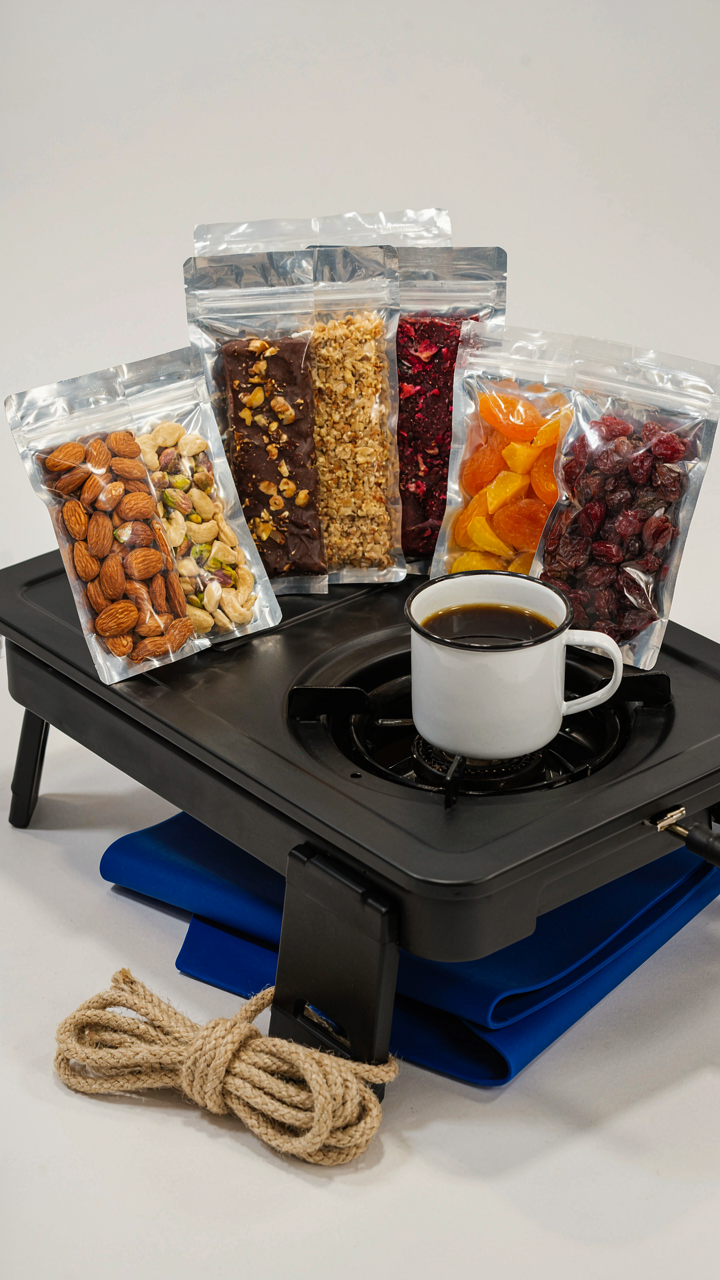
Calorie Density And Nutrient Timing
You want to believe food choice doesn’t matter much because the real work happens in your legs. That’s denial. Your body is a machine with fuel requirements, and the mechanism is simple: calorie density determines how much weight you carry for how long you eat.
Think of nutrition like supply chain logistics. In logistics, you measure throughput per unit of input. On the trail, calories per ounce is your throughput. Fats deliver nine calories per gram. Carbs and protein deliver four. That math is fixed. A cross country hike means eating roughly 5,000 to 6,000 calories daily for months. That translates to carrying 2 to 3 pounds of food per day if you source poorly, or 1.5 pounds if you don’t. Over 150 days, poor choices mean carrying an extra 225 pounds of redundant weight. That’s the mechanism.
Most thru-hikers eat the wrong foods at the wrong times because they follow meal-timing advice built for sedentary life. Six small meals spaced evenly won’t work. Your body burns fuel unevenly throughout a hiking day. You need dense calories early morning before the big climb. You need simple carbs during hour four or five when glycogen tanks. You need fat and protein at camp when your body repairs muscle. The timing shifts the workload away from your digestive system and toward muscular recovery. Pack peanut butter, nuts, and oil-heavy snacks for morning miles. Bring rice and pasta for evening refueling. That’s not preference. That’s mechanics.
Hydration Strategies For Varied Climates
Water is not a one-size solution, and thinking it is costs you performance on day forty when you’re in high desert or coastal wind. Climate determines your sweat rate, which determines your water needs, which determines your carry weight and resupply strategy.
In humid, moderate climates like the Appalachian Trail, you lose water through sweat and respiration at a steady baseline. You can filter from creeks and springs frequently, so you carry one to two liters between sources. In high desert or alpine terrain, the dry air and intense sun accelerate evaporation from your skin and lungs. You lose water faster than you realize because sweat evaporates before you feel wet. Carry three to four liters and plan resupply points around actual water sources, not assumptions. In coastal ranges with wind, the combination of sun exposure and air movement dries you out faster than flat terrain. Mountain passes require you to carry water over longer stretches between sources. Scout your route beforehand and mark reliable water on your map. Stop drinking water reactively when thirsty. Drink proactively every thirty to forty minutes during high exertion, before your thirst signals dehydration. Your performance on mile twenty depends on hydration decisions made on mile two.
The False Comfort Of Digital Navigation
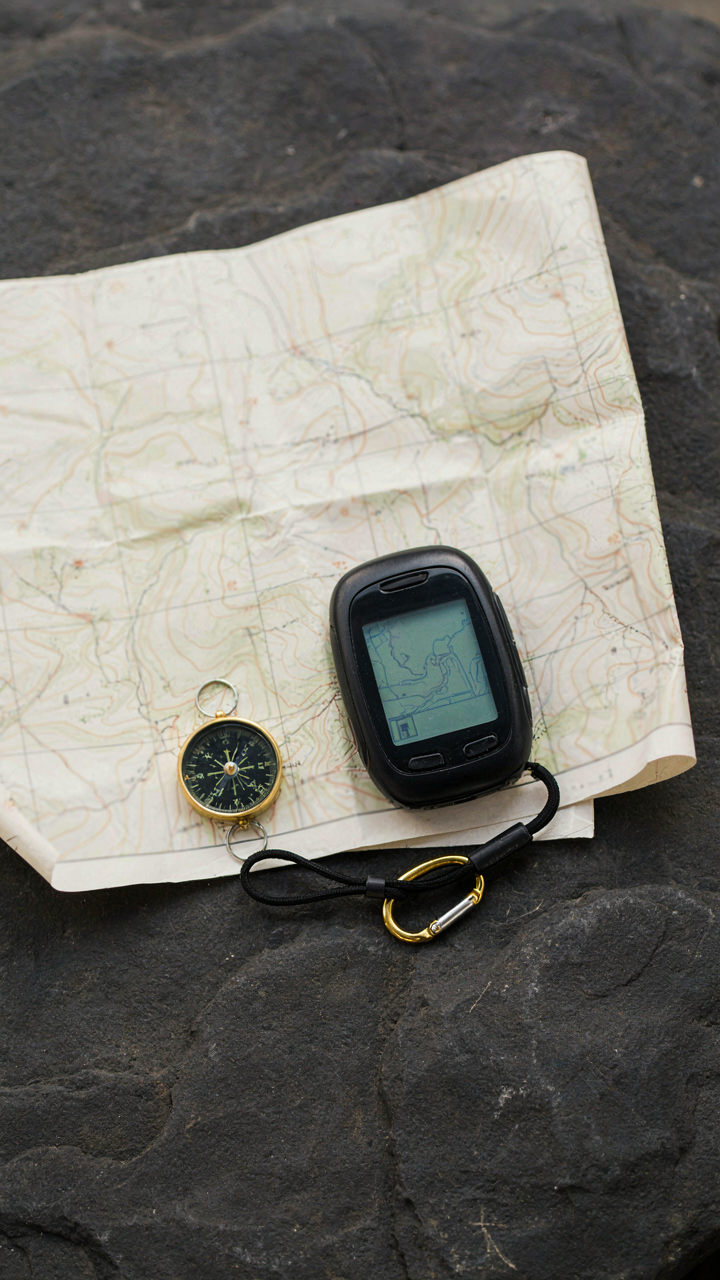
Map And Compass Mastery
You want the confidence that comes from not being dependent on batteries. That’s not strategy. That’s denial dressed as preparedness. The mechanism is simple: analog navigation forces you to understand terrain before you walk it, not react to it after.
Map reading is a skill that atrophies without use. Topographic contours, declination adjustment, triangulation from known peaks—these aren’t quaint backup tactics. They’re the baseline. On a cross country hike, you’ll navigate through sections with no trails, no cell service, no GPS accuracy. A paper map and compass won’t fail the way satellites do. Carry them on every day, not just emergency days.
Layered Redundancy Across Tools
Using one navigation system is incompetence dressed as efficiency. Redundancy in navigation operates like defensive depth in military strategy: each layer fails independently, and your plan holds if one breaks. GPS fails. Maps tear. Compasses malfunction. None of this matters if you stack them correctly.
Start with paper maps of your entire route, marked with major waypoints and bailout locations. GPS serves as your speed tool—it logs your position and tells you distance traveled. A basic compass handles declination correction and bearing verification when GPS drifts or dies. On a cross country hike, you navigate with all three in concert, not in sequence. Cross check GPS against the map every morning. Verify map orientation with compass every camp. This protocol catches errors before they compound into days lost.
Real Wilderness First Aid: Beyond Band Aids

The Injuries Nobody Talks About
You want to feel prepared so you don’t have to think about dying alone on a trail. Here’s the mechanism: most hikers die not from dramatic injuries but from infection, dehydration cascading into shock, and poor decision-making under pain. Standard first aid training teaches you to treat symptoms, not prevent the conditions that kill you in the backcountry.
The real work happens before the injury occurs. You need a system for wound management that accounts for the fact that you cannot reach a hospital. This means understanding infection progression, knowing your evacuation timeline, and carrying tools designed for extended care, not just the first hour. Blister management separates successful thru-hikers from those who quit by day five.
- Blisters: Drain with a sterile needle, apply antibiotic ointment, cover with moleskin or athletic tape cut to size. Prevention beats treatment: moisture-wicking socks and proper boot fit eliminate ninety percent of blister problems.
- Sprains and strains: Wrap with elastic bandage using figure-eight technique for ankles. Ibuprofen reduces swelling faster than ice packs you cannot carry. Walking becomes possible within two to three days if immobilized correctly.
- Cuts and abrasions: Flush with clean water, apply antibiotic ointment, bandage to prevent dirt entry. On a month-long hike, a small cut ignored turns into cellulitis that forces evacuation.
- Tendonitis: Rest the affected limb by shifting weight to your other leg for a day. Taping the joint maintains stability without full immobilization, letting you continue at reduced pace.
- Severe dehydration: Force electrolytes and water in small amounts every fifteen minutes. Dizziness and confusion mean your kidneys are already compromised. Stop hiking immediately and camp until symptoms clear.
Pack a blister kit before you pack anything else. This is not dramatic, but blisters end more cross country hikes than any other injury. Moleskin, antibiotic ointment, and a sterile needle weigh less than an ounce and save your trip.
Evacuation Triggers And Protocol
The hardest part of wilderness first aid is knowing when to self-treat and when to call for help. Think like military triage: your decision criteria must be binary, not hopeful. If evacuation is possible but delayed, infection spreads faster than you can manage it with field medicine.
Set evacuation triggers before you start hiking. Uncontrolled bleeding, severe allergic reaction, suspected fracture of major bones, altered mental status, or uncontrolled pain all trigger immediate evacuation protocol. That means stopping your hike, marking your location precisely, and using your communication device if you have one. Most cross country routes pass within cell range of towns within two days, so walking out under your own power is often faster than waiting for rescue. Document your location using GPS coordinates, not descriptions. Tell someone your planned route and expected check-in dates. If you miss a check-in by more than one day, they contact authorities with exact coordinates.
Carry pain medication beyond ibuprofen if your route takes you three or more days from road access. Acetaminophen and ibuprofen combined address different pain pathways. Prescription-strength NSAIDs require a doctor but cover injuries that prevent weight-bearing. Know the difference between managing pain and masking a serious injury. Pain that worsens despite medication and rest signals tissue damage requiring professional evaluation, which means evacuation. Your job in the backcountry is stabilization and prevention of deterioration, not diagnosis.
The Post Hike Delusion: What Comes Next

Translating Trail Lessons Into Real Life
You want to believe the hike changed you permanently, that you’ll keep the discipline and clarity forever. The mechanism that kills this: without deliberate structure, your brain defaults to the easiest reward pathway available. Psychology calls this regression to baseline. The trail forced constraints that don’t exist at home. Remove the constraints, and you remove the behavior. Most people don’t rebuild the structure. They just feel guilty about it.
The real work starts after you land. Write down three specific behaviors from the trail that generated the clarity you felt, then map each one to a friction point in your current life. Not “I’ll keep hiking” but “I’ll walk before email” or “I’ll eat lunch without my phone.” The specificity matters because vague resolutions die in the first week.
The Trap Of Chasing The Feeling Again
Every hiker knows this trap: the hike was profound, so the next one will be better, or longer, or harder. You’re chasing a diminishing return. Neuroscience calls this hedonic adaptation. Your nervous system doesn’t stay shocked. It recalibrates. The feeling you want from a second hike is already baked into a smaller dose the next time. Most people miss this and just escalate the mileage, hoping volume replaces novelty. It doesn’t.
The utility of the hike wasn’t the distance or the destination. It was the friction it created between you and your default patterns. That friction is what clarity rides on. Build smaller frictions into your baseline life instead of planning to escape it again. Document three specific decisions you made on the trail differently than you would at home, then embed one into your weekly schedule for the next four weeks.
The Real Obstacle Isn’t The Trail; It’s Your Inability To Trust Your Own Hard Won Competence

Trust Your Feet Before Your Phone
You want permission. That’s the real reason you’re reading this section. Permission means you’re not responsible if things go wrong. But here’s the mechanism: decision fatigue compounds when you outsource choices you’ve already proven you can make. Every time you second-guess a route decision or water source judgment you’ve verified through experience, you burn mental energy that keeps you moving forward on the actual trail.
The common advice says gather more data, consult more sources, cross-reference guidebooks. Wrong. You’ve already hiked segments. You’ve already read weather patterns. You’ve already managed water scarcity on smaller trips. The competence exists. What you’re actually doing is using external validation as a permission structure because uncertainty feels safer than accountability. On a cross country hike, that hesitation costs miles, time, and momentum. Your feet have collected real information. Trust the data your body already holds.
Stop Waiting For The Expert Consensus
Nobody who hasn’t walked the exact section you’re walking at the exact time you’re walking it knows better than you. Consensus advice flattens variables. It strips away the specific weather window you’re in, the specific fitness you’ve built, the specific water availability this year versus last year. You’ve done months of preparation. You’ve built calluses, tested gear, proven your pacing. An online forum consensus cannot replace that.
The protocol is direct: make your call, document the reasoning, execute it, and evaluate the outcome afterward. This creates a feedback loop instead of a permission loop. If the route works, you trust yourself more next time. If it fails, you have actual data to improve, not secondhand regret. Cross country hiking demands this. The trail won’t wait for expert validation, and neither should you.
The Real Obstacle Isn’t The Trail; It’s Your Inability To Trust Your Own Hard-won Competence

You’ll plan everything perfectly and still doubt yourself at mile 800. That’s the real trap. Your body knows the rhythm. Your mind knows the route. But you’ll second-guess both because uncertainty feels safer than commitment. Stop researching and start walking today. Pick one section, hike it, and let your competence build on itself. You don’t need permission from another blog post to trust what you already know.