
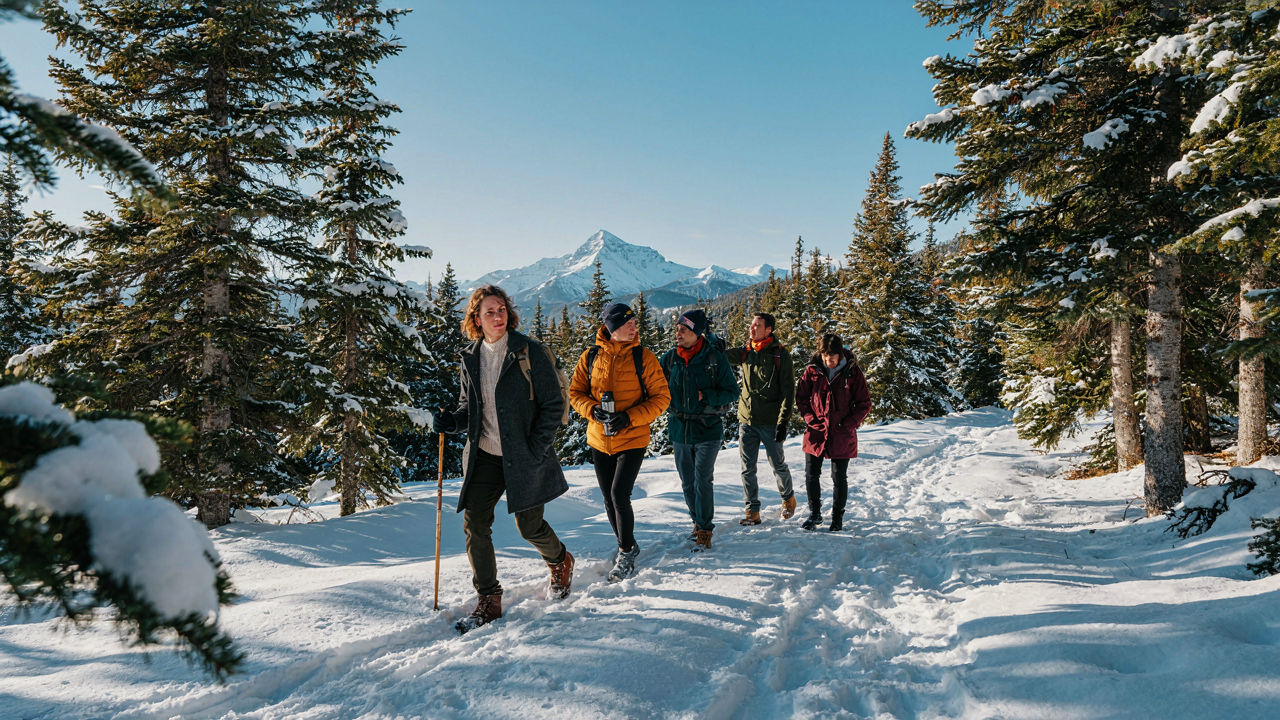
The Tall Man’s Thermal Challenge: Why Standard Layers Fail Your Frame
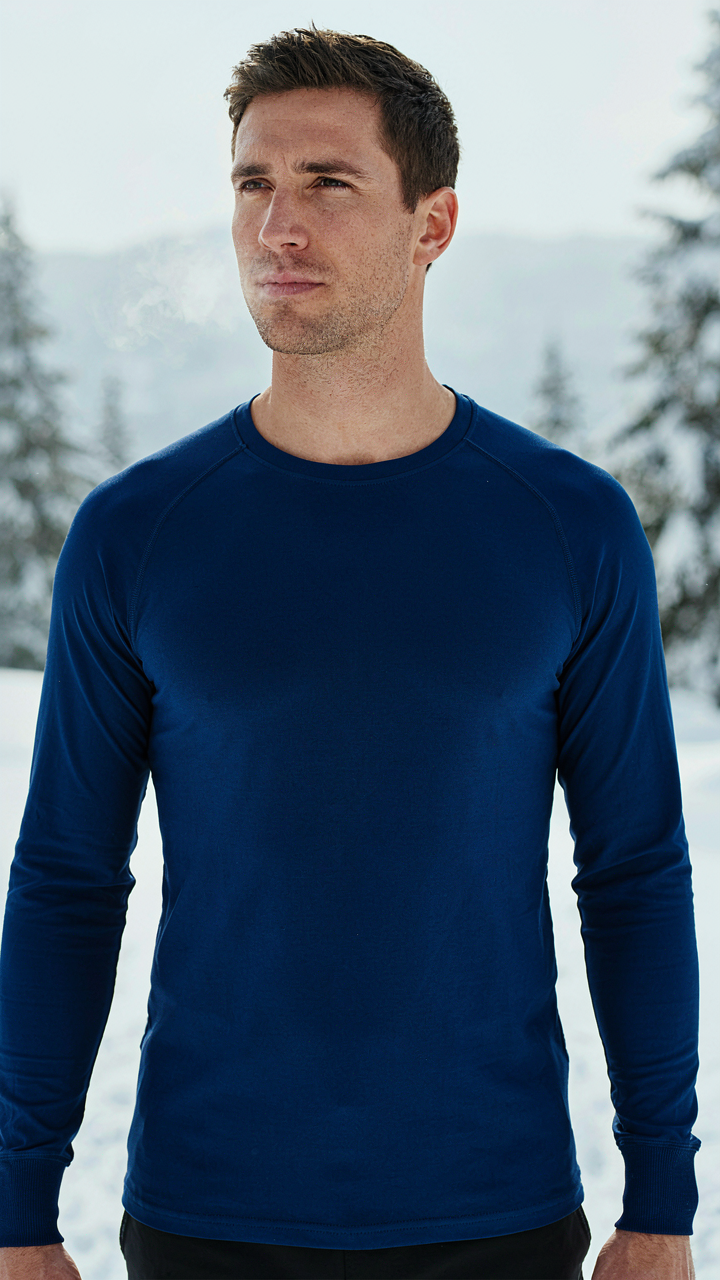
More Skin In The Game
You’re worried standard gear won’t fit right and you’ll freeze looking stupid. Here’s the physics: taller frames have more surface area relative to their core volume, which means heat radiates away faster. A six-foot-four man loses thermal energy through exposed wrists, ankles, and neck gaps that a five-foot-ten hiker never notices. The math is unavoidable. More perimeter equals more heat escape routes.
This isn’t about being bigger overall. It’s about proportions. Standard midweight layers are cut for average male dimensions. Sleeves end two inches short on tall limbs. Torso length leaves gaps at the waist. Those gaps aren’t style problems. They’re convection highways where cold air strips heat directly off your skin. Conventional advice ignores this entirely because most gear designers build for the statistical middle.
Wind Finds The Gaps

Convection wins in cold weather, and tall men present more edge cases for it to exploit. Your extended limbs spend more time exposed to wind. When you hike, movement creates air flow around your body. That moving air accelerates heat loss through your uncovered wrists, the space between jacket hem and pant waist, and your ankles above the boot collar. These gaps compound in tall frames.
The solution isn’t layering more aggressively. Wind finds gaps regardless of layer count. You need garments sized to your actual dimensions so baselayer sleeves reach your wrist bones and jacket hemlines overlap your hip structure. When fit is correct, convection loses its pathways. Measure your torso length and inseam, then shop accordingly instead of buying standard tall sizes that still miss the mark on individual proportions.

The “Kinetic Fit” Protocol: Movement Without Compromise (Hiking Outfit Men)
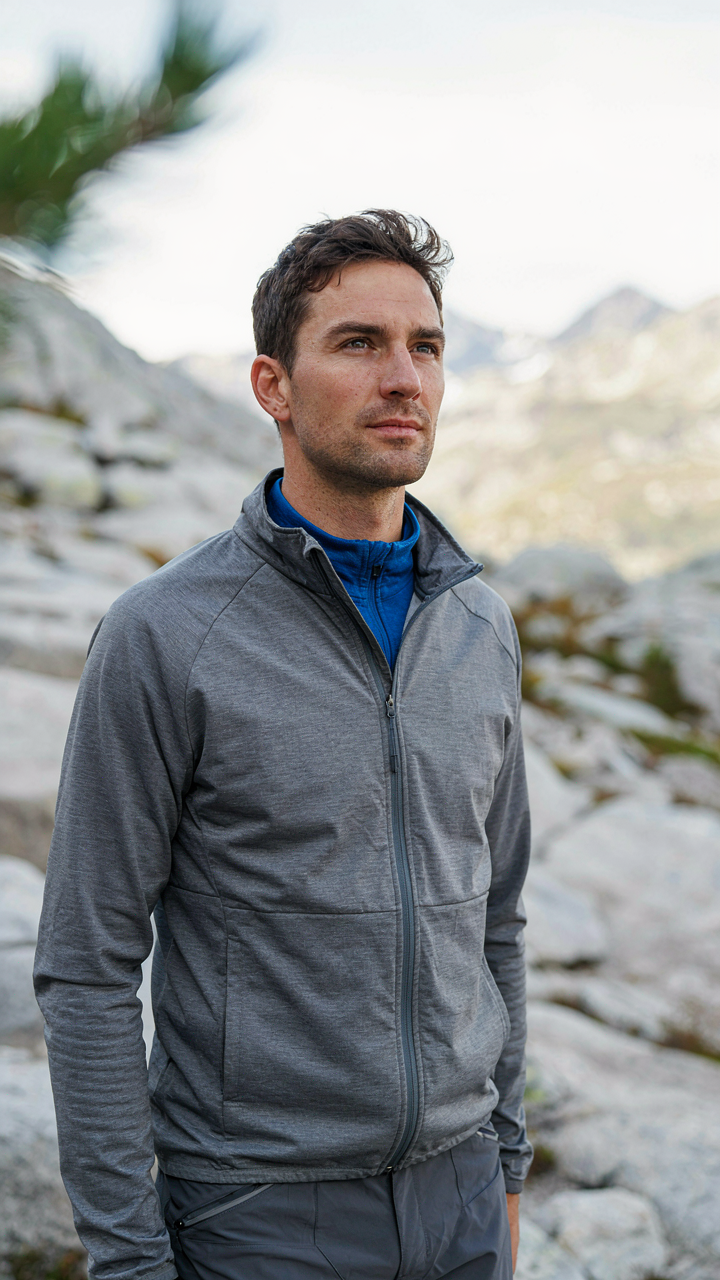
Stretch Fabrics For Long Strides
You want to look like you belong outdoors without feeling trapped in your own clothes. That’s the real problem. Tall men have a biomechanical disadvantage on trail: your stride length demands more fabric give than standard sizing offers. Most hiking pants use rigid weaves—cotton blends, canvas—that don’t stretch. They resist your leg drive, which means you’re fighting resistance on every incline.
The mechanism is simple physics applied to textiles. Elastane (spandex) fibers woven into base fabrics—nylon, polyester—create longitudinal and lateral stretch without sacrificing durability. A tall man needs minimum four-way stretch in pants: front-to-back flex for step height and side-to-side flex for lateral stability on uneven ground. Non-stretch fabrics create binding at the inner thigh and crotch seam on long strides, which kills efficiency and creates chafe points. When fabric stretches with your movement instead of against it, you expend less energy per mile.
Articulated Knees And Elbows
Straight-seam construction on jacket sleeves and pant legs wastes arm and leg range. Articulated design means seams and panels are cut at anatomical angles—the knee seam sits where your knee actually bends, not where a standard pattern assumes it does. For tall men, this matters more because your limbs have greater extension range.
Brands like Arc’teryx and Patagonia use pre-bent panel cuts that account for natural joint angles during movement. Your elbow doesn’t bend in a perfect 90-degree line, and your knee flexes in a specific arc. When seams follow that arc instead of cutting straight across, the fabric drapes into the bend without bunching or pulling at stress points. For cold weather, this prevents fabric from riding up and exposing skin. Buy jackets with gusseted underarms and pants with angled knee darts. This is the difference between moving freely and managing micro-adjustments all day.
Base Layering For Giants: Beyond “Long” (Mens Hiking Outfit Winter)
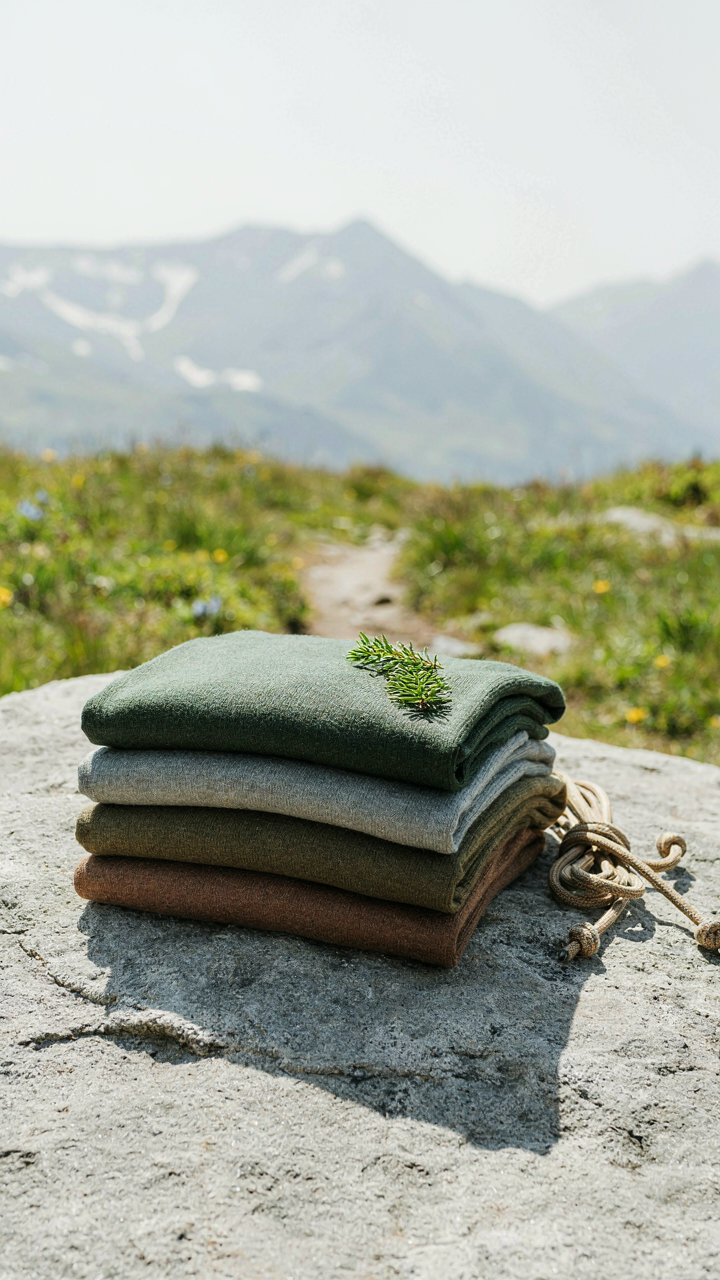
Merino Wool Versus Synthetics For Tall Frames
You’re checking size charts hoping “XL tall” won’t be sold out, worried you’ll end up in undersized garbage that rides up on the trail. Here’s the mechanism: base layers fail tall men not because of fabric choice alone, but because manufacturers cut them for average torso length, then just add sleeve length. Merino wool regulates temperature better than synthetics across sweat cycles, but only if it actually covers your core. Most tall-specific synthetics (polyester blends) hit the market because they’re cheaper to produce in extended sizes, not because they outperform merino in cold conditions. Merino wool outperforms synthetics in moisture management and odor resistance, full stop. The real problem is finding merino in true tall cuts, which means checking European brands first—they cut for longer torsos by default.
Synthetics win on one front: they dry faster than merino. In a pure durability play, synthetics also resist pilling better during repeated trail use. But synthetics trap more odor over time and degrade faster in UV exposure. For tall men in sustained cold, merino wool is the better base layer if the fit is correct. Verify inseam length before buying. Measure your own torso from collarbone to hip bone, then compare it to the brand’s stated torso measurements, not just the size label. Most brands don’t publish these numbers, which tells you they don’t cut for tall proportions intentionally.
Torso Length And The Tuck Problem
Most hiking base layers are designed for people who tuck them in or wear them under rigid structures that hold fabric in place. Tall men can’t tuck without creating a bunched mass under a pack, and no base layer stays tucked on a steep climb. The physics of garment fit applies here: tension and friction determine whether fabric stays in position. A base layer two inches too short creates gaps at your lower back. A base layer that’s two inches too long bunches at your midsection and loses insulating efficiency by trapping dead air in the wrong places. Buy a base layer long enough that it reaches your hip bone when arms are at rest, with no gap between the layer and your pants waistband when you hike uphill. Test this in your own home first by wearing it under your actual hiking pants and doing ten stairs at normal pace. If fabric separates from your torso or rides up your back, the length is wrong for your proportions.
The untucked base layer needs to sit as a second skin, not a draped garment. Tall men typically need a one-size-up torso length paired with standard arm length, or a full size up in brands that don’t cut tall-specific options. Rab and Devold cut longer torsos as standard. Smartwool tall sizes actually work. Decathlon’s merino blends fit longer frames without the premium price. Don’t assume “tall” means taller sleeves—measure the actual torso length from shoulder seam to hem before checkout. That one step eliminates most base layer failures on the trail.
Mid Layers: The “Insulation Architecture” For Tall Frames (Outdoor Outfit Men)
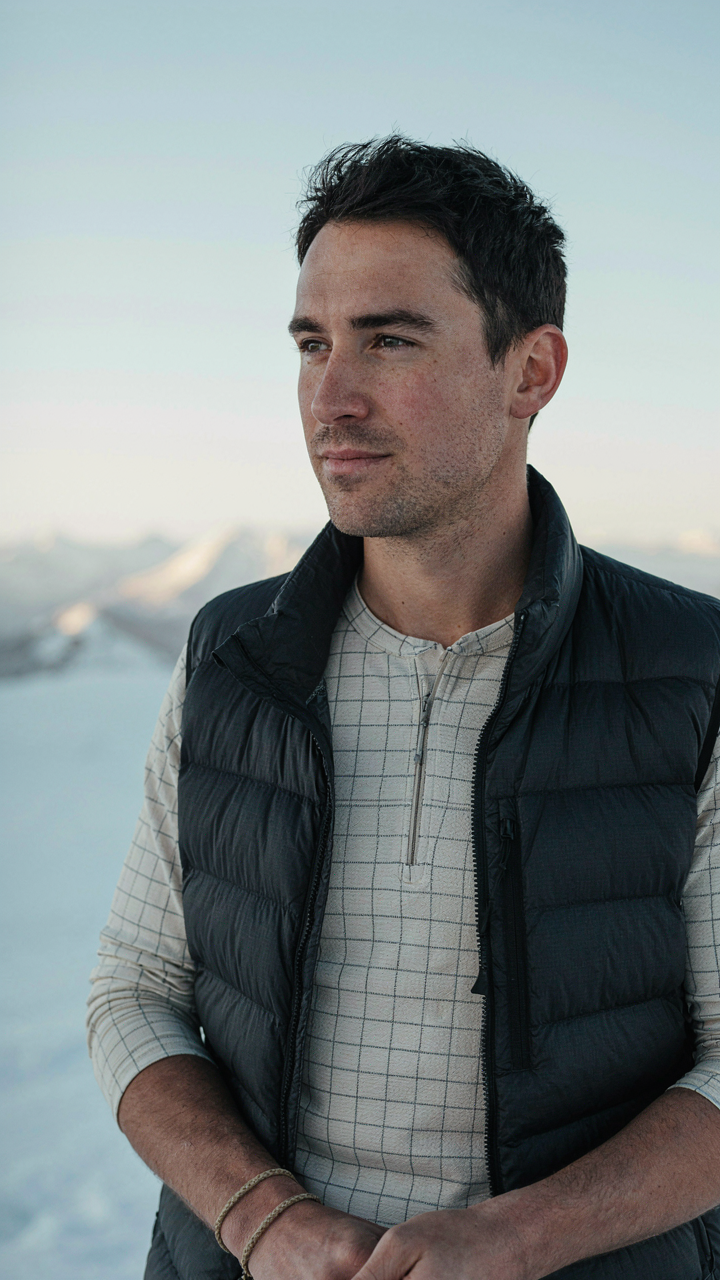
Where Loft Actually Matters
You want the mid-layer to solve a problem you think doesn’t exist yet. Here’s the mechanism: in cold weather hiking, your tall frame has more surface area exposed to wind and convection. Loft distribution works like thermal insulation in building design—you concentrate density where your body bleeds heat fastest, not everywhere equally. Most hikers buy one generic fleece and call it solved. They’re wrong. Your torso loses heat three times faster than your legs, and your core loses it faster than your extremities. This is basic thermodynamics. A tall frame means your shoulders and chest sit higher in the wind column on ridges. Stack your loft strategically: heavier synthetic or down in the core, lighter grid fleece on the arms, nothing wasted on the thighs.
The second layer should never be bulk for bulk’s sake. A 200-weight merino wool grid mid-layer under a synthetic insulated vest concentrates warmth where you need it and lets your arms stay mobile for technical terrain. Tall men need this modularity because your limb-to-torso ratio shifts heat management demands. When you hike, your legs generate their own heat through repetitive motion. Your chest and shoulders do not. Build your mid-layer stack around that physiological fact, not around what marketing calls “comprehensive warmth.”
Jacket Length Stops Being Optional
Kidney warmth is non negotiable in cold hiking, but standard jacket sizing leaves tall men exposed. Most mid-layer jackets cut 2 to 3 inches short on a six-foot-plus frame, leaving your lower back uninsulated between your pack and your shell. This gap kills your core temperature faster than any single design flaw. A proper mid-layer jacket for tall men must extend 2 inches below your natural waistline when your arms hang at rest. Test this before buying: stand upright, let your arms hang, and mark where your jacket hem lands. It should cover the top of your glute medius. Anything shorter is a liability in sustained cold.
Length matters more than fit in most online sizing. Brands cut their tall sizes with longer sleeves but not longer torsos, which is backwards. Measure your specific frame: torso length from your C7 vertebra (the bone at the base of your neck) to your natural waistline. Compare that to the jacket’s stated torso length. A half-inch difference compounds across hours of hiking. Buy for the torso first. Sleeve length adjusts with layering underneath. Torso length does not.
Outer Shells: The Weather Wall For Extended Limbs
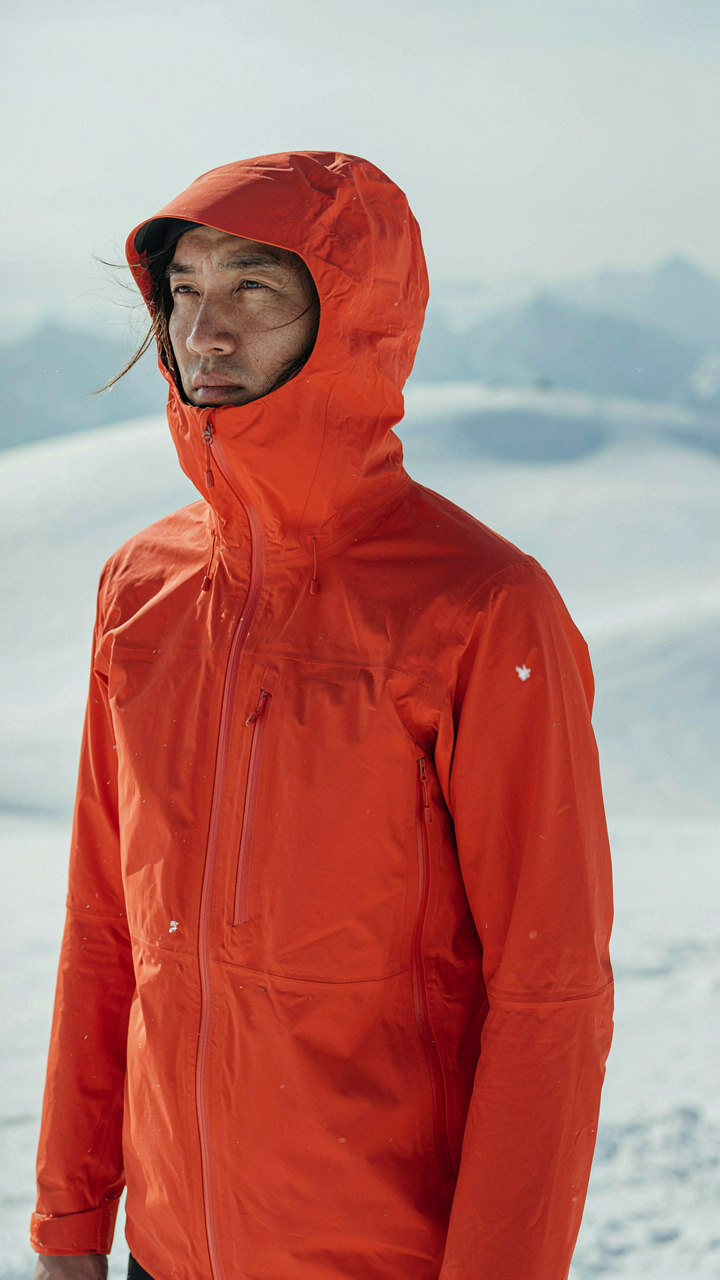
Jacket And Pant Inseam Reality
You care about this because wearing a jacket that ends at your wrist instead of your hand looks like you’re wearing your kid’s gear, and that kills credibility before you hit the trail. Here’s the mechanism: tall men have a leverage problem. The same jacket length that fits a 5’10” hiker leaves your forearms exposed on a 6’3″ frame. Wind and cold exploit gaps. Standard sizing charts assume proportions they don’t have.
Most hiking brands cut sleeves to a formula based on chest size alone, ignoring arm length entirely. This is lazy design, not your measurement problem. For jackets, you need sleeve length that reaches your wrist bone when your arm hangs naturally. For pants, the inseam should land at the top of your boot heel, not your ankle. Brands like Arc’teryx and Black Diamond offer extended sizes specifically because tall athletes have different ratios than the mass market. Measure your actual arm length from shoulder to wrist before ordering anything.
Hood Depth For Taller Necks
The hood serves thermal function, not fashion. A shallow hood that sits high on your head exposes your neck completely, which defeats the entire purpose of a sealed system. Tall men with longer necks need hoods that extend lower and cover the C5 vertebra—the base of your neck where wind penetrates first.
Most hoods are designed around average head proportions, which means they sit too far back on your skull. Test this: pull the hood on and look straight ahead. Your peripheral vision should stay clear, but the fabric should cover your entire neck. Look for jackets with adjustable hood depth or drawcord systems that let you pull the opening tighter around your face. Patagonia and Mountain Hardwear make hoods with extended coverage. If the hood rides above your shoulders when cinched, it’s the wrong jacket, regardless of size tag.
Accessory Amplification: Guarding The Extremities
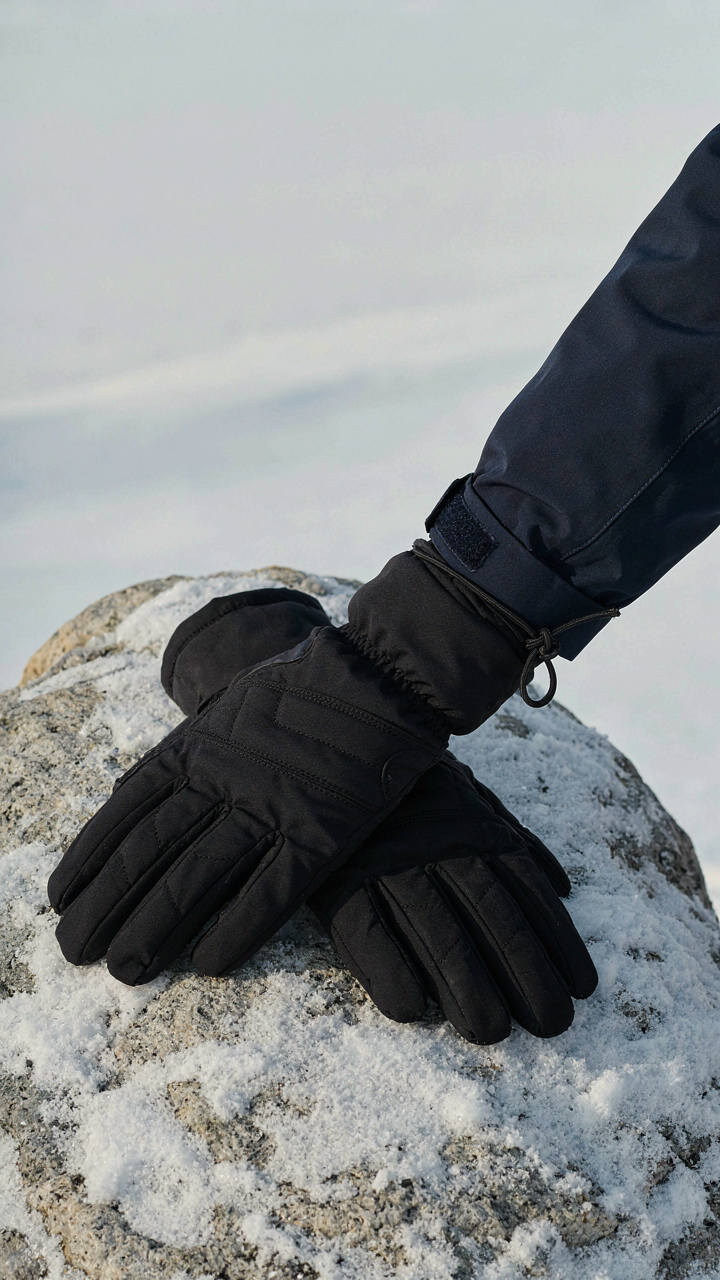
Glove Gauntlet Length And Cuff Seals
You’re worried gloves won’t look proportional on your larger hands, so you settle for regular sizes that leave wrist exposed. That’s a mistake rooted in vanity, not physics. Think of your extremities as perimeter defense in thermodynamics terms: heat loss accelerates at exposed junctions between layers, which is why military cold weather gear prioritizes sealing gaps over aesthetic balance.
Tall men have longer forearms. Standard glove cuffs end three to four inches above your wrist, creating a dead zone where wind channels directly onto skin. Gauntlet-style gloves with extended cuffs that overlap your jacket sleeve by two to three inches eliminate this vulnerability. The overlap isn’t optional—it’s the mechanism that stops convective heat loss at the wrist joint.
- Gauntlet Overlap: Extended cuff must overlap jacket sleeve by minimum two inches. Measure from your wrist crease to mid-forearm when arm is bent at ninety degrees to find proper length.
- Cuff Seal Material: Look for neoprene, fleece-lined nylon, or wool blends at the gauntlet edge. These materials compress against skin without restricting blood flow to hands, maintaining dexterity in cold.
- Mitt Versus Glove Trade-off: Mittens retain heat better but sacrifice grip. For hiking, five-finger gloves with gauntlets give you tool dexterity while gauntlets protect the vulnerable forearm-to-hand transition zone.
- Wrist Circumference Sizing: Your wrist is proportionally smaller than your hand. Buy gloves by hand circumference, then verify the gauntlet cuff compresses snugly around your wrist without cutting circulation.
- Layering Under Gauntlets: A thin wool or synthetic glove liner under your gauntlet adds insulation without bulk. This lets you remove the outer gauntlet for climbing while keeping inner layer active.
Cuff seals fail because most hikers ignore the gauntlet-to-sleeve interface entirely. Your jacket cuff must sit below your glove cuff when arms hang at rest. When you raise your arms to navigate terrain, the overlap compresses and maintains the seal. Check this fit before you buy—don’t assume “large” gloves automatically work for tall frames.
Sock Height And Boot Collar Integration
Boot collar height matters more than sock thickness for keeping heat in your foot. Your shin is exposed during hiking, and boot collars on standard hiking boots only reach mid-ankle, leaving your lower leg vulnerable to wind and cold contact with snow. Tall men often have longer shins relative to their overall frame, which compounds this exposure.
The sock should rise to meet or slightly overlap your boot collar when your boot is fully laced and your leg is extended. If your socks are crew-length but your boot collar only hits mid-ankle, you’ve created a gap where your shin contacts cold air directly. Merino wool socks at eighteen to twenty inches tall pair with boots that have collar heights above six inches to eliminate this junction vulnerability.
Sock height isn’t about thickness—it’s about coverage. A thin merino sock that reaches your knee-minus-two-inches outperforms a thick wool sock that ends below your calf. The mechanism is simple: continuous insulation around your leg prevents localized cold spots from triggering systemic heat loss. Buy socks specifically measured in inches, not vague sizing like “crew” or “over-the-calf.” Your boot lacing tension also matters. If your boot collar compresses into your sock from tight lacing, blood flow to your lower leg restricts. Lace boots snugly at the forefoot but leave the collar area one tension notch looser to preserve circulation while maintaining the seal against wind.
The “Anthropometric Anomaly” Approach To Gear Selection (Trekking Outfit)
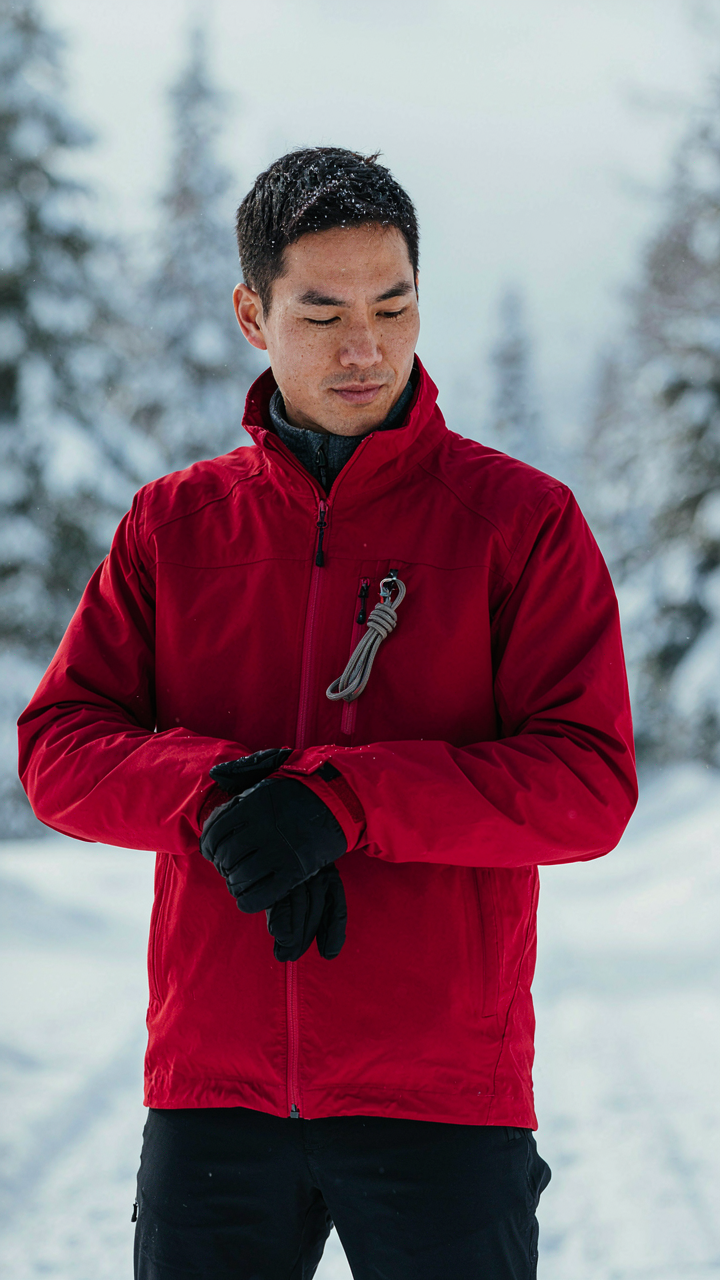
Why Custom Fits Cost Less Than You Think
You’re worried custom gear will drain your budget. The real issue is that you’re comparing wrong products to begin with. Economics teaches us about unit cost versus total cost of ownership. For tall men, that means the cheapest off-rack jacket isn’t cheap if you replace it in two seasons because the sleeves ride up past your wrists.
Standard sizes optimize for the median body, not yours. A tall man buying regular-length sleeves gets exposed forearms in cold weather, then compensates by layering underneath, which adds bulk and kills dexterity. One properly fitted jacket from a brand that cuts for your proportions outlasts three poorly fitting ones. The upfront premium vanishes when you calculate years of use per dollar spent.
Evolution Didn’t Prepare You For Mountain Cold
Evolutionary biology explains why your frame works against you in high-altitude winter conditions. Tall bodies evolved to dissipate heat efficiently in warm climates, not conserve it in extreme cold. Your surface-area-to-mass ratio is worse than a shorter person’s, meaning you lose core heat faster across more exposed skin.
This isn’t a flaw you overcome with willpower. It’s a mechanism you engineer around. Tall men need longer insulation layers, extended cuff coverage, and torso-specific heat zones that standard mountain gear doesn’t provide. Your vertical limbs act as heat radiators. Accept this and build your kit accordingly by prioritizing sleeve length over jacket brand name, and choosing insulation types rated for higher cold exposure than shorter hikers actually need for the same conditions.
Footwear And Gait: Supporting The Tall Stride
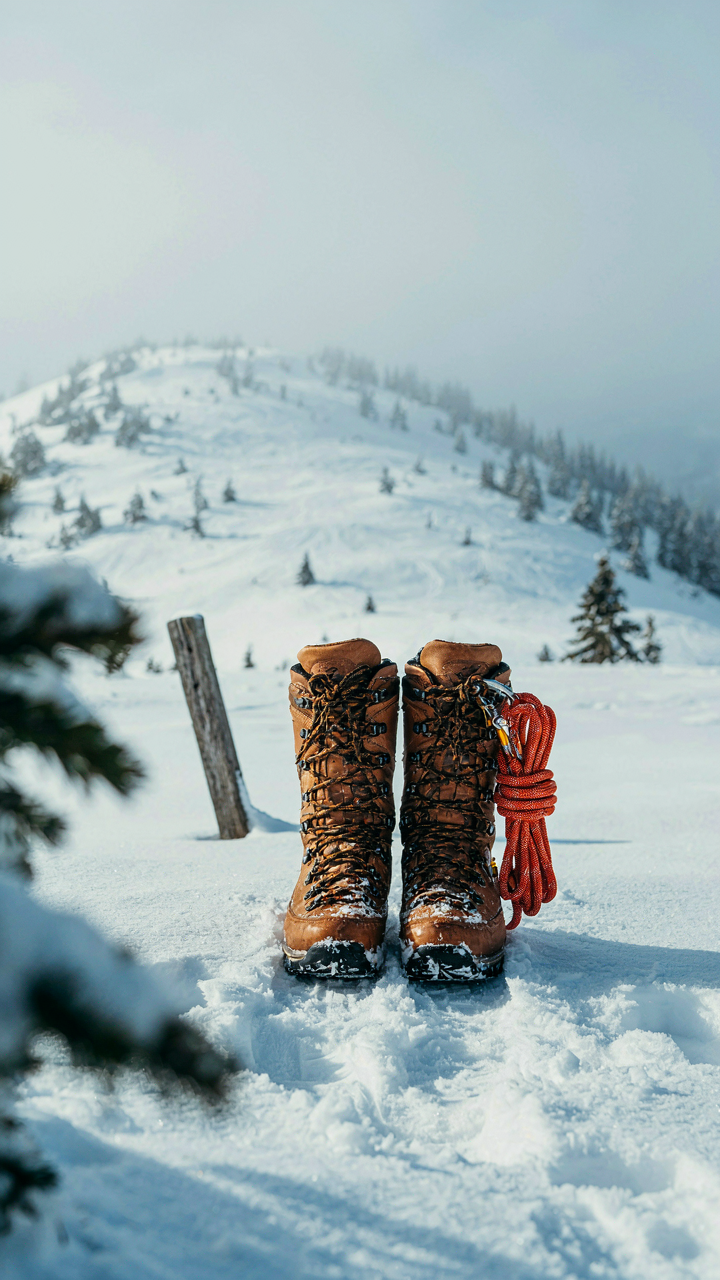
Ankle Support And Boot Shaft Height
You want taller boots because you think they look more serious. The real reason is biomechanics. Tall men have longer legs and higher centers of gravity, which means more rotational force at the ankle on uneven terrain. Physics calls this torque. Your ankle experiences greater leverage stress than a shorter hiker’s ankle on the same slope.
Standard boot shafts hit mid-calf on average frames. On tall frames, that same boot leaves your upper ankle exposed and undersupported. You need boots with shafts that reach at least three to four inches above your ankle bone. This isn’t comfort padding. It’s structural reinforcement against inversion injuries on frozen ground where your foot naturally wants to roll.
Aggressive Tread For Longer Levers
The common advice says tread depth doesn’t matter much in snow. That’s incomplete. On ice and packed snow, your longer leg means a longer moment arm from hip to foot. Biomechanics applies here too. A taller person’s stride covers more ground per step, which means each footfall carries more momentum. You need deeper, sharper tread patterns than standard winter boots provide.
Lugs should be at least half an inch deep and cut with angular edges rather than rounded ones. Look for boots with tread that’s aggressive on the heel and lateral edges, where you naturally brake on descents. Your height amplifies both your speed downhill and the force of each step. Microspikes or crampons become mandatory gear, not optional, because your natural stride speed will exceed what any boot tread alone can handle on icy conditions.
Your True Obstacle Isn’t Finding Gear, It’s Refusing To Acknowledge Your Body’s Distinct Demands
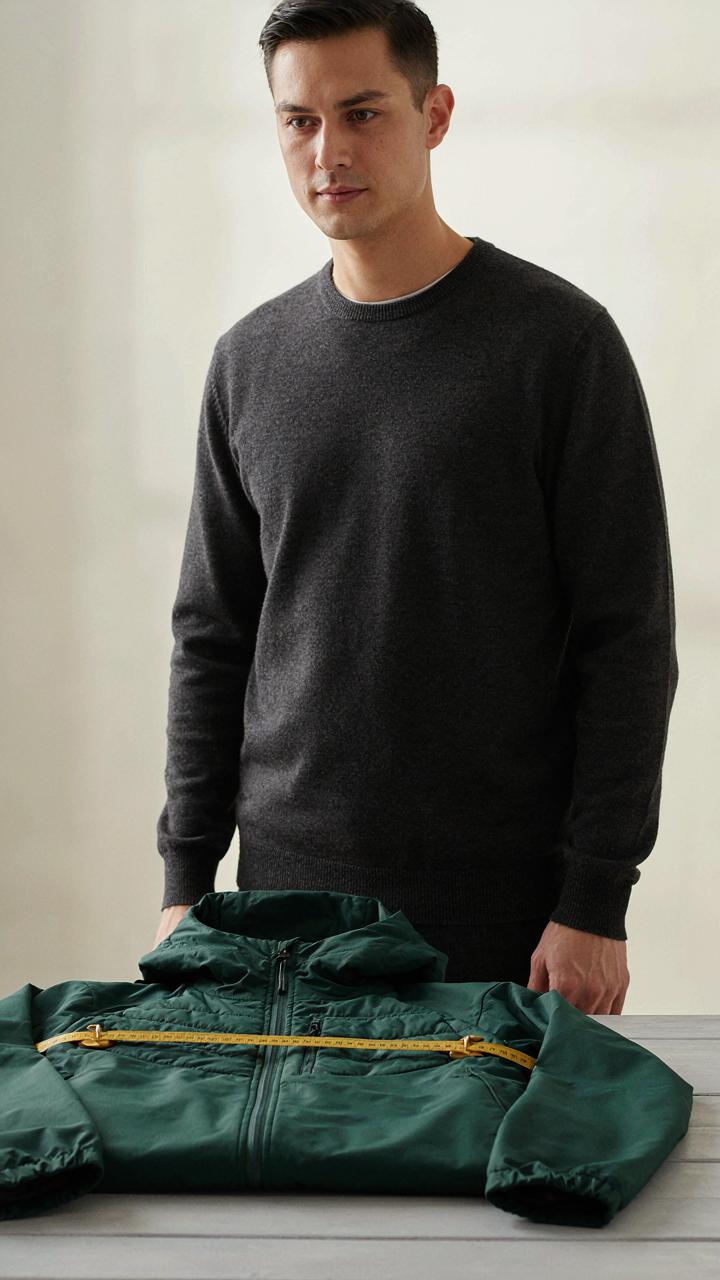
Most tall men hike in ill-fitting gear because admitting you need something different feels like weakness. It’s not. Your proportions demand specific solutions, and pretending standard sizes work wastes money and comfort on the trail. Stop shopping the general racks. Spend thirty minutes today measuring your actual inseam, sleeve length, and torso. Write it down. Use it as your filter. The right fit isn’t a luxury. It’s the difference between a brutal day and actually enjoying the cold.