

The Myth Of “Flattering” Hiking Gear: Function Over Form
Why Brands Sell You Status Instead Of Warmth
You’re buying hiking gear hoping it makes you look a certain way on the trail. But here’s what actually happens: the outdoor industry markets “flattering cuts” to plus size women because it sells guilt, not because it solves the real problem. The mechanism is simple. Conventional retail sizing for plus women gets narrower as sizes go up, creating a gap between what fits your torso and what fits your legs. Brands exploit this by selling you the emotional benefit of looking smaller instead of the functional benefit of staying warm and moving freely.
The real cost of this strategy shows up on the mountain. A jacket marketed as “slimming” typically uses fabric too thin for genuine insulation or cuts sleeves too short to allow full arm movement. You’re paying premium prices for psychological comfort that evaporates the moment you’re 2,000 feet up and the temperature drops. Marketing departments know most buyers never test gear in actual conditions before purchase, so they lead with aesthetics. Stop believing the copy. Your only job on a cold weather hike is to regulate core temperature and move without restriction.
Warmth And Mobility Require Different Design Rules

Thermal physics doesn’t care about silhouettes. A jacket that traps heat needs dead air space between your body and the fabric, which means intentional volume. Add the layering system underneath, and you’re looking at genuine bulk. This isn’t a flaw. It’s the entire point. Most guidance tells plus size women to “embrace your body” and “wear what makes you confident,” which is emotional fluff that does nothing when your core temperature drops two degrees and hypothermia starts.
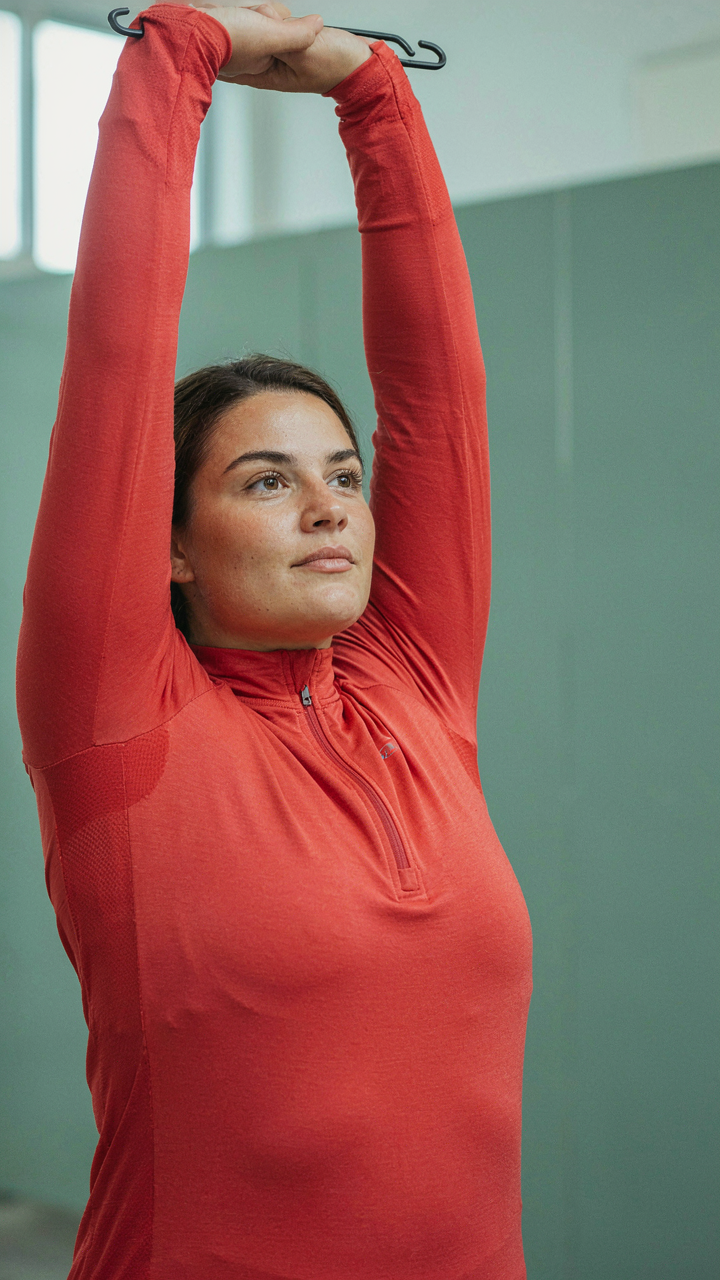
The real protocol is mechanical: prioritize range of motion first, warmth second, appearance nowhere. Mobility means your shoulders can rotate fully, your hips can bend in full squat position, and your arms can swing without tension. Test this by doing a full overhead reach and a deep lunge in the dressing room. If fabric pulls or restricts, it’s wrong regardless of how it looks. Warmth means your base layer, insulation, and shell actually create layering depth without compression. Compression kills insulation by crushing the air pockets that hold heat. Your gear should feel loose enough that you could add another full layer underneath if needed.

The Layering Protocol: An Energy Management System
Base Layers: Where Sweat Becomes Your Enemy
You’re reading this because you’ve been cold before and it felt like a failure. It wasn’t. Thermodynamics—the physics governing heat transfer—has three mechanisms: conduction, convection, and evaporation. Most hikers obsess over conduction. You need to stop evaporation first. Sweat doesn’t warm you. It accelerates heat loss through evaporative cooling, the same principle that makes a wet body shiver uncontrollably in wind.
Base layers aren’t about warmth. They’re about moving moisture away from your skin before it can strip body heat. Merino wool and synthetic polyester both work because they transport sweat outward while maintaining some insulation when damp. Cotton absorbs moisture and holds it against your body. This is non-negotiable: cotton base layers will fail you in cold conditions. Choose merino or synthetic exclusively. The fit matters more than you think. Oversized base layers create air pockets that trap sweat instead of wicking it. On a plus size frame, proper fit means snug but not restrictive—contact with skin is how moisture transfer happens.
Mid Layers: The Insulation Trap Most People Miss
Insulation traps dead air. That’s the mechanism. But most advice about mid-layers treats them like a single solution when they’re actually a choice between two competing strategies, and which one works depends on your specific conditions. Fleece holds static air in its fibers and performs decently when damp. Down clusters air into tiny pockets but collapses when wet, becoming useless. Synthetic insulation mimics down’s structure while resisting moisture.
The real problem: plus size hikers often size up in mid-layers to avoid restriction, creating excess fabric that moves independently from the body. This breaks the thermal seal between layers. You need the mid-layer tight enough to stay connected to your base layer but loose enough to move over it without binding. This is why a fitted insulating vest worn over your mid-layer—rather than a bulky jacket as your only mid-layer—gives you more thermal control and lets you shed heat if your effort level spikes. Carry a synthetic mid-layer that compresses to fist-size rather than a rigid down jacket.
Outer Shells: Your Last Line Of Defense Against The Elements
Waterproof Vs Water Resistant Understanding The Barrier
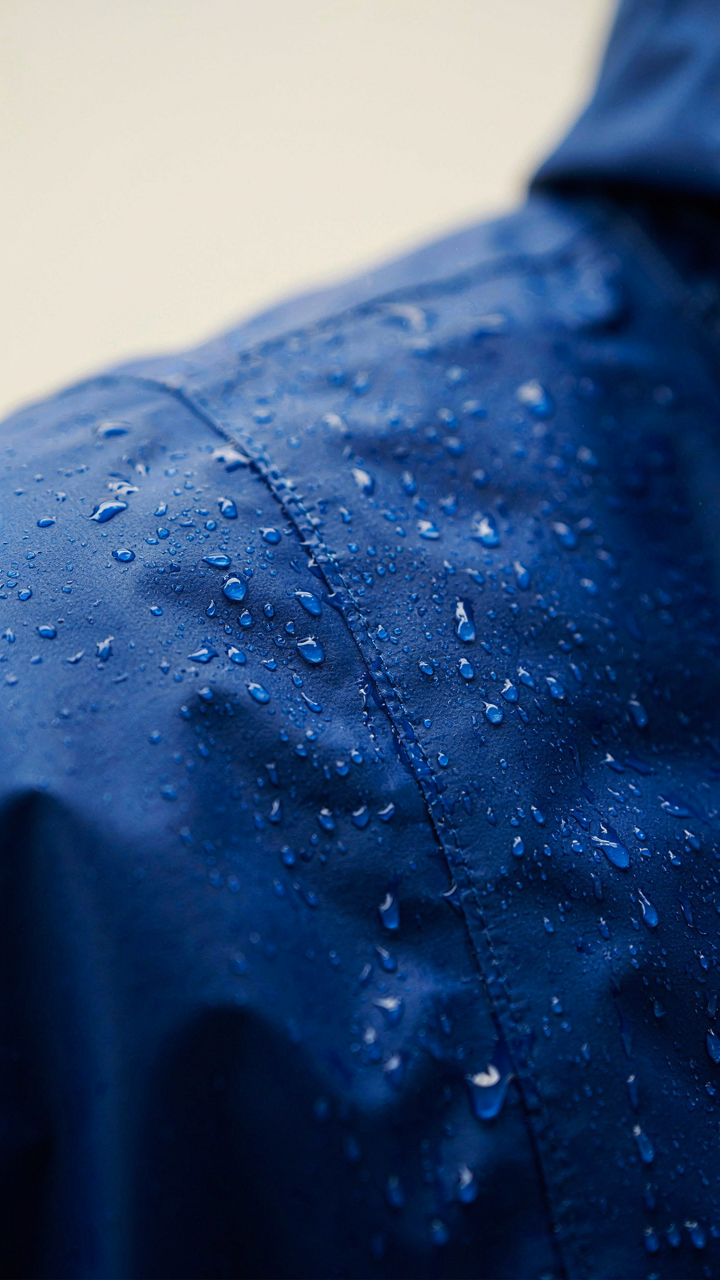
You want the jacket that sounds like it’ll work, so you don’t waste money on the wrong thing and look stupid out there. Here’s what actually matters: waterproof means water doesn’t penetrate the fabric under pressure. Water-resistant means water beads on the surface until enough force or time breaks the seal. Most jackets labeled waterproof use a membrane—Gore-Tex, eVent, or similar—that blocks liquid but lets vapor escape. This isn’t marketing. It’s physics applied to fabric.
The confusion exists because retailers use both terms loosely. A truly waterproof jacket with sealed seams survives prolonged rain and stream crossings. Water-resistant jackets shed light rain and moisture but fail during heavy downpour or direct water pressure. For plus-size women hiking in cold weather, you need waterproof with sealed seams because your hike duration increases exposure time, and larger surface area means more contact points for water. Check the label for membrane type and seam tape explicitly. If neither is mentioned, it’s water-resistant masquerading as protection.
Wind Resistance Mitigating Convective Heat Loss
Physics calls it convection: moving air strips heat from your body by replacing warm air against your skin with cold air. Your outer shell’s job is to create a dead air barrier that stops that replacement cycle. This is why wind matters more than temperature alone. A 20-degree day with 15 mph wind feels like five degrees. Your shell fabric density and weave structure control how much wind passes through.
Most wind-resistant fabrics use tight weaves or add a brushed backing to trap still air. Nylon and polyester blends outperform looser constructions. For plus-size women, oversizing the shell to layer underneath defeats the function—baggy fabric lets wind flow into pockets and gaps. Fit must be snug over your insulation, not loose on top of it. Measure your arm and torso wearing your base and insulation layers, then buy shells that accommodate that volume without excess fabric. Wind resistance only works when the barrier actually touches your insulation and traps dead air between them.
Footwear: The Foundation Of Your Cold Weather Hiking Outfit

Insulated Boots: Where Heat Stops Leaking
You care about this because cold feet mean a failed hike, and a failed hike means wasted time and money. The mechanism is simple: your body prioritizes core temperature survival over extremities. When your feet get cold, your body constricts blood vessels there first to preserve vital organs. Insulated boots interrupt this cascade by trapping air in the insulation layer, which slows heat loss before your body even has to make the choice.
Most hiking boot guidance ignores sizing reality for plus size women. Standard boots assume average foot volume and arch pressure. You need boots rated for the actual temperature you’ll encounter, not aspirational conditions. Look for boots with 200-400 grams of insulation for moderate cold, 400-600 grams for serious alpine work. The insulation material matters less than loft consistency—synthetic holds insulation properties when wet, down compresses easily but costs more. Buy boots a half size larger than your street shoe to accommodate thick socks without cutting circulation, which defeats the entire insulation strategy.
Sock Construction: The Blister Prevention Protocol
Socks operate on the same layering principle as clothing: friction happens at boundaries between materials. Merino wool socks manage moisture while preventing the blister-causing sliding that happens inside a boot when your foot sweats then cools. Cotton absorbs sweat, holds it, and creates the exact conditions for blisters. Synthetic blends dry faster but don’t regulate temperature as effectively.
- Merino Wool (70-100 percent): Naturally antimicrobial, regulates temperature across wide ranges, prevents odor buildup on multi-day hikes without daily washing.
- Synthetic Blends (polyester, nylon): Dry fastest of all materials, best for wet conditions where moisture management outweighs temperature regulation needs.
- Wool-Synthetic Blends (60/40 merino-nylon): Splits the difference between durability, dry time, and temperature control for most three-season cold weather hiking.
- Sock Weight (Midweight minimum): Provides cushioning against rock and boot pressure while maintaining the air pockets that insulate. Lightweight socks compress too easily in tight boots.
- Fit Over Compression: Socks should sit snug without elastic bands that cut off circulation at the calf. Proper fit prevents sliding inside the boot, which creates friction and blisters.
Wear two sock layers only if your boot has room without compression. Double layering on a tight fit cuts blood flow and defeats thermal regulation. The outer sock should be your premium material (merino), the inner sock should be a thin liner that wicks away immediate moisture before it reaches the outer layer. Replace socks if they develop pilling or thin spots—compromised insulation doesn’t protect your feet, and compromised fit causes blisters. Start every hike with dry feet and dry socks packed in a waterproof bag.
Accessories Aren’t Optional: The Unsung Heroes

Where Your Heat Actually Escapes
You’re buying the perfect jacket because you think that’s where the work happens. It isn’t. Your body loses 40 percent of its heat through your head and another 10 percent through your hands and feet. This is basic physics: extremities have the highest surface-area-to-volume ratio, making them heat-loss accelerators. A hat and gloves aren’t accessories. They’re the infrastructure that keeps your core temperature stable enough for your larger frame to generate sustained warmth during exertion.
Most cold weather advice tells plus size women to layer more on the torso. Wrong move. Your torso already has mass working in your favor. Your scalp, fingertips, and ears have zero insulation advantage. Merino wool beanies trap heat through dead air pockets in the fiber structure and keep working even when damp. Insulated gloves rated for your specific temperature range prevent vasoconstriction that forces your body to work harder and burn calories faster just to maintain function. A beanie that fits without gaps and gloves that seal at your wrists create a closed system where heat stays contained rather than radiating away into cold air.
Defense Against The Wind’s Real Weapon
Wind doesn’t kill you through temperature alone. It kills through convection: moving air strips away the still air layer your body naturally creates around your skin. A neck gaiter solves this across multiple exposure points without adding bulk that plus size women often struggle to fit under jacket collars. One piece protects your neck, lower face, and chest opening where wind funnels straight into your jacket.
Quality gaiters transition between positions without bunching or slipping down. Merino blends offer moisture-wicking and temperature regulation that synthetics skip. Position your gaiter high enough to cover your chin and jaw line, lower enough to tuck into your jacket collar and create an unbroken seal. When you’re moving uphill and your face warms, pull it down to your neck. The versatility matters because your thermal needs shift constantly during hiking, and accessories that adapt beat those that lock you into one configuration.
Curvy Camping Outfits: Beyond The Trailhead
When Sitting Still Is The Real Test
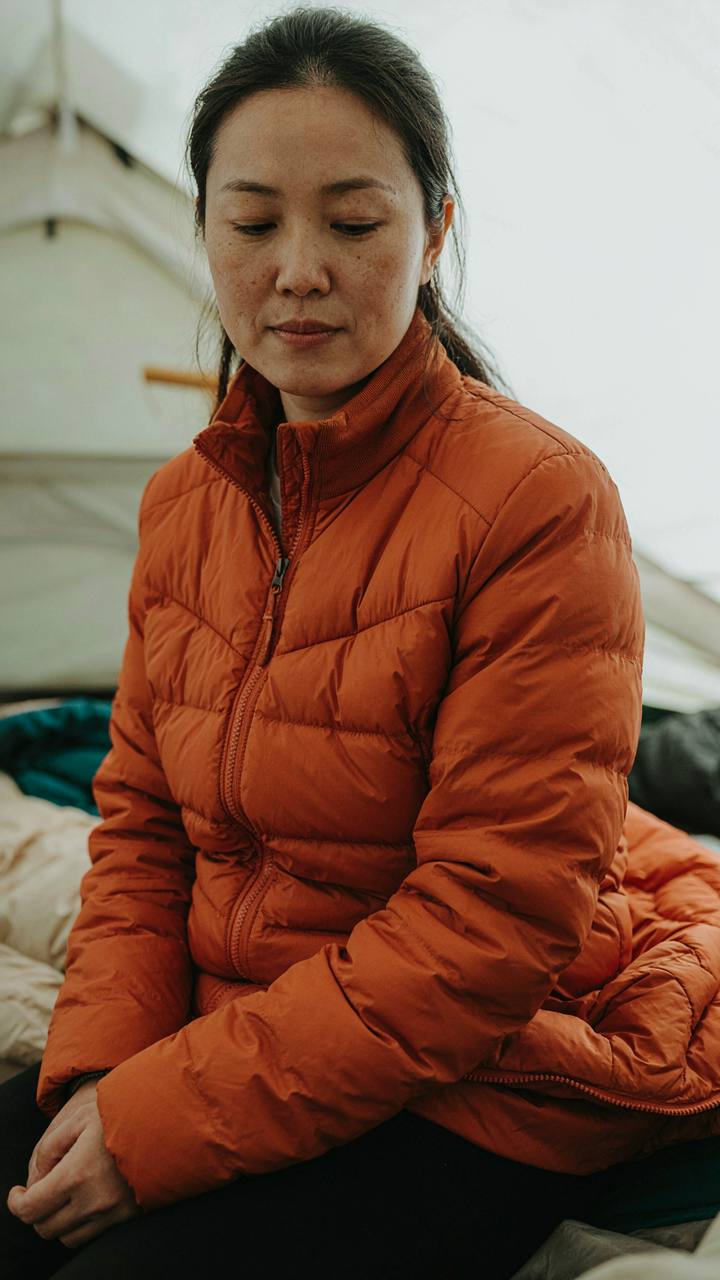
You want to know how to stay warm when you’re not moving because you’re afraid of being miserable at camp, and misery kills trips. The physics of thermodynamics applies here: your body generates heat through activity, but the moment you stop hiking and sit around a fire or in a tent, you lose that metabolic advantage. Plus size bodies have more surface area to manage, which means more perimeter losing heat to the environment. The insulation layers that worked while you were moving become your entire climate control system.
The mistake everyone makes is treating camp clothes like a lighter version of hiking clothes. They’re not. You need a dedicated insulation layer that traps dead air without compressing under your own weight when you sit. Down or synthetic insulation rated for 20 degrees below your expected low temperature works because it maintains loft even under pressure. Wear it over your base layer, under a windproof shell. This combination stays effective whether you’re standing, sitting, or lying down.
Packing Without The Dead Weight
Strategic packing isn’t about minimalism, it’s about density. Thermodynamic principles show that the volume of gear doesn’t matter as much as its efficiency per pound, and plus size hikers carrying additional insulation can’t afford redundancy. Everyone tells you to layer light, but they don’t explain that you need one excellent insulating jacket and one excellent insulating bottom, not five mediocre pieces.
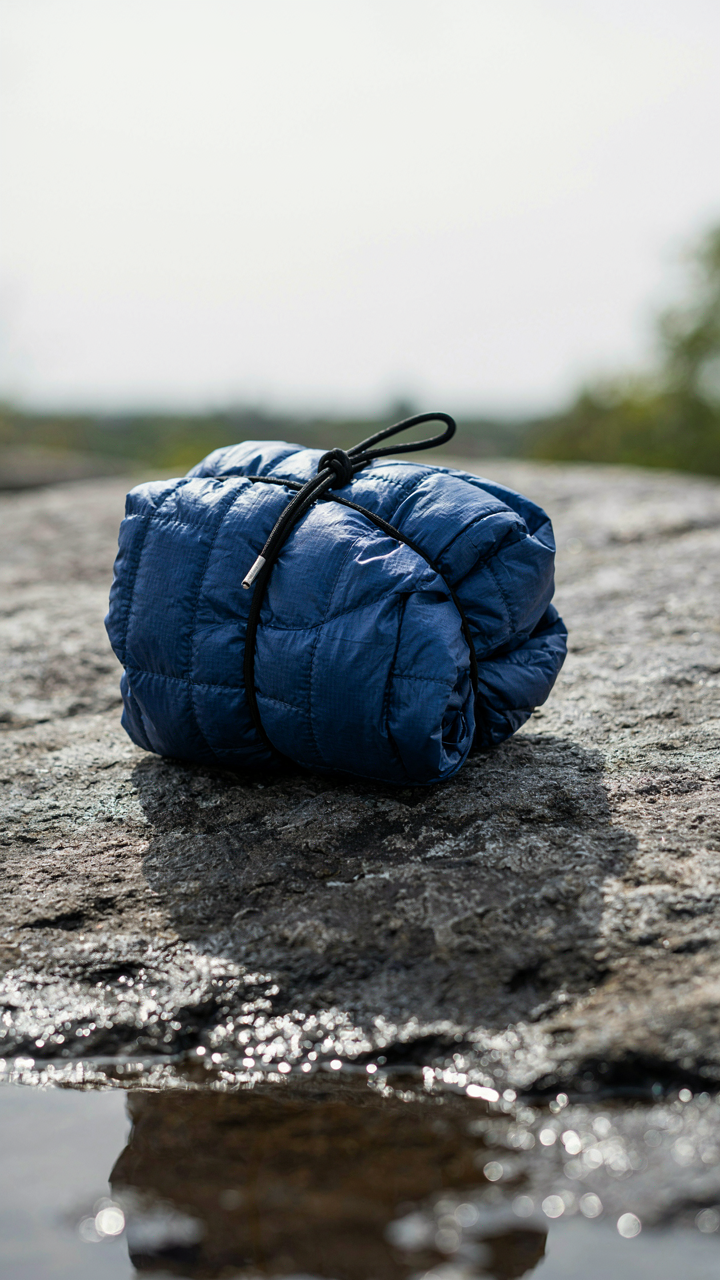
Down compresses into one-fifth its expanded size, so a quality down jacket takes minimal pack space while delivering maximum warmth. Pair it with insulated leggings or snow pants rated for the temperature. Skip the extras. A second fleece is dead weight. Bring a backup base layer instead, because moisture management matters more than layering options when you’re stationary and sweating cools quickly in cold air.
The “Mountain Outfit” Mindset: Adaptability Over Specificity
Weather Shifts Demand Reactive Layering
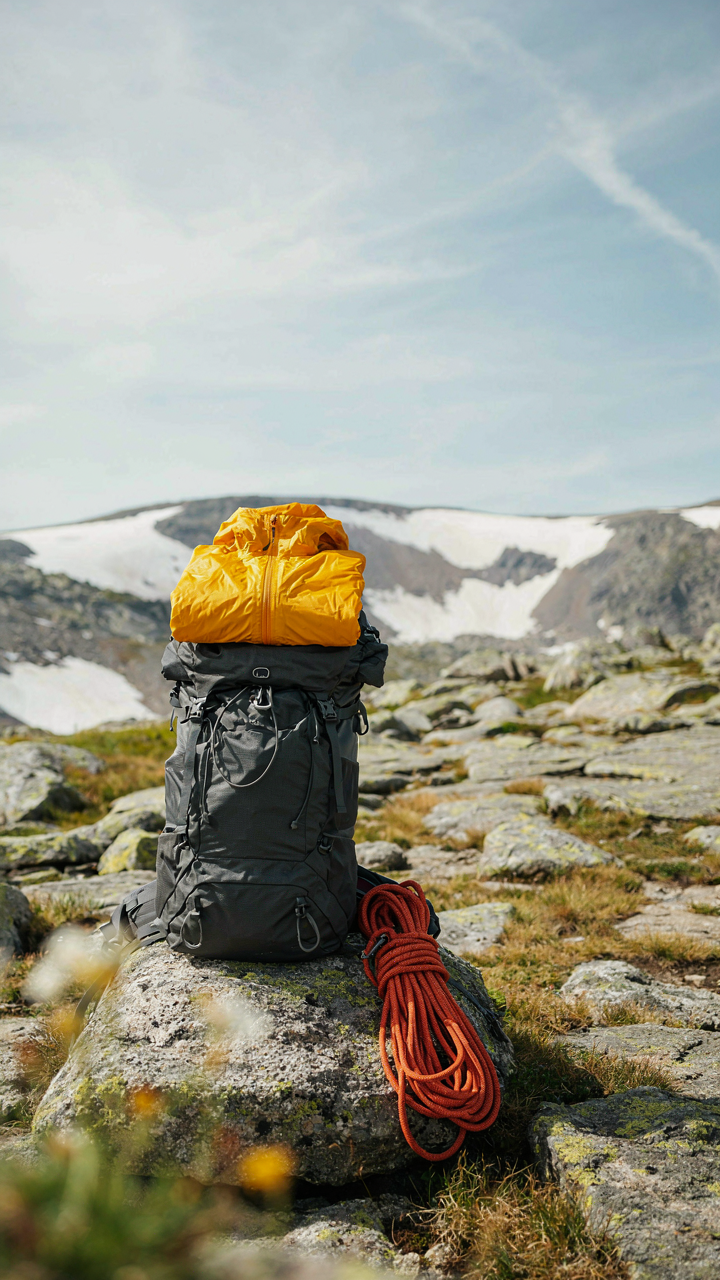
You want to believe one outfit works for every condition so you never feel unprepared. It won’t. Mountains change temperature, wind, and precipitation in hours, sometimes minutes. Borrowing from meteorology, you’re managing systems—not static states. A front moves through. Sun disappears. Wind speed doubles. Your outfit must respond without needing to descend or find shelter. This isn’t about owning more jackets; it’s about understanding which pieces move and which stay put based on real-time conditions.
Most advice treats cold weather gear as a fixed assembly. Wrong. Your base layer stays constant, but your insulation and shell layers swap based on what’s happening outside right now. Temperature drops five degrees and clouds roll in? Add your insulating layer. Wind picks up but you’re still dry? The shell comes on top immediately. Visibility matters too—bright outer layers on cloudy days keep you visible to other hikers. You’re not dressing for the forecast; you’re dressing for the current condition with backup options in your pack.
Exertion Heat Requires Planned Adjustments
Physiology dictates this: your body generates heat during effort. The steeper the climb, the more heat you produce, regardless of outside temperature. Most plus size hikers strip layers too late or keep them on too long, then sweat into their insulation—which kills warmth when you stop moving. Your metabolic rate during exertion is high; plan for it. Start your hike slightly cold. You’ll warm fast once you’re climbing. This prevents the sweat-then-chill cycle that ruins an entire day.
Your layering protocol changes between ascent and descent. Going uphill, you shed your shell and possibly your insulating layer before you feel hot. Coming down, those pieces go back on the moment your heart rate drops because your body cools rapidly once exertion stops. Keep your pack accessible so you can execute these changes without stopping for ten minutes. Timing layer transitions to your exertion level, not your discomfort, keeps you warm, dry, and functional for the entire hike.
Debunking Plus Size Winter Outfit Myths: What Actually Works
The Bulk Trap Isn’t About Size
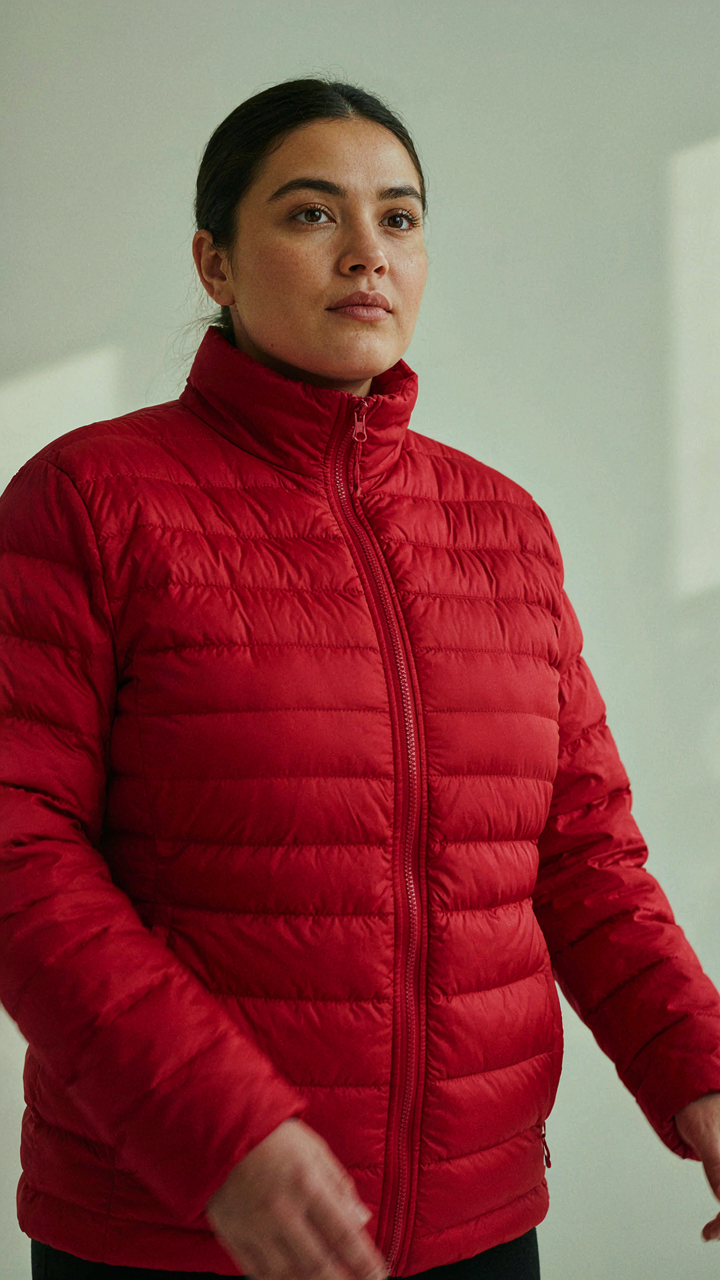
You’re worried that layering will make you look bigger, so you underdress or settle for one thick coat that restricts your arms. That’s the real problem here, not your body. The mechanism at work is borrowed from physics: insulation works through air trapping, not material thickness. Three thin layers trap more dead air space than one thick layer of the same total weight, and thin layers move with your body instead of against it.
The standard advice says “just wear a puffer jacket.” That’s incomplete. You need strategic layering that adds zero visual bulk while multiplying warmth. Base layer against skin, mid-layer for insulation, outer shell for wind and moisture. Each layer stays fitted. Your arms move freely because the fabric moves with you, not because you bought something oversized. The jacket doesn’t have to be a tent to function.
Fit Beats Every Compromise
Restrictive gear kills performance faster than cold does. A plus size woman in a properly fitted jacket will out-hike someone in an ill-fitting “smaller” size every time because she can actually move. Stop chasing vanity sizing from mainstream brands. Find brands that cut for real bodies at the chest, not just the length. Arc’teryx, Patagonia, and Columbia make extended sizes with actual engineering, not just scaled-up patterns.
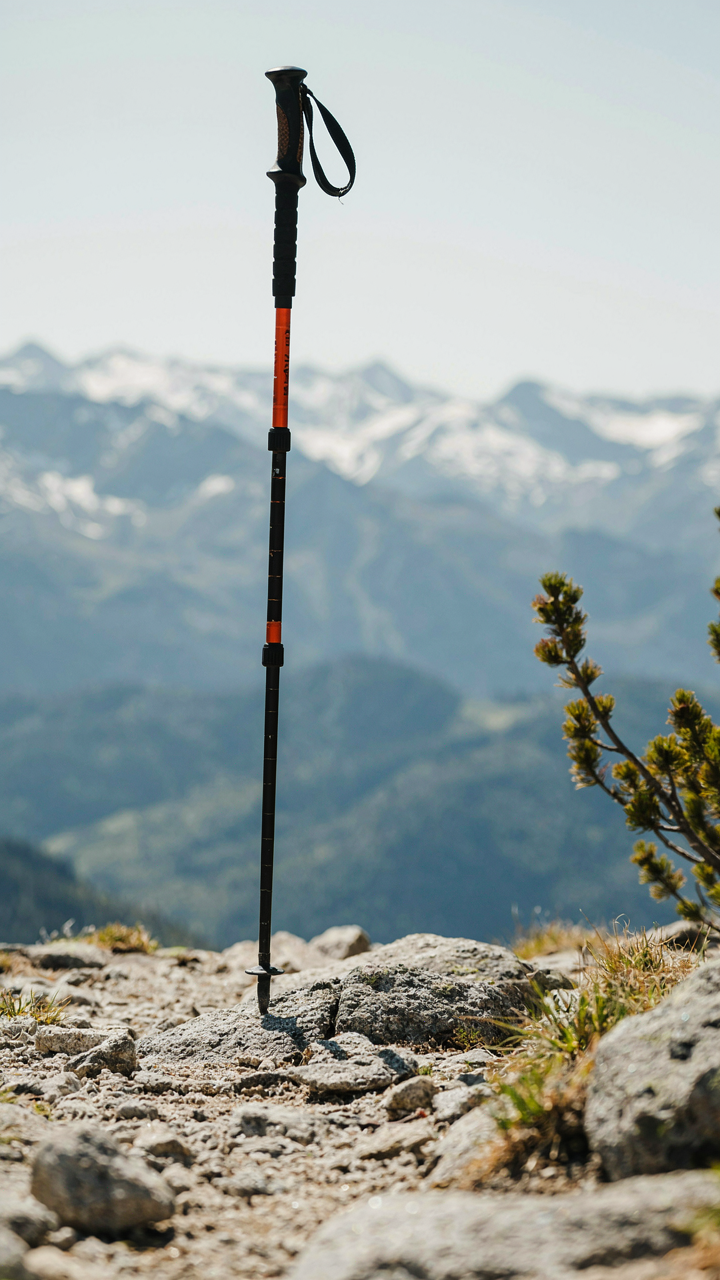
The key is testing range of motion before you buy. Lift your arms overhead. Swing them in circles. Bend forward. If the jacket rides up, pulls at the armpits, or bunches at the back, it’s wrong. Winter hiking demands shoulder mobility for pole planting and balance on uneven terrain. Order online if needed, but try it on moving. Your outfit succeeds or fails on whether your body can actually function in it.
The “Cute Hiking Outfit” Trap: Why Instagram Is Your Enemy
Performance Over Aesthetics
You want people to think you’re the kind of woman who hikes. That’s the real driver here, and it costs you on the trail. The mechanism is simple: social proof becomes a competing priority against staying warm and functional, so you make outfit decisions that photograph well instead of decisions that work. A fitted jacket that shows off your shape photographs better than a properly sized layer system. Cropped leggings look intentional and trendy. They also expose your skin to cold and wind at the exact joint where your body loses heat fastest. Instagram has trained everyone to treat hiking as a performance for an audience that isn’t there.
The hard truth: cute doesn’t keep you safe. When your core temperature drops or moisture gets trapped against your skin, the image quality of your outfit means nothing. Plus size women already face pressure to prove they belong on trails. Adding aesthetic anxiety on top of that is a tax you don’t owe. Function first isn’t puritanical. It’s the only rational play when you’re moving through cold, unpredictable weather at elevation. Your outfit should work for your body and the conditions, period.
The Hidden Cost Of Compromise
Economics calls this opportunity cost: the value of what you give up when you choose option A over option B. Choose a thin, flattering cold weather jacket over proper insulation and you get two outcomes nobody mentions plainly. First, your body works harder to maintain temperature, burning through calories faster and making the hike harder than it should be. Second, you cut the trip short or skip conditions you could have handled, which compounds over time into skills you never build and fitness you never develop.
The cascade matters. A woman who compromises her outfit once doesn’t learn what real layering feels like. She doesn’t calibrate her body’s signals correctly. She doesn’t build confidence in cold weather. She hikes less. She stays smaller in her own life. One bad outfit choice isn’t failure. Chronic outfit choices based on how you look instead of how you perform is the mechanism that keeps plus size women small on trails. Reverse this by choosing one outfit system and wearing it until you trust it completely.
The Real Obstacle Isn’t Finding The Right Gear; It’s Overcoming The Mental Clutter Of Irrelevant Advice
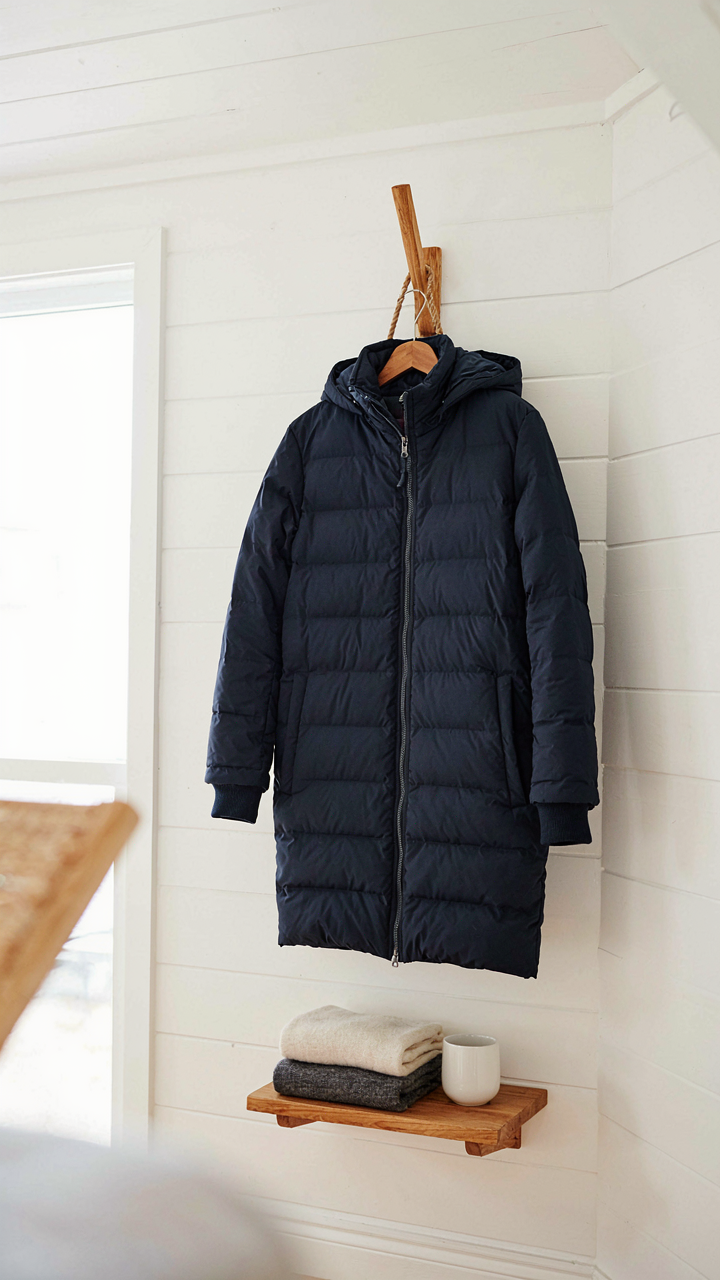
Every plus size woman who buys the wrong jacket already knew better. The issue was never information. You’ve been drowning in generic advice designed for bodies that aren’t yours, so you froze instead of acted. Stop waiting for the perfect article. Go try on one heavy coat today. Feel how it moves. Feel how you move in it. The only opinion that matters is the one your body gives you on the trail.