
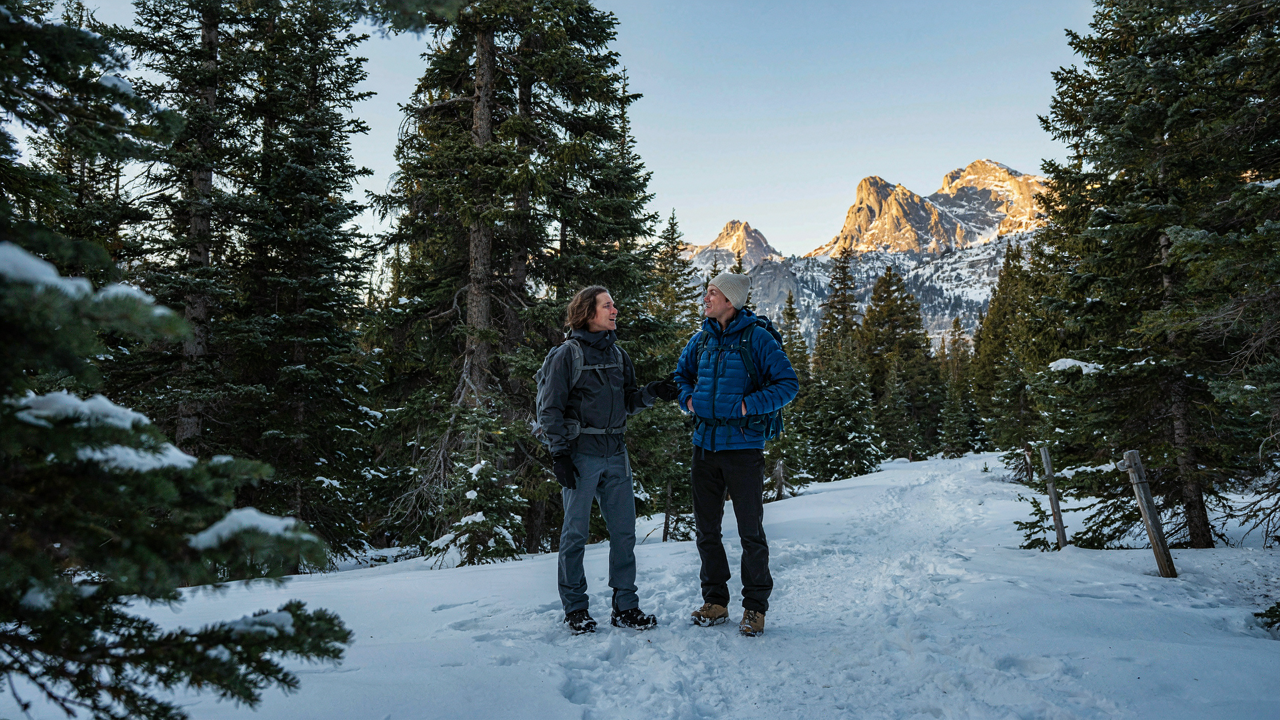
The Thermal Regulation Protocol: Ditching The “Warm Jacket” Myth

Start With Sweat Management, Not Insulation
You want one piece that does everything because buying gear feels like admitting you don’t know what you’re doing. That’s the real fear here. The mechanism is sweat. Your body generates heat through movement. When sweat sits against your skin in cold air, it accelerates heat loss. Physics calls this evaporative cooling. Base layers interrupt this cycle by moving moisture away from your body surface. You need synthetic or merino wool, not cotton. Cotton absorbs moisture and holds it. Synthetics and merino actively wick sweat outward.
Thickness doesn’t matter on base layers. Fit does. A tight synthetic layer works better than a loose wool one because contact with skin is what enables moisture transfer. College students often buy oversized base layers thinking more fabric means more warmth. It doesn’t. You’re paying for the wicking action, not the volume. Buy merino or polyester in your actual size. Wear it snug against your skin as your first layer.
Layer Air Into Your System

Insulation works by trapping dead air. Physics operates the same way whether you’re in a lab or on a ridge. Mid-layers create pockets where air can’t circulate. When you hike, your exertion level changes. You warm up going uphill, cool down at stops. A single heavy jacket forces you to choose: overheat or underheat. Mid-layers let you adjust without taking off your shell.
Fleece or wool mid-layers do this work. Fleece compresses easily, packs small, and dries fast. Wool retains warmth even when damp and regulates better if your effort level swings. Buy a mid-layer you can layer over your base, then pull off when you’re moving hard. Don’t layer two mid-layers at once. Add a shell instead. The goal is adjustability, not maximum thickness in one piece.

The “Weatherproof, Not Pricy” Imperative For Cold Weather Outfits Hiking
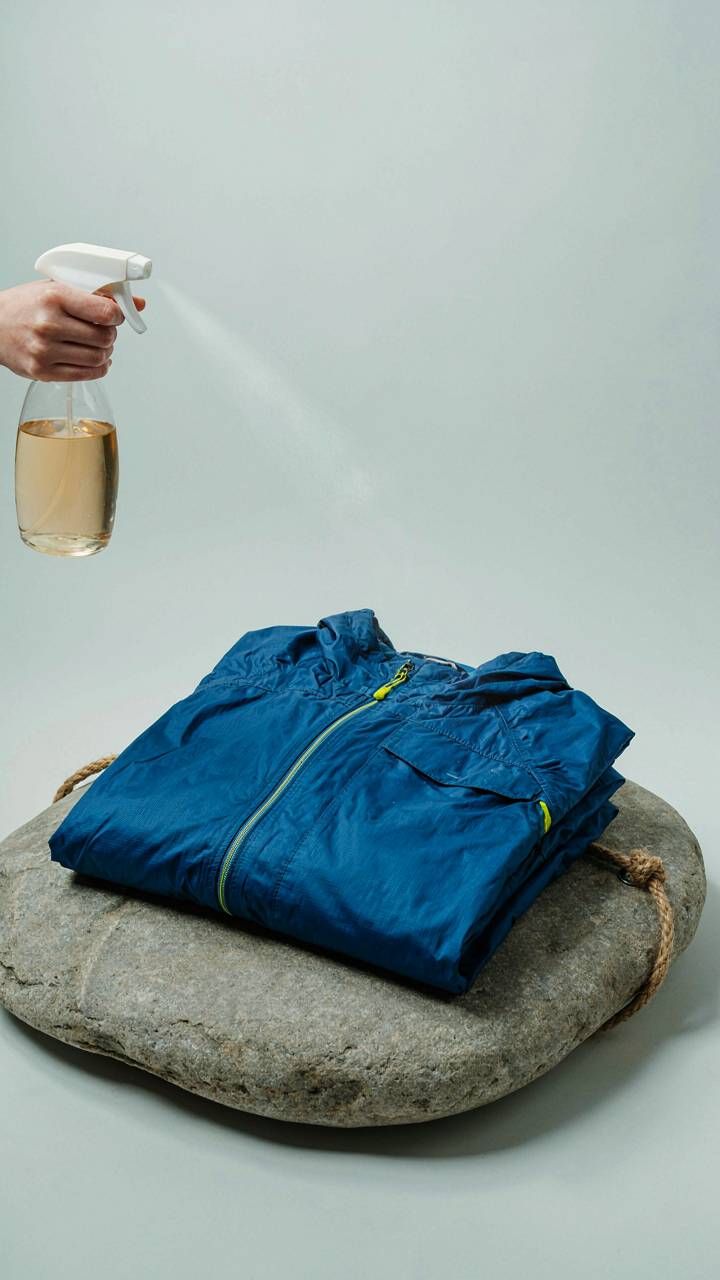
Shell Layers Block Wind And Water
You want to look like you have your life together without dropping $400 on gear. The mechanism is simple: shell layers are your only defense against the two things that kill heat fastest—wind rips warmth away through convection, water conducts it out through direct contact. A shell traps air and blocks moisture. Everything else is negotiable. Cotton fails here. Synthetics and wool work because they shed water and keep insulating when damp.
Most college students buy shells that are either too stiff to wear daily or too thin to actually shed water. The real move: find a shell with a DWR finish (durable water repellency) that packs down small enough to live in your backpack year-round. It becomes part of your rotation, not a specialized purchase. This solves the “I own one winter jacket” problem most students face. You’re building a system, not a wardrobe.
Material Science Durable Water Repellency Decoded
Physics teaches us that water beads on surfaces because of surface tension and contact angle. Apply this to fabric: DWR is the chemical treatment that makes fibers hydrophobic, forcing water to bead and roll off instead of absorbing. Nothing about this is accidental or premium-exclusive. Budget shells use the same technology as expensive ones. The difference is durability and breathability, not the fundamental mechanism.
Here’s what nobody says clearly: DWR washes out with time and detergent. Your $60 shell works like a $300 shell for six months, then performs like untreated fabric if you machine wash it in hot water with regular detergent. Restore it with a DWR reapplication spray or wash-in treatment. Cost is five dollars. This single protocol extends shell life by years and keeps you from replacing gear every season because you didn’t know how to maintain it.
Feet And Hands: Your Expedition’s Weakest Links

The Sock System That Actually Works
You’re worried your feet will freeze and ruin the hike. That’s not the real problem. Blisters and wet socks kill more outings than cold does because you ignore the mechanism: friction and moisture management work together, not separately. Cotton holds water against skin. Merino wool or synthetic blends wick moisture while reducing friction through their fiber structure. A blister forms when your sock moves against your foot, not when your foot gets cold.
- Merino wool blend socks: Naturally antimicrobial, regulates temperature, and resists odor even when damp. Darn Tough or SmartWool are college-budget accessible at most outdoor retailers.
- Two-layer sock pairing: Wear a thin liner sock under your main sock. The layers slide against each other instead of your skin, cutting blister risk significantly.
- Moisture-wicking base: Synthetic materials like polyester or nylon move sweat away from skin faster than natural fibers alone, keeping feet dry during sustained effort.
- Proper boot fit: Socks only work if your boot isn’t too tight or loose. A snug fit with room for toe wiggle prevents pressure points that trigger blisters.
- Extra pairs in your pack: Wet socks become a liability. Carry one backup pair in a waterproof bag to swap if your primary pair gets soaked crossing streams or from sweat.
Bring socks rated for your temperature range, not just your season. A sock rated to 20 degrees performs differently than one rated to minus 10 degrees. The insulation density matters as much as the material. Change socks if yours get damp before cold sets in. Moisture accelerates heat loss faster than air temperature alone.
Glove Strategy: Finding Your Operating Window
The standard advice says “pack mittens for warmth, gloves for dexterity.” That’s incomplete. Mittens insulate better because fingers touch each other, sharing heat. Gloves separate fingers, increasing surface area exposed to cold. But you need dexterity to operate your phone, adjust gear, or handle food. The real strategy is layering: thin liner gloves under insulated mittens you remove for tasks.
Liner gloves stay on while you adjust your backpack straps, check your map, or take photos. They provide minimal insulation but enough to prevent rapid heat loss during the 30 seconds your hands are exposed. When you’re moving and don’t need fine motor control, mittens go on. Merino liners work better than cotton because they maintain dexterity even when slightly damp. Synthetic insulators like PrimaLoft in your outer mittens compress less than down when wet, maintaining warmth if you brush snow or cross streams. Keep gloves accessible in a jacket pocket, not buried in your pack, so you switch them without stopping for five minutes in the cold.
Below The Belt: Cargo Pants Winter And Movement

Insulated Pants For Stationary Warmth
You want to look competent on the trail without freezing, but you’re afraid insulated pants will make you move like a robot. Here’s the mechanism: insulation works by trapping dead air. The thicker the trapped air layer, the longer you stay warm when stationary. Most college hikers underestimate how much time they spend standing still—at viewpoints, on breaks, waiting for the group. That’s where insulation pays.
Down-filled and synthetic insulated pants retain heat through static positioning. Down compresses under movement but recovers quickly when you stop. Synthetic insulation holds its loft even when compressed, making it the choice for constant motion. For winter hiking where you’ll stop frequently, either works. The key is density: look for pants with insulation in the core and thighs, not just the outer shell. This concentrates warmth where your body bleeds it fastest.
Joint Flexibility And Fabric Mechanics
Movement mechanics in cold-weather gear borrows from biomechanics: flexibility at joints determines your actual range of motion, not fabric thickness. Your hips, knees, and ankles need free travel or your hiking pace tanks. Cargo pants with rigid insulation flatten your gait. Stretchy fabrics with directional insulation let joints move naturally while keeping heat in the panels that matter.
Four-way stretch materials in modern hiking pants enable knee bend and hip extension without compromising insulation placement. Articulated knee panels and gusseted crotches eliminate the binding that kills efficiency. Fabric choice determines whether you hike efficiently or waste energy fighting your own pants. Test movement by doing a deep squat in any pants before buying. If you can’t drop below parallel comfortably, the pants restrict you too much for real terrain.
The Outfit Tracking Matrix: Engineering For Environment

How Heat Actually Leaves Your Body
You want to look competent on the trail without freezing, which means you need to stop thinking about “warmth” and start thinking about heat loss. Physics calls this thermodynamics, and the principle that matters here is the four mechanisms of heat transfer: conduction, convection, radiation, and evaporation. On a cold hike, your body bleeds heat through all four simultaneously, and most college students address maybe one of them.
Conduction happens when your body touches something colder. Cotton kills you here because it absorbs moisture and transfers heat fast. Convection strips heat when wind moves across your skin or through loose fabric. Radiation accounts for roughly 60 percent of heat loss in still air, which is why a reflective base layer under your outer shell works. Evaporation from sweat is your biggest enemy on the trail because wet fabric loses insulative value almost entirely. Layer deliberately to interrupt each mechanism, not just to “stay warm.”
Movement Costs Energy You Don’t Have To Waste
Your body is a machine that converts calories into motion, and biomechanics determines how efficiently that happens. A poorly fitted or overly restrictive cold weather outfit forces your muscles to work harder for the same output, which burns extra calories and generates unnecessary heat that escapes through sweat. That sweat then cools you faster than the warmth it created helped you. Most college students wear either too much bulk or too tight compression, both of which spike energy expenditure on a four-hour hike.
The real mechanism: looser outer layers trap air without restricting joint movement, while mid-weight insulation layers compress just enough to stay close to skin without cutting circulation. Your legs and core do 80 percent of the hiking work, so fit matters most there. Test your outfit by doing a full squat, raising your arms overhead, and rotating your torso. If you can’t move freely, your muscles will compensate by working harder, which means more sweat, more heat loss, and a colder, more exhausted version of you three miles in.
Head And Neck: Guarding Your Core Temperature

Hats And Beanies: Minimize Heat Loss
You want to look like you belong on the trail, not like you’re desperately trying not to freeze. Here’s the actual mechanism: your head has no sweat glands and minimal insulation, so it radiates heat faster than anywhere else on your body. Thermodynamics doesn’t care about your aesthetic. A beanie that covers your ears and extends past your forehead blocks wind and traps the warm air your body already generates. That’s the whole game.
Most college students buy thin beanies because they pack small. Wrong move. You need one with actual insulation, ideally merino wool or a synthetic blend. Merino regulates temperature better than cotton and doesn’t hold sweat. A balaclava works too if you want face protection without carrying two items. The fit matters: it should be snug enough to stay put in wind, loose enough that it doesn’t cut off circulation. Test it on a short walk first to make sure you’re not tugging it down every thirty seconds.
Neck Gaiters: Versatile Temperature Control
A neck gaiter gives you a tool that actually responds to conditions instead of a static layer you’re stuck with. Military doctrine calls this adaptive load: you configure your gear for the mission phase you’re in. On the approach, pull it down around your neck as a collar. If wind picks up or temperature drops, roll it up over your mouth to warm incoming air before it hits your lungs. On the descent when you’re generating heat, drop it back down. Most hikers never figure this out and just overheat or freeze in place.
Material selection separates functional from useless here. Merino wool gaiters stay effective when damp and regulate temperature without feeling bulky. Synthetic fleece works if budget is tight, but it traps sweat. Avoid cotton entirely. The gaiter should be seamless or have a flat seam to prevent chafing on the neck, especially under a pack strap. One piece weighs almost nothing and takes up a pocket corner. Deploy it based on wind speed and exertion level, not on a schedule.
Beyond Aesthetics: Chic Hiking Outfits For Performance

Durability Beats Trends Every Time
You want to look intentional on the trail because looking sloppy feels like admitting you don’t belong there. Here’s the mechanism: durability is the only aesthetic that compounds. A torn seam in week two destroys the entire outfit. A stain that spreads destroys the entire outfit. But a garment that survives three seasons teaches you something about materials and construction that Instagram never will.
College budgets force the right choice anyway. Buy synthetic base layers from brands like Patagonia or Arc’teryx that use stitching patterns designed for high-stress movement. Down jackets and wool sweaters repair with simple needle work. Cotton fails in cold and wet. Polyester blends fail in cold and wet. The materials that look good are the materials that fall apart. Pick instead what lasts.
The Real Value In Second Hand Gear
Most advice about buying used frames this as environmental virtue signaling. Wrong angle. Economics is the real mechanism here. A $300 insulated jacket loses 40 percent of its value the moment it leaves the store. A college student with $400 total outdoor budget buys used at year two and owns the same gear a first year student rents through their wallet every season.
Outdoor Gear Exchange, local climbing gyms, and Facebook marketplace groups dedicated to hiking communities host gear that’s been tested under real conditions. You learn what fails. You learn what lasts. A used Arc’teryx shell jacket or Patagonia down parka costs half retail and arrives with user feedback already embedded in its condition. Check seams, zippers, and insulation clumping before purchase. That’s your protocol.
The Kyrgyzstan Outfit Blueprint: Adaptability In Extremes

Layering For Rapid Changes
You want to look like you have your life together on the trail. The real mechanism is thermal regulation under unpredictable conditions. Think of layering like a thermostat, not a costume. In thermodynamics, systems maintain equilibrium by exchanging energy with their environment. Your outfit does the same thing. At altitude, temperature swings twenty degrees in hours. You add a layer, you shed it, you readjust. The goal isn’t looking prepared. It’s staying functional when conditions change faster than you can hike down.
Most advice tells you to wear three layers. That’s incomplete. What matters is what each layer actually does and when you remove it. Base layers wick moisture and stay close to skin. Mid layers trap dead air and add insulation only when needed. Outer shells block wind and precipitation without trapping heat underneath. The mechanism: you stack these in reverse order as you climb higher and temperature drops. You strip them in reverse order as you descend or exert harder. The real skill is knowing which layer comes off first when you start sweating uphill, not which one looks best.
Minimal Gear, Maximum Flexibility
College students have no budget and no car space. Those constraints force clarity. You don’t pack backup items. You pack items that do multiple jobs. A merino wool midlayer works as insulation and as a sleep layer in your tent. A windbreaker works as an outer shell and as a pack cover if rain hits sideways. A neck gaiter works as face protection, ear coverage, and an emergency hat. Every piece must justify its weight.
The protocol: before packing, list what each item handles. If it handles one job, it stays home. If it handles two jobs in different conditions, it earns its spot. Pack a base layer, one midlayer, one shell, one hat, gloves rated for the exact elevation you’ll hit, and one backup pair of gloves in a waterproof bag. Strip everything else. On the trail, you’ll find out fast what you actually needed and what you carried for ego.
The Only Real Obstacle Is Believing Marketing Hype Instead Of Understanding Fundamental Principles

Every brand wants you thinking you need their expensive jacket. You don’t. You need layers that trap heat, fabric that sheds moisture, and wind protection. That’s it. Stop scrolling Instagram for validation. Go to a thrift store today and build a base layer outfit for under fifty bucks using cotton, wool, and a windbreaker. Test it this weekend on a real trail. You’ll realize the gear companies have been selling you insecurity, not winter hiking solutions.