

Beyond The Instagram Myth: What Canyoning Actually Demands
What Canyoning Actually Is
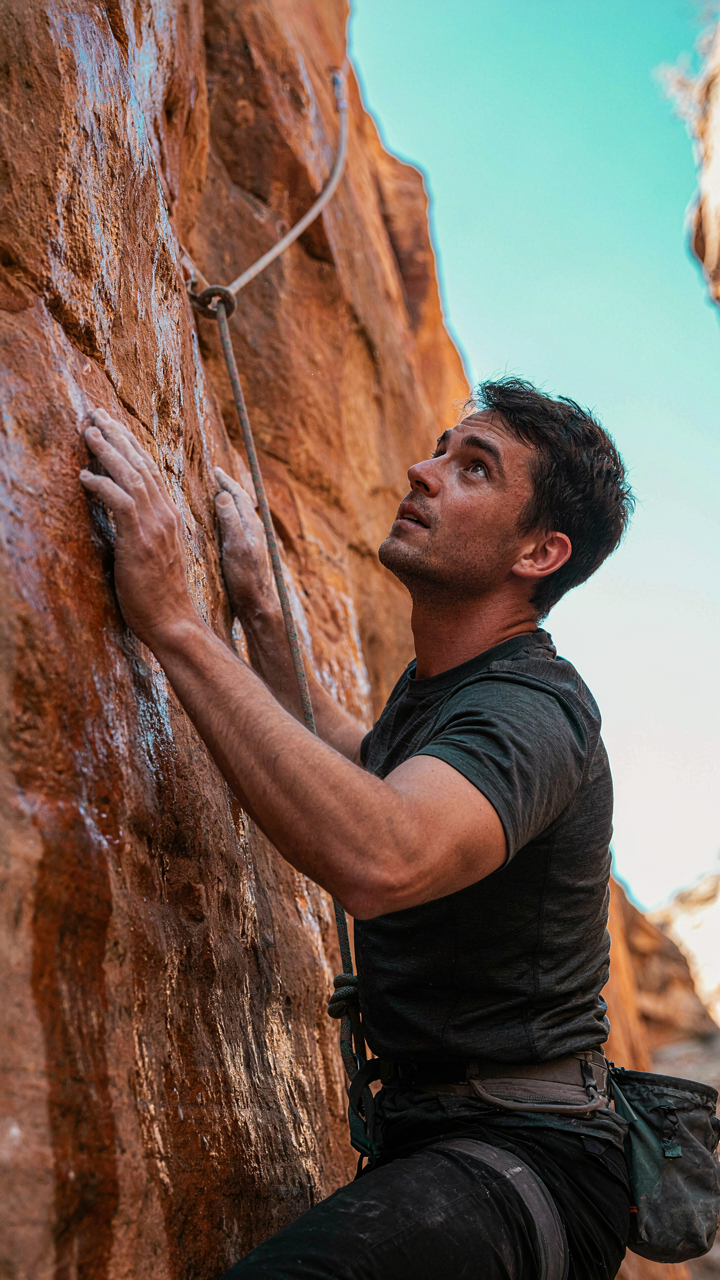
You want to believe canyoning is simpler than it is because admitting the truth means admitting you need more training than a weekend. Here’s the mechanism: canyoning combines rappelling, climbing, swimming, and route-finding in an environment designed to punish mistakes. It’s not rock climbing with water. It’s not whitewater rafting with ropes. It’s a hybrid sport where failure in any single component kills the whole operation. Most beginners confuse confidence with competence because Instagram shows the descent, not the year of skill-stacking that preceded it.
The core issue is that water obscures consequences. You can’t see a submerged hazard. You can’t feel the integrity of a handhold when wet. You can’t recover from a blown rappel decision the way you might on dry rock. The canyon constrains your options. You move forward or you don’t move. This is why canyoning demands respect before it demands adrenaline.
The Unspoken Prerequisites

Borrow a term from aviation: you need positive energy state management. In flying, positive energy means you have altitude, airspeed, and options to recover from error. In canyoning, positive energy means you have fitness, technical skill, and mental bandwidth before you enter the canyon. The common advice is to “start with beginner canyons.” That’s incomplete. You need to start with beginner’s fitness and beginner’s technical skill set, which takes months, not weekends.
Physical prerequisite one: grip strength and finger endurance. Most beginners have neither. You need to climb regularly to build the tendons that won’t fail mid-rappel. Mental prerequisite two: you must stay calm when your body signals danger, because water creates the illusion of danger even when conditions are safe. The protocol: build climbing fitness for three months, learn rope technique in a gym for two months, then find a guide for your first canyon.

The Kern River Canyoneering Imperative: Gear That Doesn’t Fail

Your Harness And Helmet Are Not Status Symbols
You want the gear to feel professional so people respect your decision to do this. That’s not why they matter. Your harness and helmet prevent the specific failures that kill people in canyons. A harness distributes force across your body during a rappel so your organs don’t compress. A helmet protects your skull from rock strike during a fall or scramble. Both fail if you buy the cheapest option or trust hand-me-downs with hidden damage.
Use a climbing-specific harness rated for vertical work, not a generic safety harness. Inspect it before every trip for fraying webbing, torn stitching, or bent metal. Your helmet must meet climbing standards, not just construction standards. Replace it after any significant impact. Check your carabiner gates click closed every single time you clip in. One gate failure during load means you’re falling.
Team Redundancy Beats Individual Capability
Think of rope redundancy like military supply lines: one source fails, the mission collapses. Most beginners bring one rope and one backup device. That’s not redundancy. Bring two ropes rated for your group’s weight. Carry two belay devices. Have a second communication method beyond shouting. The Kern River canyons don’t have cell service in most sections, so a whistle and hand signals are your actual system, not your backup.
Each person carries their own webbing for anchors. Each person carries their own knife for emergency cutting. Your group must have multiple ways to stop a fall or lower someone safely. Set up group anchors with slings from at least two different people so no single person’s equipment failure stops the rescue. Before you descend, verify that two people can execute an emergency lower with what you have on site.
Gravity’s Gambit: Mastering Waterfall Rappelling
The Brake Hand Setup
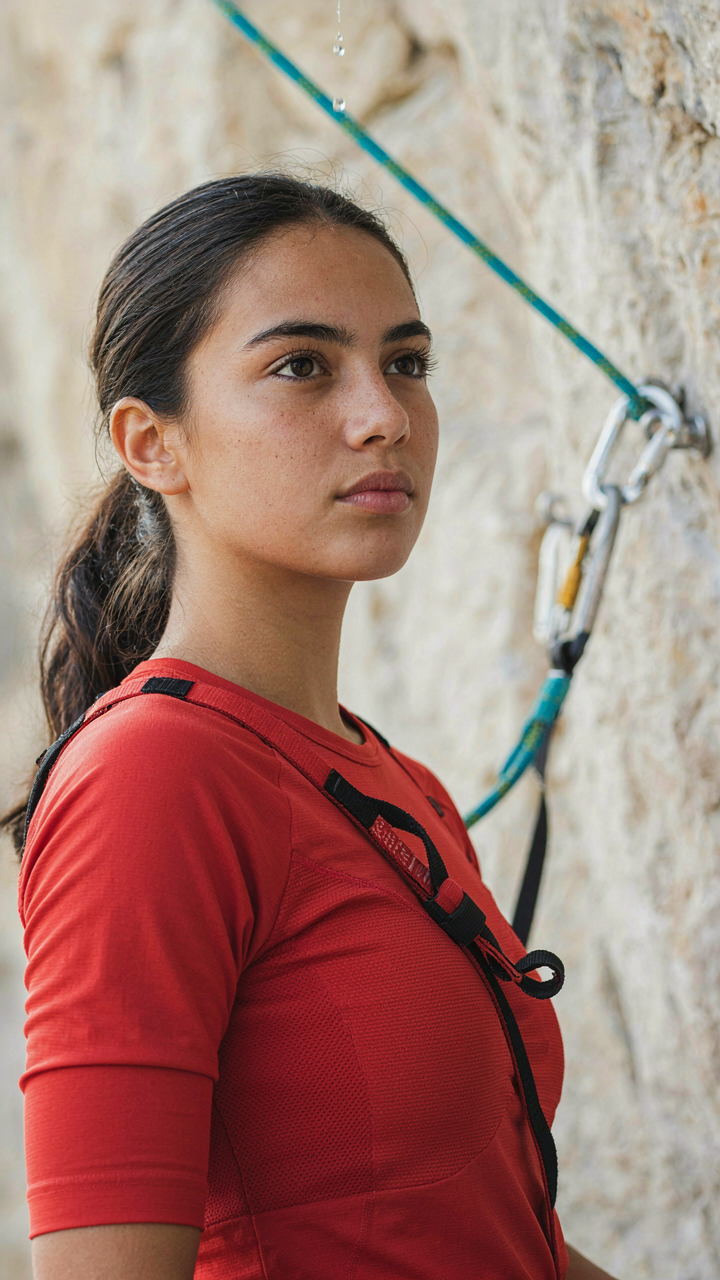
You want to look competent in front of your group. That’s not the real issue. The real issue is that a bad brake hand means you accelerate into a waterfall with no way to stop. Rappelling borrows from physics the concept of friction as resistance. Your brake hand creates friction on the rope. Without it, gravity wins outright.
The brake hand stays below the rappel device at all times, gripping the rope firmly against your body. Most beginners either grip too loosely, hoping the device does all the work, or they grip with their fingers instead of their full hand. Your palm, not your fingers, generates stopping power. Position your brake hand so the rope runs across the heel of your hand and wraps toward your hip. This distributes load across bone and muscle, not tendons that fatigue and fail.
Anchor Integrity And Redundancy
Most canyoneering guides say check your anchor twice. That’s not enough. The anchor system must survive a single point failure. This means you need at least two independent anchor points, each capable of holding the full load alone. One faulty bolt or one piece of flawed rock cannot compromise your descent.
Before you rig anything, inspect both anchor points for cracks, loose rock, or deterioration. Set two carabiners on two separate bolts or natural features, never one. Clip both carabiners to a load-distributing or master point carabiner facing the correct direction. The rope threads through the master point carabiner, creating the anchor you descend from. Test the system by applying downward pressure before you commit your weight.
The Okatse Canyon Protocol: Strategic Route Navigation
Water Flow Tells You What The Rock Won’t
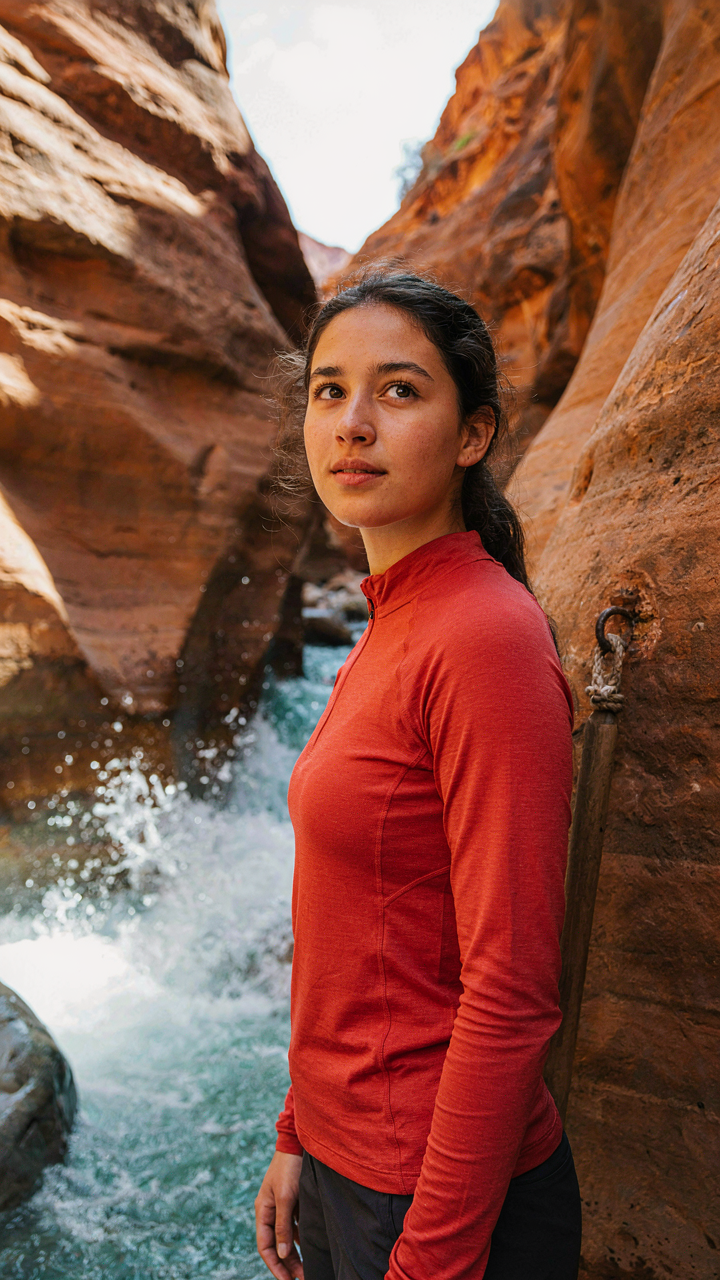
You want to feel like you’re not the beginner in the group. Here’s what actually matters: water reveals the canyon’s decision tree before you enter it. Hydrology, borrowed from civil engineering, maps onto canyoning as your early warning system. Fast water means constriction upstream. Slack water means a pool or obstacle. The rock formation you see is static noise. The water behavior is the signal.
Most beginners fixate on rappel anchors and rope setup. They miss the fact that water volume and velocity reshape hazards hourly. A canyon dry in the morning floods by afternoon in rain zones. You need to read the current direction, the spray pattern on walls, and the sound frequency. Hollow roar means a drop. Whisper means shallow flow. That’s not poetry. That’s mechanism.
Pressure Decisions Require Pre Made Rules
The generic advice says “stay calm and think clearly.” That’s useless under adrenaline. Military decision doctrine calls this “commander’s intent” – you decide the criteria before the moment arrives. In canyoning, this means you establish abort thresholds before you rappel, not during descent.
Set three hard stops before entry: water temperature threshold, visibility distance, and group separation limit. If water drops below 55 degrees Fahrenheit in a slot canyon, you have hypothermia risk on a two hour exposure. If you can’t see more than ten feet ahead, navigation error probability spikes. If anyone separates from the group by more than visual contact range, you exit immediately. Write these on your hand if needed. The decision happens on paper, not in the canyon.
Survival Of The Fittest: An Evolutionary Biology Perspective
Your Nervous System Doesn’t Know The Difference
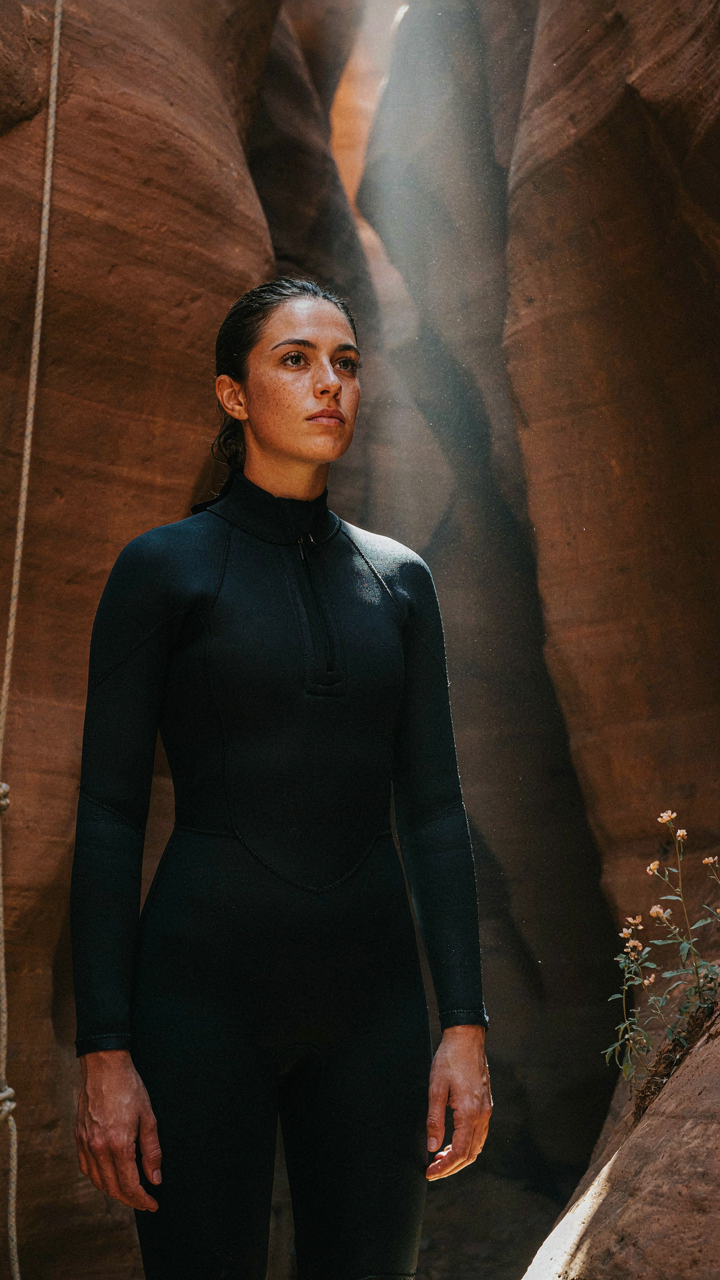
You want to believe you’re rational when water starts moving fast. You’re not. Evolutionary biology calls this the fight-or-flight response, and in canyoning it’s your amygdala flooding your system with cortisol and adrenaline before your prefrontal cortex can process what’s actually happening. The mechanism is ancient: your body treats a slot canyon rappel the same as a predator. Recognition matters because panic kills more beginners than the canyon does.
Your job is to desensitize this response through controlled exposure, not willpower. The first time you rappel, your nervous system treats it as a threat. By the fifth time, the same stimulus produces a smaller chemical response because your brain has filed it under “survived that.” This isn’t motivation talk. It’s neurochemistry. Repeat exposure rewires what your body considers dangerous, which is why progression matters more than intensity.
Building The Pathway, Not The Courage
Your brain doesn’t build courage. It builds neural pathways through repetition. Neuroscience proves this: myelination, the insulation of nerve fibers, increases with practice, making signals fire faster and more efficiently. In canyoning, this means your body learns to execute rappel techniques, water entry, and route-finding without conscious deliberation. The common advice is to “just push through fear.” That’s incomplete. You’re not pushing through anything. You’re literally rewiring your nervous system’s response to the stimulus.
Start with easier canyons and controlled variables. A beginner canyon with established anchors, clear water level patterns, and moderate heights lets your brain catalog the experience as manageable. Your muscles learn the motion. Your vestibular system adapts to the vertical environment. Your decision-making gets faster because you’ve run the scenario before. After ten descents on similar terrain, your body stops treating the descent as a crisis and starts treating it as a task. That shift is when the adrenaline becomes usable instead of paralyzing.
Jungle Waterfall Adventure: Advanced Maneuvers For The Ambitious

How To Jump And Slide Without Breaking Yourself
You want to feel invincible. That’s the real driver here. But jumping off a waterfall isn’t about courage—it’s about physics. Gravity applies the same force whether you’re confident or terrified. The mechanism that keeps you intact is understanding how water absorbs impact force differently than solid ground. A jump from 15 feet into moving water requires the same entry angle and body position as a 25-foot drop. Get the mechanics right, and fear becomes irrelevant because the outcome becomes predictable.
The consensus advice says “just commit.” That’s incomplete. Commitment without technique gets you hurt. Here’s what actually works:
- Entry Angle: Feet-first or streamlined headfirst, never belly-first. Belly flops create chest cavity pressure that injures ribs and organs. Water entry speed matters more than jump height.
- Landing Zone Assessment: Check for submerged rocks, fallen logs, and current patterns before any jump. Move to the pool’s deepest section. Shallow water kills jumpers, not cliffs.
- Slide Technique: Sit upright, not on your tailbone. Feet forward, heels dragging lightly. Your bodyweight controls speed, not arm position. Tensing your core prevents spine compression on impact pools.
- Speed Control On Slides: Increase friction by pressing your seat harder into the rock. Decrease friction by arching your back slightly. This adjusts your velocity in real-time without losing control.
- Exit Angle: Push away from the rock face mid-slide to avoid slamming into vertical walls. Your legs absorb the final impact, not your head or spine.
Most jumpers fail because they overthink the leap and underthink the landing. You generate 3 to 4 times your body weight in force when you hit the pool. Brace your core seconds before contact. Tuck your chin. Keep your legs slightly bent to absorb deceleration. The water doesn’t care about your mindset. It cares about your form. Practice these positions on flat ground first. Then move to the canyon. Muscle memory replaces panic.
Ascending Ropes In A Canyon Environment
Rope ascents in a canyon aren’t climbing. They’re mechanical positioning under load. Think of rope work like leverage in physics: you’re not pulling yourself up through strength alone. You’re using friction and body geometry to redirect force. Most beginners use their arms instead of their legs, which burns out the wrong muscle groups and wastes energy needed for the rest of the descent.
Ascenders come in two types: mechanical and friction-based. Mechanical ascenders (like handled ascenders or jumars) lock onto the rope via a cam system. You pump them upward and they stay put. Friction-based systems use Figure-8 descenders or prusik knots that you slide up manually. In a canyon, mechanical ascenders win because canyons demand speed and fatigue management. You’re often ascending in wet conditions after multiple rappels. Slip-prone hands and forearms can’t be your limiting factor. The ascending protocol: clip your harness to the mechanical ascender, lock your legs into the rope below it, then drive upward using your quads and glutes, not your shoulders. Reset and repeat. Your ascender does the holding. Your legs do the work.
Ascending wet ropes presents a real problem nobody mentions clearly: wet rope friction drops by nearly half compared to dry rope. Your ascender grip loosens. Your footwork must compensate. Wear shoes with aggressive tread, not smooth soles. Position your feet wide on the rope to increase surface area. Never rely on upper body strength on wet canyon ascents. You’ll run out of energy at the worst moment. Anchor yourself to a secure point before attempting any ascent. If the ascender slips, your backup anchor saves your life. This is non-negotiable protocol.
Beyond Bali Activities Adventure: The Real Risk Assessment

Water Behavior Changes Everything
You want this section because you’re hoping someone else has already calculated the danger for you. They haven’t. The core mechanism is this: canyons concentrate water in ways that turn gradual weather into instant threat. Hydrology—the study of water movement—teaches us about flow rate. In a canyon, flow rate doesn’t scale linearly with rainfall. A storm five miles upstream that seems irrelevant will arrive as a wall. Flash floods kill more canyon users than any other single factor because people misunderstand the delay between cause and effect.
Canyon systems funnel water through narrow passages. A narrow passage amplifies velocity and volume. You cannot see the storm that will kill you. By the time you hear it, you’ve already lost your exit window. This is why guides establish water level benchmarks before descent and pull groups out at predetermined thresholds. The rule is mechanical, not emotional: if water reaches the marked rock at the canyon entrance, you do not enter, regardless of current conditions downstream seeming calm.
Prepare For Failure, Not Hope
Common advice says “bring a rope.” That’s incomplete. Real emergency preparedness means you can move yourself and one other person out of the canyon using only what’s on your body. That’s the actual standard. Self-rescue basics reduce the delay between problem and solution, which is what separates minor incident from fatality in canyons where rescue teams cannot reach you for hours.
The protocol: carry a harness, prussik loops, and carabiners on every descent, not in a pack that gets separated. Learn to prussik before your first canyon. Prussiking is mechanical advantage applied through friction—you climb rope using loops that grip when weighted and slide when unweighted. Practice this until your hands do it unconsciously. Test your setup on an outdoor climbing wall first. Your group needs one member who can establish an anchor and lower an injured person. That skill transfers the responsibility from chance to procedure.
The Rock Climbers’ Edge: Translating Skills For Canyoning Sport

Your Knots Won’t Save You If Your Hands Are Slow
You think knowing knots makes you safe in a canyon. It doesn’t. Speed does. The real advantage climbers have is muscle memory built through repetition, not theoretical knowledge. In canyoning, efficiency under fatigue is the actual defense against mistakes. A climber who ties an anchor in thirty seconds while exhausted beats a climber who takes two minutes when fresh. Your hands need to operate on autopilot before you ever clip into a canyon rope system.
The standard advice says “learn the double figure eight and the bowline and you’re done.” Wrong. You need to drill these knots until your fingers tie them in the dark, underwater conditions, and while wearing gloves. Canyoning demands knot competency, not knot knowledge. Rock climbers already know this because they’ve spent years building this exact skill. They don’t think about tying. They execute. That’s the transfer worth making. Practice each knot fifty times before your first canyon.
Weight Over Technique, Not The Other Way Around
Movement economy is borrowed directly from biomechanics, the field that studies how bodies expend energy. In climbing, climbers learn to keep their hips close to the wall to reduce arm strain. In canyoning, this translates to a simple rule: your body weight moves the load, not your muscles. Most beginners fight the rope and the rock. Climbers understand that fighting is costly. They use geometry instead.
The real efficiency difference shows up in rappelling footwork and edging on wet rock. Climbers position their feet underneath their body, not to the side. They keep elbows locked rather than bent when hanging on a static rope. They lean back instead of hugging the wall. These aren’t stylistic choices. They’re structural decisions that preserve arm strength for the actual technical sections. Do what the rock demands, not what feels instinctive. Angle your body to let gravity work, and your arms last twice as long.
The Real Obstacle Isn’t The Canyon; It’s Your Refusal To Embrace Calculated Risk

Most people don’t skip canyoning because it’s dangerous. They skip it because they’ve confused danger with stupidity. The canyon doesn’t kill careless people. It kills people who never learned the difference. You already manage risk every day without thinking about it. Canyoning for beginners just makes you conscious of what you’re doing. Call a guide today, book a trip next month, stop waiting for permission to feel alive. Your comfort zone isn’t safety; it’s just a slower way to die.