
The Instagram Illusion: Grand Canyon Viewpoints Engineered For Likes
Where The Camera Wins Over Geology
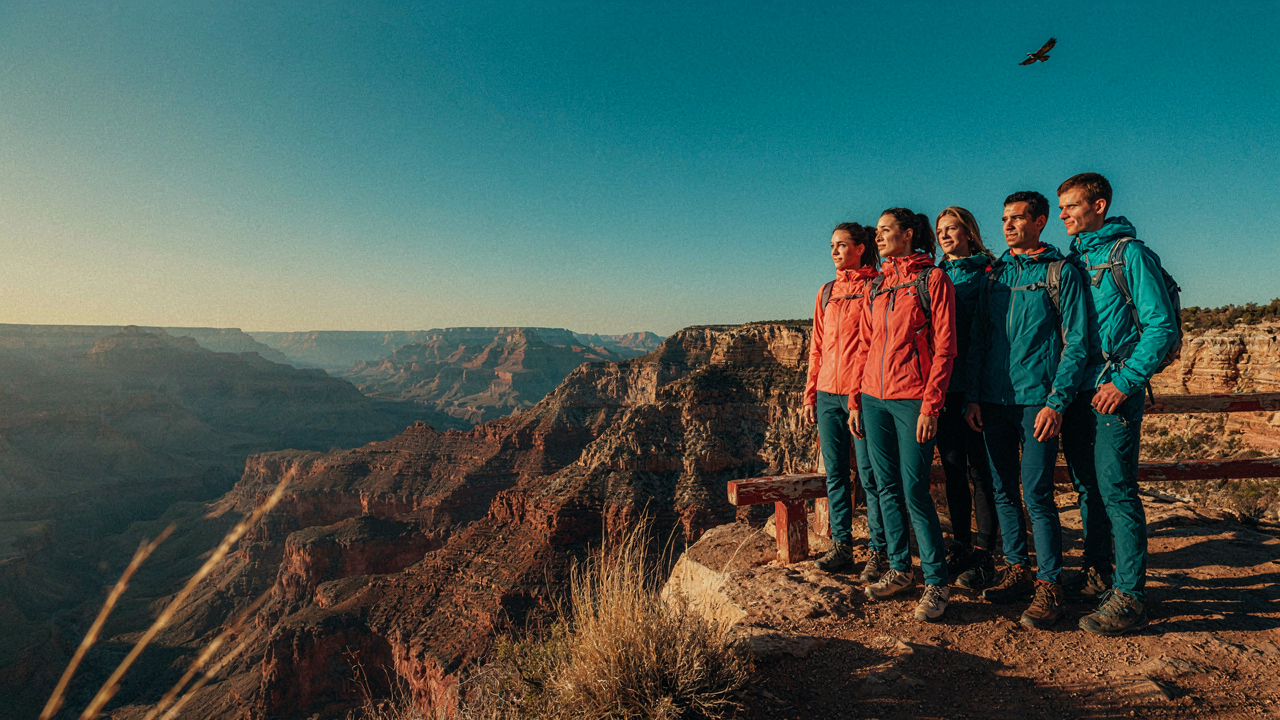
You want proof you were somewhere meaningful without doing the work to understand it. The Grand Canyon’s most photographed viewpoints aren’t positioned by accident—they’re engineered through consumer psychology, not natural significance. The National Park Service maintains designated overlooks along the South Rim specifically because they frame the canyon in ways that read well in two dimensions. These spots concentrate foot traffic, creating self-reinforcing social proof: everyone shoots here, so it must matter.
The mechanism mirrors retail design. Department stores place high-margin items at eye level because visual prominence drives purchase intent. Canyon viewpoints operate identically. Mather Point, Grand Canyon Village, and Yavapai Observation Station get thousands of daily visitors not because they reveal the canyon’s geology most clearly, but because they’re accessible, marked, and photogenic at predictable times of day. The Park Service knows this. They design pathways, railings, and sight lines to maximize frame composition. You’re not discovering a view. You’re consuming a pre-composed product.
The Friction Between Crowds And Actual Seeing
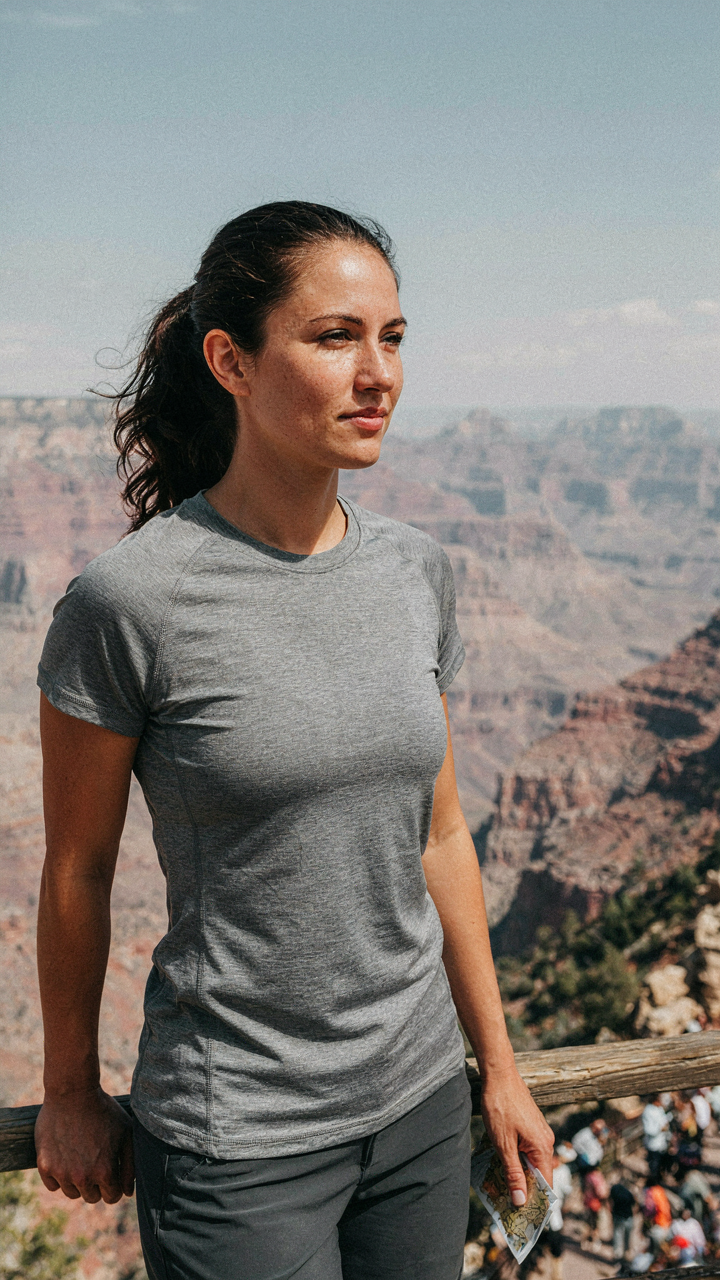
Crowding isn’t just annoying—it’s a tax on perception. When thirty people occupy a viewpoint simultaneously, each individual’s processing power fragments. You spend mental energy navigating bodies instead of observing rock strata, light angles, or the canyon’s actual depth. Economics calls this a negative externality: your experience degrades as more people arrive, but you don’t pay for that degradation directly.
The Grand Canyon’s South Rim receives roughly 4 million visitors annually. The most popular viewpoints absorb a disproportionate share, meaning peak hours create visual noise that prevents the kind of sustained observation geology demands. A crowded overlook becomes a photo opportunity collection site, not a learning environment. The solution isn’t visiting less-known viewpoints—it’s timing. Sunrise or sunset limits crowds through natural filtering. Early morning hikers and photographers occupy overlooks before the main traffic wave. You see the same canyon with 80 percent fewer people by shifting your arrival time two hours earlier than consensus expects.

The Effort To Reward Ratio: Your Personal Grand Canyon National Park

Mapping Your Unique Journey
You want permission to skip the crowded spots without feeling like you’re missing something real. Here’s the mechanism: canyon viewpoints follow an inverse relationship between accessibility and solitude. The viewpoint that requires zero planning attracts maximum traffic. The one demanding four hours of driving attracts people willing to trade time for space.
Grand Canyon National Park sits at 7,000 feet elevation on the Colorado Plateau. Most visitors hit South Rim’s corridor trail viewpoints within walking distance of the village. Hermits Rest, Cape Royal, and Desert View exist on the same property but demand progressively longer drives. Each additional mile of required travel drops visitor density exponentially. You’re not discovering hidden gems by accident. You’re executing a simple formula: distance from parking equals probability of solitude.
Discovering Arizona Beyond The Obvious
Most canyon viewpoint advice treats Arizona as a single destination. Wrong. Arizona holds distinct canyon systems across different plateaus and geologies, each with separate access patterns and crowd dynamics. Canyon de Chelly sits in the Navajo Nation two hours northeast of Flagstaff. Valley of the Gods sprawls across Utah border country. Walnut Canyon sits fifteen minutes east of Flagstaff with a completely different visitor profile than the Grand Canyon.
The real play is matching your constraints to the canyon system that fits. If you have one day and live in Phoenix, Walnut Canyon or Apache Trail viewpoints beat a six hour round trip to the South Rim. If you’re already at the Grand Canyon and want escape without leaving, drive to Toroweap on the remote North Rim approach. That route takes eight hours one way and sees roughly 40 visitors daily against 10,000 at Mather Point. Your decision framework is simple: calculate total hours available, subtract driving time, then match remaining hours to the canyon system whose viewpoint density matches your tolerance.
The Solitude Protocol: Finding Great Canyon Peace
When The Crowds Thin Out
You want the Instagram moment without the Instagram crowd. The real mechanism is timing arbitrage. Tourist peaks at canyons follow predictable patterns: peak season, peak hours, peak days. Most people visit between 10 AM and 3 PM during summer months and weekends. You get the same viewpoint, same light quality, same experience by shifting your arrival to 6 AM on a Tuesday in April. The viewpoint doesn’t change. The experience does because you’re alone.
Crowds aren’t a minor inconvenience. They’re a lens distortion. They pull your attention toward managing proximity to other bodies rather than toward the landscape. Weather and season control crowd density more reliably than any other factor. Early morning visits to major canyons like the Grand Canyon or Zion consistently yield empty viewpoints until 8 or 9 AM. Winter months at most Southwest canyons drop visitor counts by 60 to 80 percent. The mechanism is simple: plan against the consensus schedule, and you inherit the space.
Attention Without Distraction
Think of your consciousness like a radio frequency in signal processing terms. The landscape broadcasts at one frequency. Crowds, phone notifications, and planning logistics broadcast at competing frequencies. Attention goes to whichever signal is strongest. Your job is to eliminate competing signals so the landscape becomes the dominant frequency.
- Phone on airplane mode before you arrive: You can’t half-commit this. Notifications disrupt attention at the neurological level. Leave it off for the entire duration.
- Arrive with no agenda for how long to stay: Time pressure creates a secondary frequency that competes with perception. Stay until you genuinely feel done, not until your schedule demands it.
- Position yourself without a clear view of other people: Your peripheral vision registers movement and proximity automatically. Position yourself where you can’t see the parking lot, path, or other viewpoint areas.
- Spend at least 20 minutes in one location before moving: The landscape reveals detail in layers. Your eye catches the broad strokes immediately. Subtlety emerges only after extended attention.
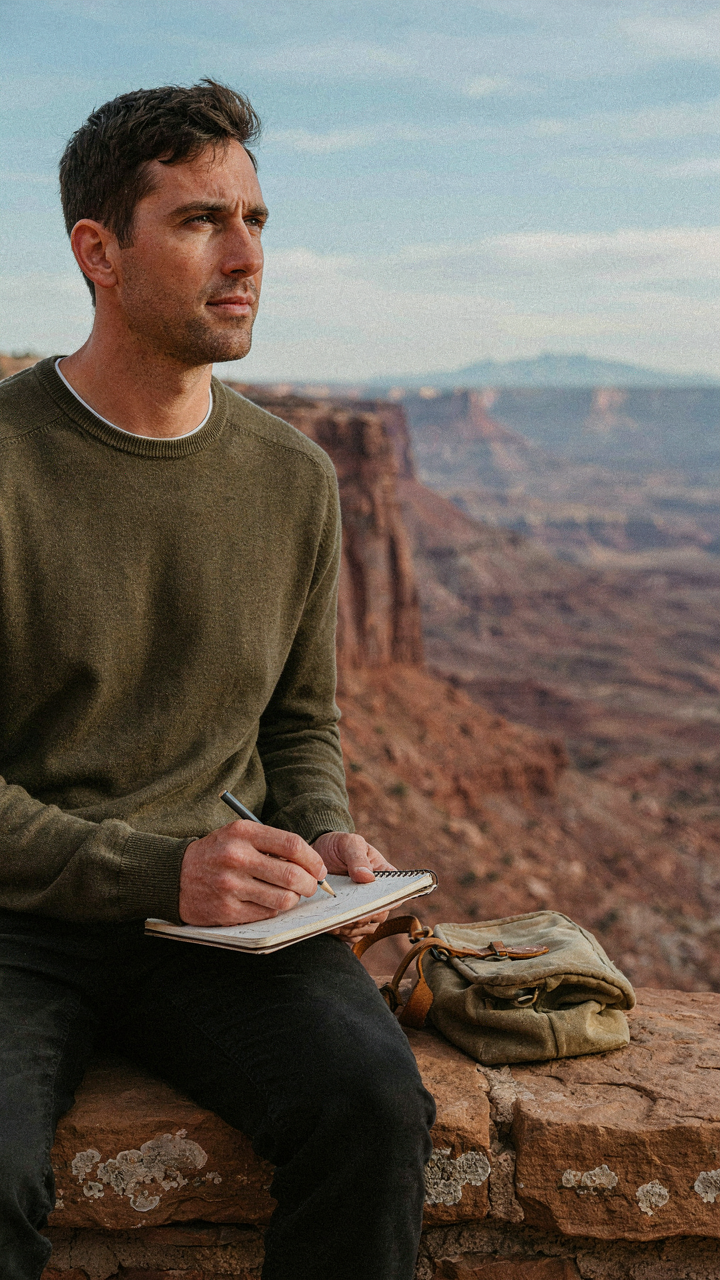
- Sketch or write one concrete observation about the rock geometry: This forces your visual system to track specific features rather than passively receive the view. Writing creates cognitive friction that locks attention in place.
Immersion in a canyon viewpoint isn’t mystical. It’s the removal of competing stimuli until a single signal dominates your attention. The mechanism is environmental design applied to your own sensory intake. You’re not seeking a feeling. You’re creating the conditions where perception can function without interference.
Ecology Of Awe: Biomimicry For Grand Canyon Photography
Adapt Your Perspective To Survive The Moment
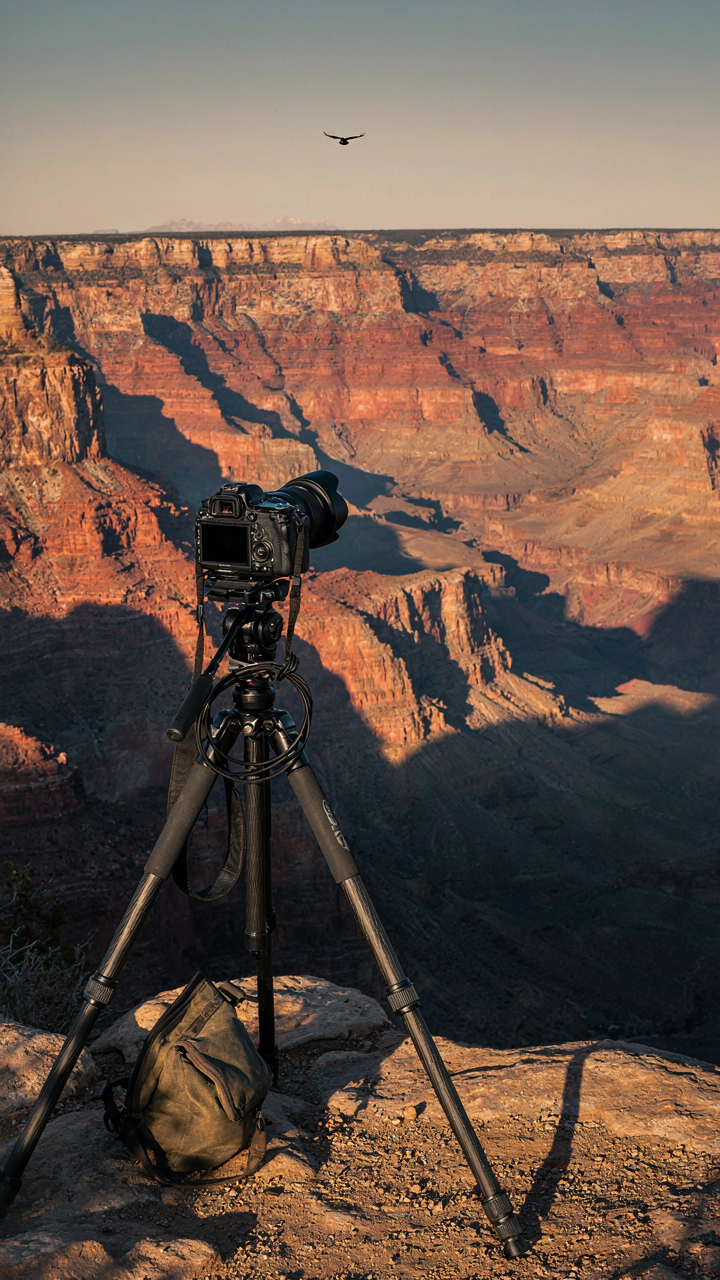
You want the shot that proves you were there. That’s the real game. But the mechanism biology names as natural selection applies directly to viewpoint choice: organisms that fail to adapt to their environment don’t reproduce. Your camera won’t either if you plant yourself where a thousand other cameras already stand. The Grand Canyon’s most-photographed overlooks—Mather Point, Yavapai Geology Museum vista, the South Rim near the village—trap you in visual convergence. Everyone shoots the same angle. Your adaptation is repositioning away from the herd before sunrise, or finding the minor unnamed pullout where light hits differently.
The real survival tactic is temporal adaptation. The Canyon changes shape three times daily as light moves. Morning light from the East Rim creates shadow geometry that vanishes by noon. Afternoon light flattens the south-facing walls. Dusk reverses every angle. Most photographers shoot midday because it’s convenient. You don’t adapt, you repeat their failure. Scout the specific viewpoint across multiple hours on different days. The viewpoint that delivers at 6 AM might be worthless at 3 PM. Adaptation means shooting when the location performs, not when your schedule allows.
Blend Behavior To Reduce Visual Noise
The symbiotic principle in ecology describes organisms that function together, gaining advantage neither could achieve alone. You are not separate from the Canyon viewpoint. You are an optical system within a larger visual system. Your presence, your tripod, your body position all register as noise in the photograph if they’re fighting the environment’s logic. Most photographers treat the Canyon as an object to extract from. They stand perpendicular to the rim, frame it dead-center, and leave. That’s not blending. That’s intrusion.
Symbiotic viewing means anchoring yourself to the Canyon’s existing visual structure instead of imposing one. If a viewpoint has a natural line created by rock formations or ridge shadows, position your camera to extend that line, not interrupt it. If the geology creates a natural path the eye wants to follow, let your composition amplify that path. If the existing light already separates foreground from mid-ground from distant rim, your framing job is to reveal that separation more clearly, not create a new hierarchy. This requires spending time at a viewpoint without shooting. Watch how the landscape organizes itself. Then position your camera as part of that organization, not against it.
Beyond The Postcard: The Grand Canyon Wallpaper Effect
When The View Owns You Instead
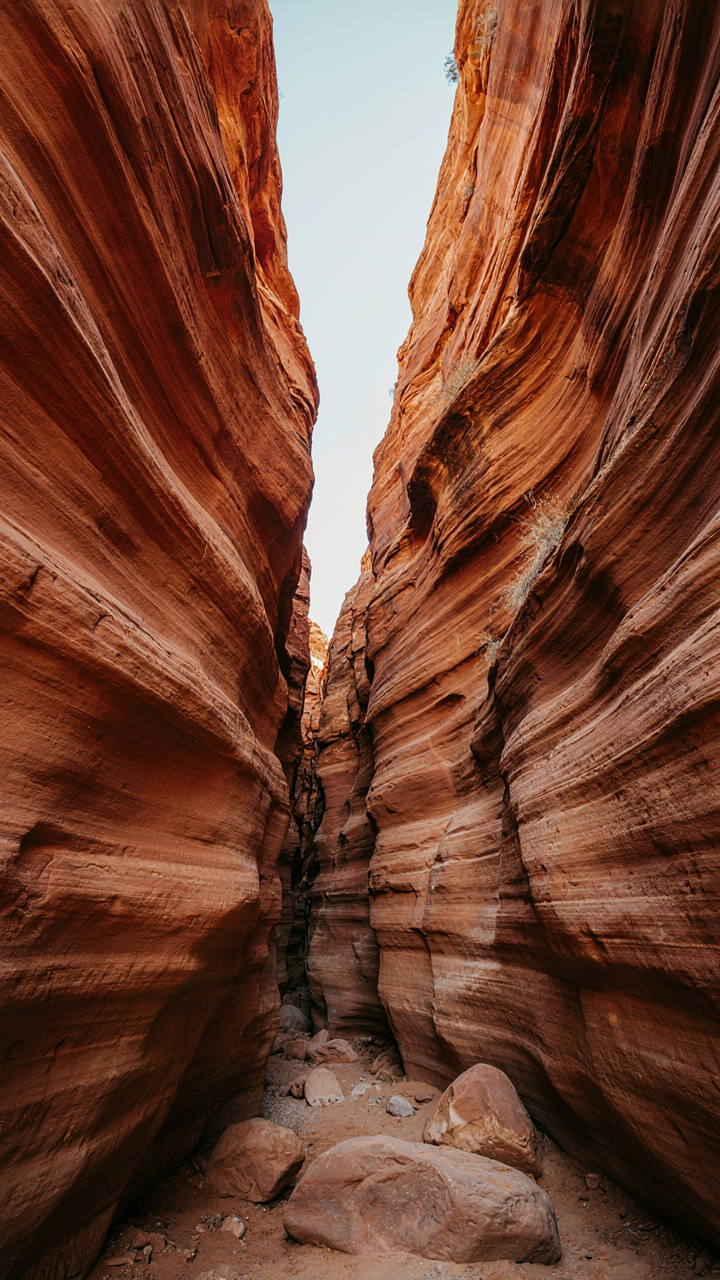
You want proof that you were there. That’s the real driver here, not enlightenment. The postcard viewpoint—the one everyone photographs—solves a status problem. It’s pre-approved beauty, pre-validated by millions of images. Borrowing from design psychology’s concept of “cognitive fluency,” these viewpoints are the high-fluency option: your brain recognizes them instantly, which makes them feel more real, more worth capturing. The mechanism is exposure. Repeat a canyon view enough times across media, and it becomes the view. Mather Point, Hopi Point, Grand Canyon Village overlook—these locations hijacked the frame before you ever arrived.
The postcard effect creates a feedback loop. You see the famous angle online, travel to replicate it, add your version to the pile, and the cycle reinforces itself. Every shared image makes the next visitor’s decision easier: shoot from here. The viewpoint becomes invisible as a choice. You’re following a beaten visual path, not exploring. This matters because it trains your eye to accept one interpretation of the canyon’s scale and structure. You miss the angles that would reveal how the light moves differently from the rim’s edges, or how the rock stratification reads from less-trafficked overlooks.
Build Your Own Sight Line
The common advice is “get there early” or “use a wide-angle lens.” Wrong focus. Those tactics just optimize the existing frame. You need to break the frame entirely. Start by identifying what the canonical viewpoint is actually showing you: usually the widest possible expanse from the safest, most accessible location. Then move perpendicular to it. Walk the rim east or west of the overlook. Descend slightly if permitted. Change your elevation by even fifty feet and the canyon’s topology shifts. You’re no longer viewing a landscape; you’re viewing a specific cross-section of geology that changes its apparent relationships based on angle.
The protocol is simple. Arrive at a famous viewpoint, then deliberately leave it. Spend fifteen minutes finding a position where you can see the same geological layers but from an unexpected angle. Shoot from there. The resulting image won’t be prettier or more impressive to strangers, but it will be yours—and more importantly, it will show you something about how canyons actually work that the postcard never could.
The Unseen Depths: Canyon Landscape Beyond The Rim
Trails Most People Never Walk
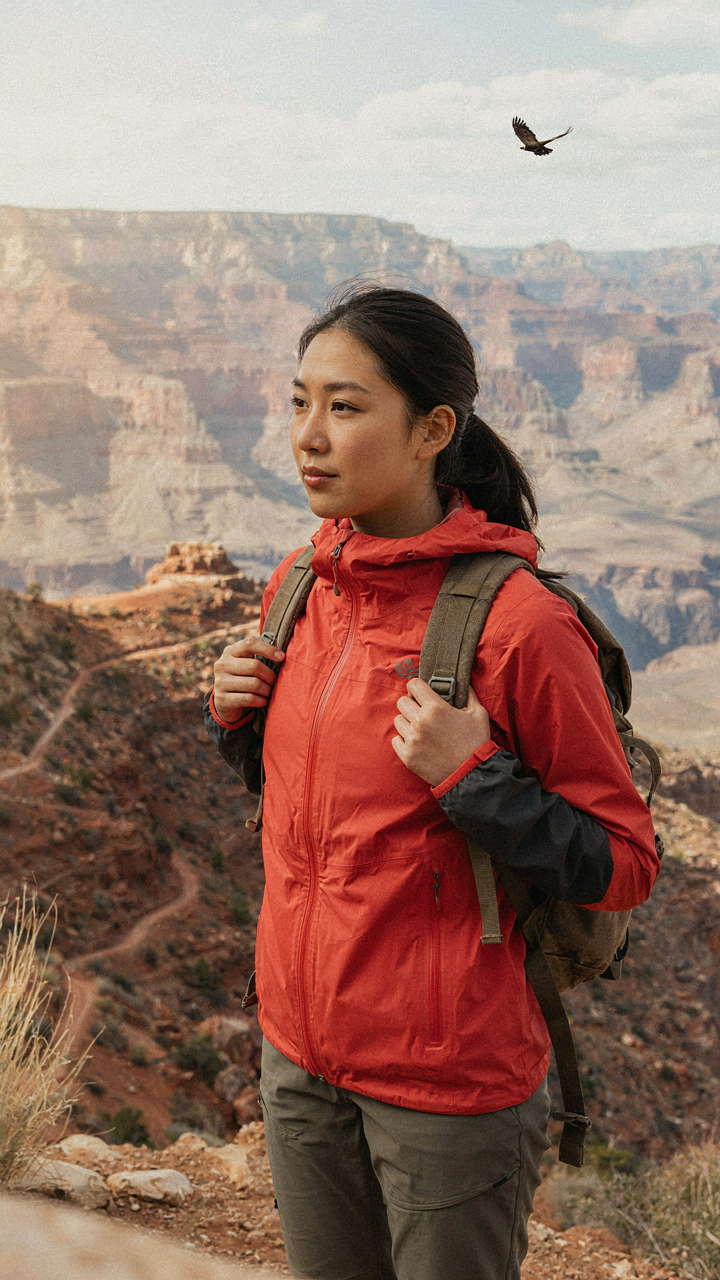
You want the Instagram angle without the crowds. That’s not laziness, it’s economics: you’re protecting your time investment. The mechanism is simple. Most canyon visitors follow designated parking lots to marked overlooks. They stay within 200 yards of their car. The trails that reveal actual canyon depth require 30 minutes of walking minimum, which filters out 80% of tourists. You go deeper, you’re alone.
Lesser-known trails exist because they don’t feed directly into the tourism infrastructure. They start from trailheads without amenities, require navigation skills, and demand real physical output. Grand Canyon’s Hermits Rest Road offers abandoned viewpoints. Zion has canyon-floor routes most people never discover. The Grand Staircase-Escalante has slot canyons that require route-finding. The payoff is direct: you see the canyon’s actual structure, not a postcard version. You notice erosion patterns, geological layering, water flow mechanics that the rim hides completely.
The Canyon You Actually Experience
Most advice tells you to “get up early and hike.” That’s incomplete because it ignores the sensory difference between rim and depth. In geology terms, canyon viewpoints operate on the principle of relief: the vertical distance between you and the landscape determines what information your eyes can process. At the rim, relief overwhelms detail. Below, detail dominates. The canyon reveals itself through scale, not beauty.
You need to move horizontally into the canyon, not just vertically down it. Walking a trail that descends 500 feet creates shadow zones, temperature shifts, and rock color changes that no panoramic view captures. You encounter the canyon’s actual material: its texture, its brittleness, its weight. Before you leave, spend at least 45 minutes below the rim level. This isn’t meditation. It’s data collection. Your brain needs that time to recalibrate what a canyon actually is.
Reclaiming Your Narrative: National Parks, Your Way
The Crowd Consensus Trap
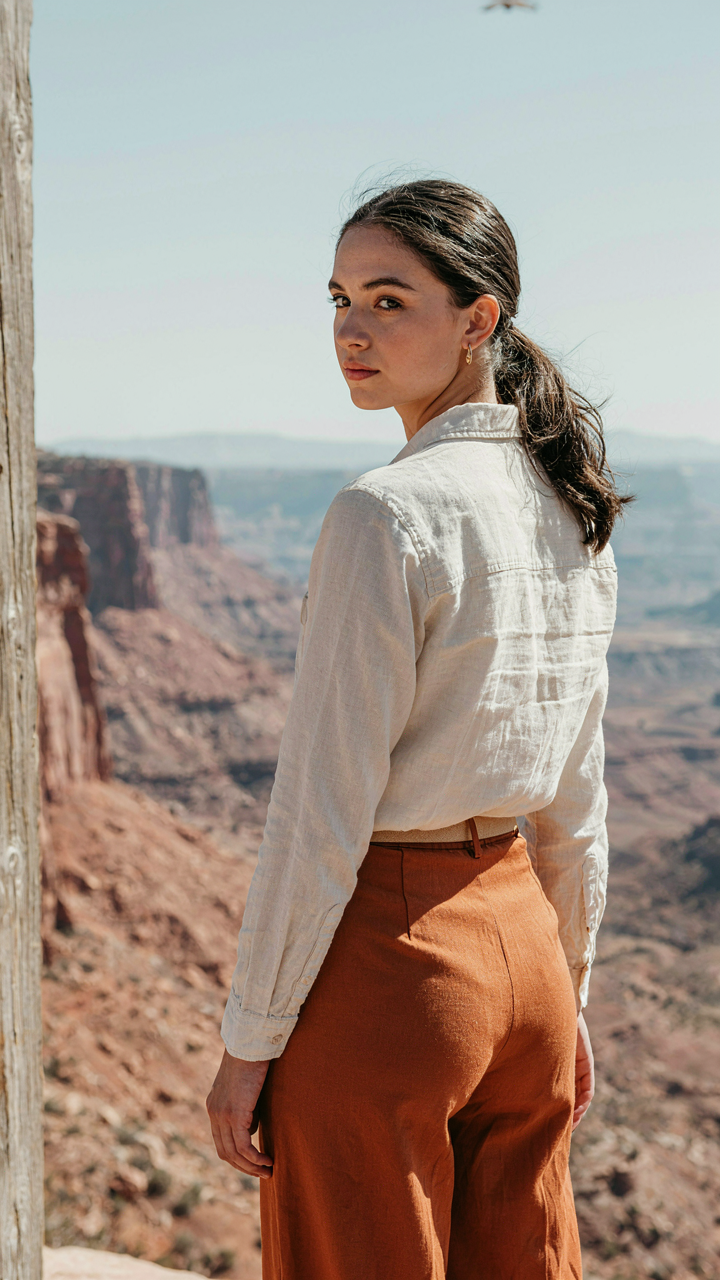
You want permission to skip the famous viewpoint because you’re afraid missing it means you wasted the trip. Here’s the mechanism: tourism marketing has weaponized scarcity and social proof. Park services publish “top ten” lists. Travel sites amplify them. Everyone sees the same viewpoint in the same photos. You feel obligated to replicate the experience, which means you’re not experiencing anything—you’re collecting checkmarks.
Most canyon viewpoints deliver the same visual information. The Colorado River cuts through rock. The light changes. The scale shifts your perspective. But the specific overlook where you stand doesn’t matter nearly as much as the fact that you’re standing there with intention. The real variable is your attention, not the location’s fame ranking.
Your Personal Compass Replaces The Guidebook
Economics has a principle called revealed preference: what you actually choose reveals what you truly value. Apply it to canyon viewpoints directly. Stop asking “What should I see?” Start asking “What am I trying to feel or understand?” If you want solitude, avoid the parking lot overlooks at sunrise. If you want geological instruction, pick a viewpoint where the strata tell a legible story. If you want physical challenge, find one requiring a descent.
The mechanism is simple: constraints generate clarity. When you name one specific constraint—time, fitness level, crowd tolerance, photography angle, geologic curiosity—the right viewpoint emerges without debate. You stop optimizing for external validation and start optimizing for the actual experience you’ll have. That shift moves you from tourist to observer.
The Anti Tourist Manifesto: Grand Canyon National Park Photos

Stop Chasing The Postcard Shot
You want proof you were there. That’s the real reason you care about canyon viewpoints—not the experience, but the evidence. The mechanism is simple: social proof demands a photo that looks like you know what you’re doing, which means you’re copying the exact angle everyone else shoots from. This kills authenticity before you even press the shutter.
The Grand Canyon doesn’t change based on where you stand. What changes is your relationship to the light, the crowd, and your own attention. Most visitors photograph from Mather Point or South Rim overlooks during peak hours when the canyon looks flattened and washed out. The real exposure happens when you move thirty minutes before sunrise or two hours before sunset, alone, without a plan for the shot.
When The Subject Matters Less Than The Moment
Generic grandeur advice tells you to capture scale. That’s incomplete. Landscape photography borrows from systems thinking—the principle of emergence states that properties exist in the relationship between parts, not in the parts themselves. Apply this to the canyon: the moment matters more than the canyon.
Shoot the shadow moving across the rock face. Photograph the weather system rolling in. Capture the moment light hits the river you can barely see from the rim. These aren’t “better” shots because they’re more artistic. They’re better because they require you to be present instead of following a checklist. Your camera becomes a tool for attention, not a status device. The mechanism is this: when you chase the light instead of the landmark, you’re no longer competing with eight million other photos. You’re the only one there at that specific moment with that specific weather and that specific angle of sun.
Your Fear Of Missing Out On A Curated Grand Canyon Moment Is The Real Canyon You Must Overcome
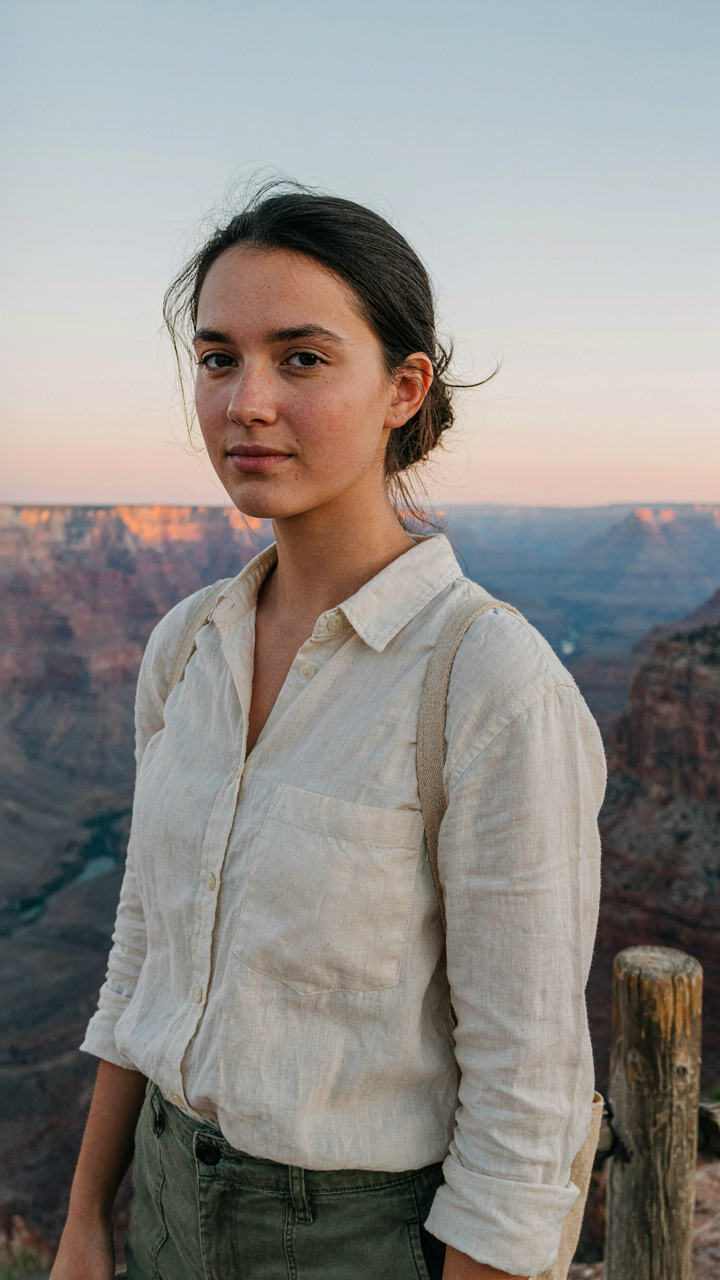
Stop treating canyon viewpoints like a checklist. The Instagram-worthy overlook means nothing if you’re too busy documenting it to actually feel it. Pick one spot. Spend three hours there instead of hitting seven in a day. Watch how light moves across the rock. Notice what changes. Your best canyon moment won’t come from following someone else’s itinerary, it’ll come from being bored enough to pay attention. The view doesn’t matter. Your presence does.