
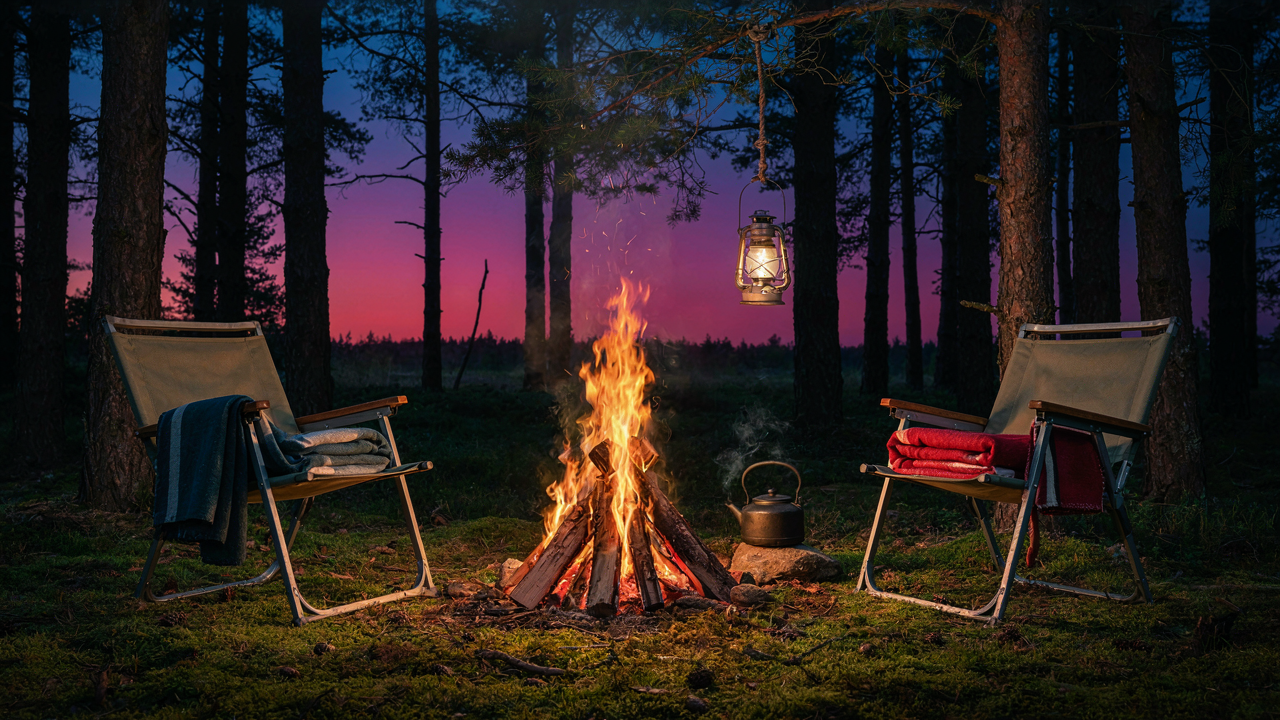
The Un Planning Protocol: Ditch The Itinerary For Real Spontaneity

Bring Only What Fits In Your Head
You want the itinerary because you think it signals control. It doesn’t. It signals fear of boredom masquerading as organization. The mechanism is simple: every item you pack creates friction. You’ll feel obligated to use it, defend it, or explain why you didn’t. You become a curator instead of a participant. Strip your gear list down until you can mentally inventory everything without opening a bag. Lighter load equals lighter cognitive load.
The practical move is this: each person brings one multipurpose item. A tarp works as shelter, ground cover, or windbreak. A knife handles cooking, fire prep, and camp tasks. Rope does fifty jobs. When gear serves multiple functions, you stop thinking about logistics and start noticing the actual camp. You talk more. You notice the light change. You’re present because your brain isn’t running an inventory loop in the background.
When Weather Becomes Your Schedule
Nature operates on constraint. Biologists call this the carrying capacity principle: resources determine what’s possible, and organisms adapt to fit. Your camp works the same way. Rain doesn’t ruin the weekend. It sets it. Low clouds? You hike the ridge anyway or stay put and cook. Wind picks up? You move to the sheltered side of the site. Clear skies? That’s when you stay late by the fire. Most groups plan backwards: they decide the activity first, then hope conditions cooperate.
Reverse that. Arrive with a mental menu of three to five things you could do, but commit to nothing until you see what the land offers. No schedule means you stop fighting reality. You make decisions based on what’s actually in front of you, not what you Googled two weeks ago. The day becomes responsive instead of rigid. By sunset, you’ll have done things nobody planned because you were paying attention to what was possible instead of what was written down.
Beyond The Instagram Campfire: Igniting Genuine Connection
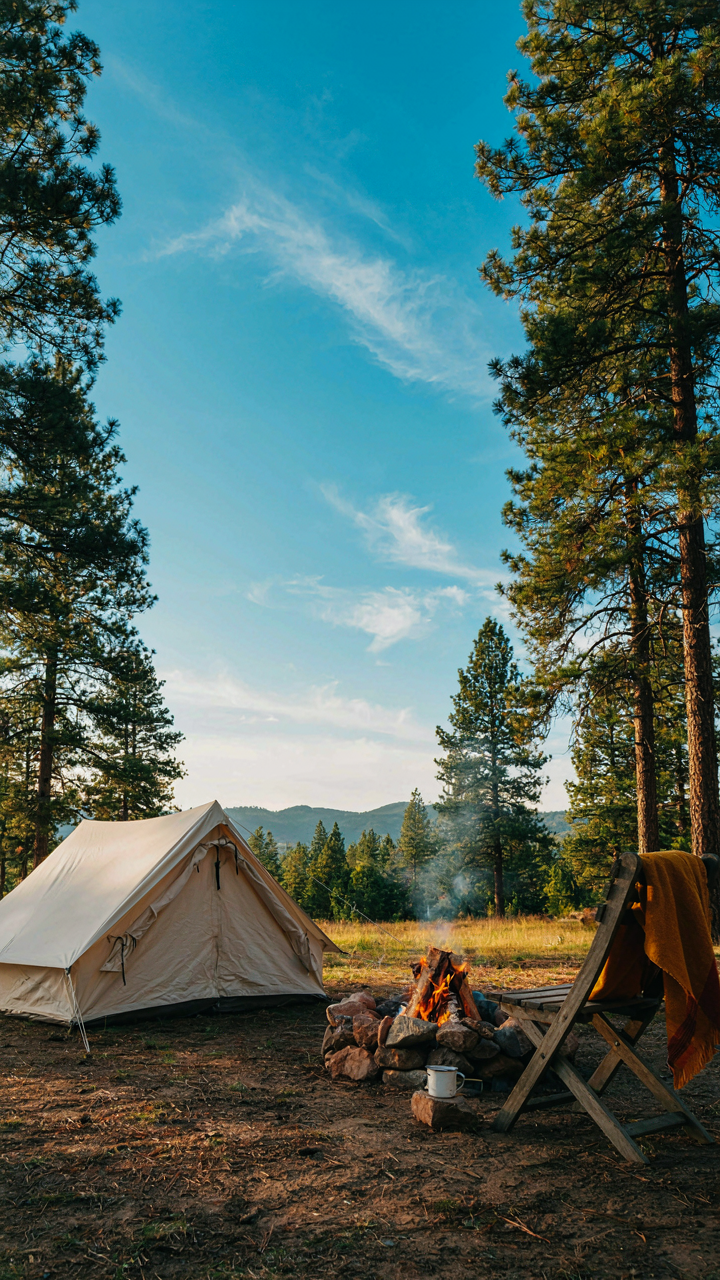
The Unposed Moment
You want proof that your friendships matter. That’s why you’re drawn to campfire moments—they feel like evidence. The mechanism is simple: phones kill presence, and presence is what you actually came for. Remove the documentation impulse and you remove the barrier between talking and connecting.
Set a phone rule before the trip, not during it. Everyone agrees beforehand: phones stay in tents except for emergencies or navigation. No exceptions negotiated at the fire. People respect pre-committed boundaries more than in-the-moment requests. This single rule compounds over a weekend into actual conversation instead of parallel scrolling.
Reclaim The Ancient Pattern
Storytelling isn’t a nice-to-have campfire addition. Anthropology shows humans bonded through oral tradition for millennia before writing existed. You’re tapping into hardwired social architecture, not inventing a cute activity. The mechanism: story structure moves through a beginning, conflict, and resolution. It mirrors how your brain processes threat and safety, which is exactly why your nervous system relaxes into listening.
Assign one person per night to tell a real story from their life—not rehearsed, but outlined. Twenty minutes minimum. No interruptions until the end. This replaces generic “how’s work” small talk with actual knowledge transfer about who your friends are and what shaped them. Rotate the storyteller each night. By day three, you’ve heard dimensions of people you’ve known for years but never actually knew.
The Primitive Feasting Method: Elevating Camp Meals
Cook Together, Not In Shifts
You want people to remember this trip as special, not just tolerable. The real mechanism is attention: shared meals built by the group keep people engaged instead of fragmenting into phone scrollers and fire-watchers. Communal cooking transforms a chore into the event itself.
The common advice here is wrong. Most camping guides treat meal prep as something to minimize or delegate to one person. That kills the social texture. Assign roles before the trip, not at the campsite. One person manages the fire, one handles protein, one preps sides. Rotate roles across meals so no one owns the burden. The constraint of limited space and tools actually forces better coordination than a full kitchen ever would.
Char Your Ingredients, Not Your Ego
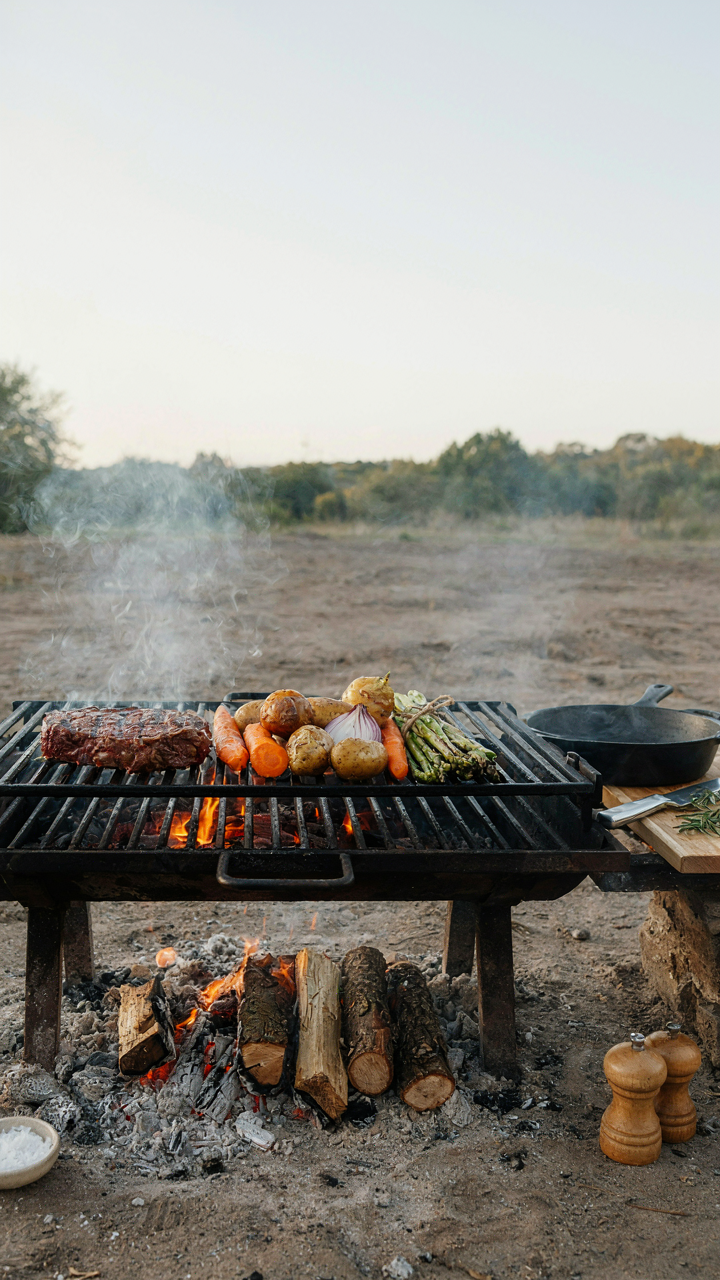
Fire cooking isn’t romantic nostalgia, it’s thermodynamics. The Maillard reaction accelerates at high heat with direct flame, which creates flavor compounds impossible to replicate on a camp stove. You need two things: a grill grate and ingredients that can tolerate direct heat without falling apart.
Forget elaborate recipes. Thick-cut proteins, root vegetables, and cast iron handle flame well. Season before cooking, not after. The char creates the complexity you’d otherwise chase with sauce. Build a two-zone fire: one side hot for searing, one side moderate for finishing. This protocol takes thirty seconds to establish and turns ordinary ingredients into something your group actually discusses days later.
Group Camping: Strategic Site Selection For Intimacy
How Nature Arranges Gathering Spaces
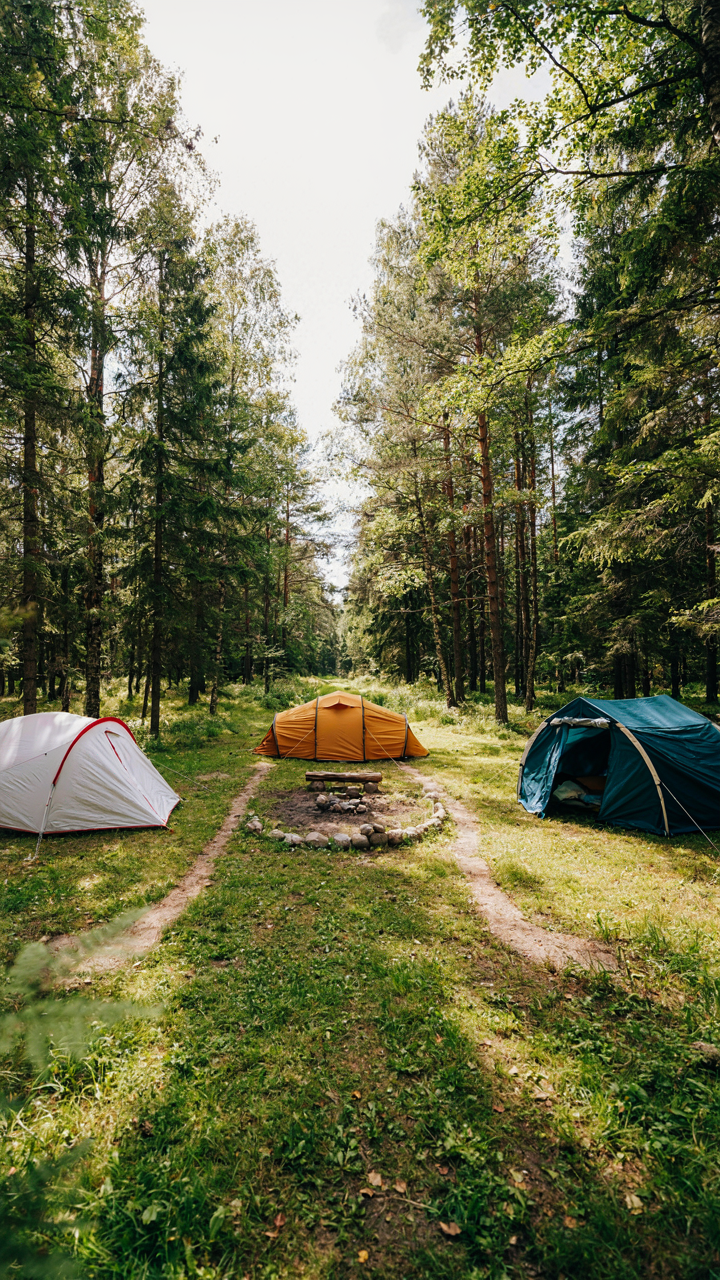
You care about this because you don’t want your trip ruined by logistics you should’ve solved before anyone arrived. Biomimicry—borrowing patterns from natural systems—reveals why certain site layouts work and others create friction. Animals cluster around water and resources in specific geometric patterns. Your campsite should mirror this: tent placement radiates from a central gathering point, not scattered randomly like a parking lot.
Most camping advice says “spread out for privacy.” That’s incomplete. You need both clustering and spacing. Place tents in a loose arc or crescent facing inward toward fire or cooking area. This creates sight lines that make people want to gather without forcing it. The mechanic is simple: humans gravitate toward grouped setups that maintain visual connection. Isolated tents breed isolation. Overlapped tents breed territorial friction. The arc solves both.
The Distance That Enables Conversation
Proximity without breathing room kills group dynamics faster than distance does. The real variable isn’t how close tents sit but whether people can move between them without crossing private threshold. Research on outdoor social spaces shows 12 to 20 feet between tent entrances gives enough separation for solo time while keeping group close enough for spontaneous interaction.
Place tents so pathways exist naturally, not through trampled grass. Use terrain features—fallen logs, slight elevation changes, existing clearings—as anchors for spacing. When people have to cut through someone’s tent zone to move around camp, resentment builds. The protocol: scout the site for natural gaps, then position tents in those gaps first. Fill remaining space after. This creates flow paths without feeling calculated.
The Essentialist’s Pack: Curating Your Wilderness Arsenal
Survival Psychology: Tools For Genuine Self Reliance
You want to feel competent in the woods because you’re afraid you won’t be. The mechanism here is borrowed from psychology: learned helplessness. When people don’t practice basic skills in controlled conditions, they freeze under mild stress. The opposite isn’t gear—it’s repetition. A knife you’ve never sharpened teaches you nothing. A fire you’ve never built in rain won’t start when you need it.
Pack tools you’ve actually used before this trip. Your friends notice when you fumble with basics. More importantly, you notice. The confidence comes from muscle memory, not from owning the right brand. Spend one weekend before the camping trip testing your stove, your shelter setup, your water source protocol. That single practice run eliminates panic and transforms your pack from a status symbol into an extension of your competence.
Portable Water Filtration: Non Negotiable Preparedness
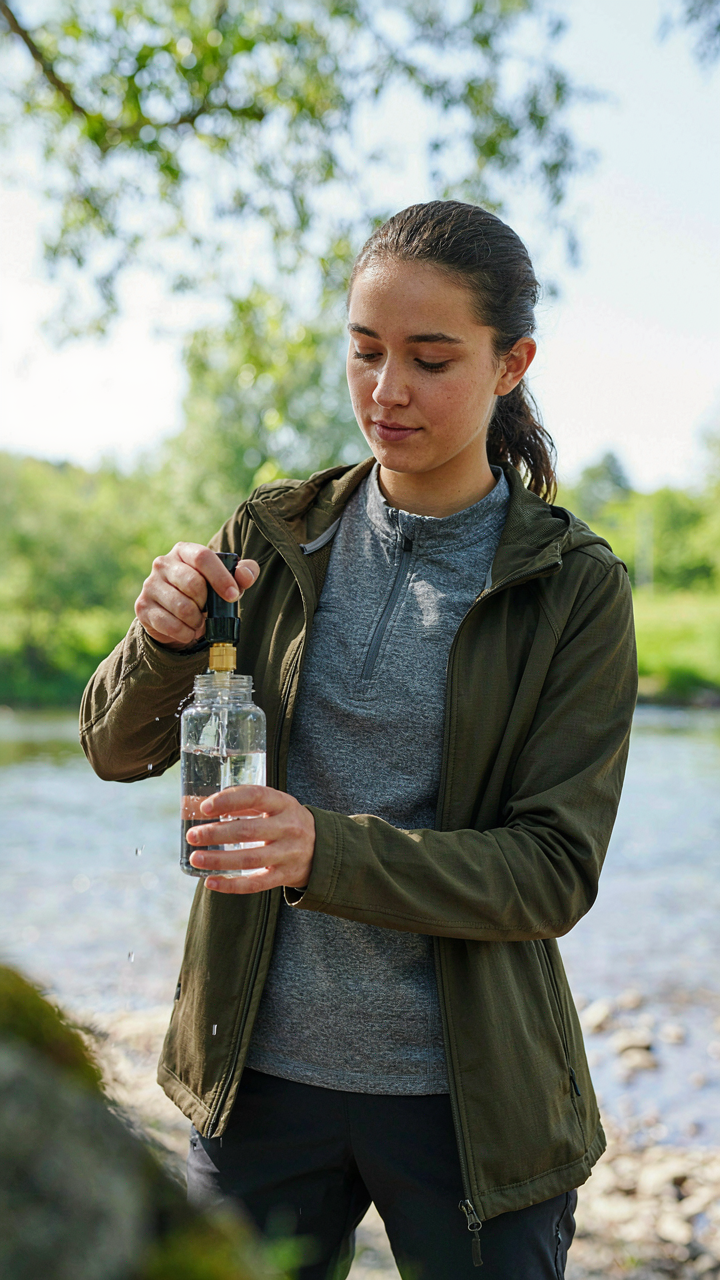
Everyone talks about bringing water. Nobody talks about what happens when your group runs out and the nearest source is a creek. Portable filtration isn’t optional for groups because one person’s dehydration becomes everyone’s problem. A gravity filter or squeeze system weighs under a pound and handles bacterial contamination reliably. Giardia and cryptosporidium exist in mountain water. Boiling takes fuel and time you don’t have when friends are thirsty.
Filtration removes the negotiation from your trip. You don’t debate water safety or ration supplies. You filter what you find and move on. Most portable systems handle particles down to 0.2 microns, which covers parasites and sediment. Pack a backup filter cartridge if your trip runs longer than three days. The mechanism is simple: prepared groups adapt faster to problems because they’ve eliminated the decision-making step.
Camping Aesthetic: Beyond Filters, Cultivate Real Beauty
Stop Editing The Forest
You want Instagram proof that your camping trip was worth posting. That’s the real reason you’re reading this. But the mechanism that actually makes a camping trip memorable isn’t the filtered photo—it’s the absence of mediation between you and the environment. Unedited surroundings force genuine attention. A tree isn’t better because it’s framed well. It’s compelling because you’re actually looking at it.
Raw environments contain more information than any curated version. Shadows, texture, scale, decay, growth—these details vanish the moment you optimize for the camera. The Romantic movement in the 18th century rejected polished artifice precisely because artists recognized that unmanaged nature commanded deeper engagement than manicured estates. Choose campsites where you arrive without a shot list. Let the experience shape what you notice, not the other way around.
Tune Your Senses Before You Tune Out
Sensory immersion is biology at work: your brain allocates processing power based on what demands attention. If you’re half-present, your nervous system treats the environment as background noise. The tactical move is to deliberately heighten one sense at a time, which forces your mind into active reception instead of passive consumption. Start with sound the first hour. Stop talking. Listen to wind patterns, bird calls, distance water. Notice how attention sharpens.
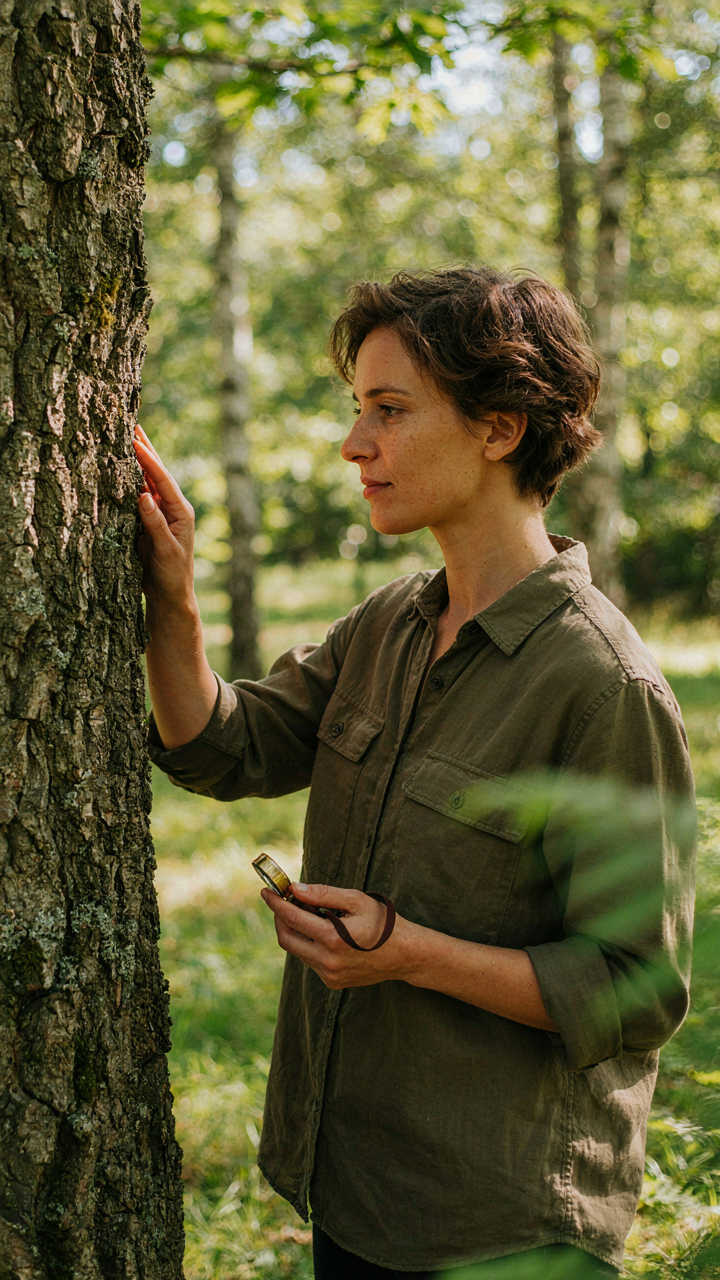
The second protocol layer is texture engagement. Touch bark, soil, water temperature with deliberate intention rather than reflexive contact. This grounds abstract experience into physical memory. Your brain encodes sensory-rich moments far better than visual-only ones. By the second day, this practice reverses the default camping mode from distraction management into genuine presence. That presence is what actually bonds the group and creates the moments worth remembering without the filter.
The Digital Detox Imperative: Reclaiming Attention

Establish Phone Free Zones
You’re worried people will think you’re weird for asking them to put phones away. Here’s the mechanism: attention is a finite resource, and fragmented attention kills conversation depth. Neurology calls this “task switching,” and every notification pull costs metabolic energy to refocus. On a camping trip, you’re not fighting work emails or social feeds—you’re fighting the architecture of the device itself, which is engineered to interrupt you.
- Collect devices at camp entry: Designate a pouch or box where everyone deposits phones upon arrival. Make it a rule, not a suggestion. Removes the social friction of individual choice.
- Define specific zones: Allow phones only at the car or in tents, never at the fire pit or during meals. Physical separation prevents unconscious reaching.
- Set return times: Agree on one window—maybe the last hour before bed—when people can check in. Predictability removes anxiety about missing something.
- Bring a physical timer: Use an old-school kitchen timer for group activities. Makes the boundary visible and reduces arguments about “just five more minutes.”
- Establish an emergency protocol: One person keeps their phone on silent for genuine emergencies only. Everyone knows who and why, which kills the FOMO excuse.
The enforcement happens through peer commitment, not punishment. When everyone agrees upfront, the rule becomes the group norm, not the trip organizer’s law.
Notice What’s Actually In Front Of You
Most camping trips fail because people show up but never arrive. You sit around a fire and talk about the same things you’d text about, which defeats the purpose of being outside. Psychology calls this “directed attention,” and it atrophies when you never practice it. The sensory data at a campsite—sound of wind, texture of bark, shift in temperature at dusk—only registers if you stop narrating your experience to an imaginary audience.
Start by watching one thing for two minutes without commentary. Pick a tree or the fire. Notice the grain patterns, how light hits differently every few seconds, the specific shade of orange in the coals. This isn’t meditation or therapy speak. It’s training your brain to process information that isn’t mediated through a screen. The shift happens fast. When one person stops talking and actually looks, others follow. By the second night, your group will naturally default to silence in moments that previously would’ve triggered phone scrolling. That’s the real win.
Reclaiming Wildness: Activities Beyond The Checklist
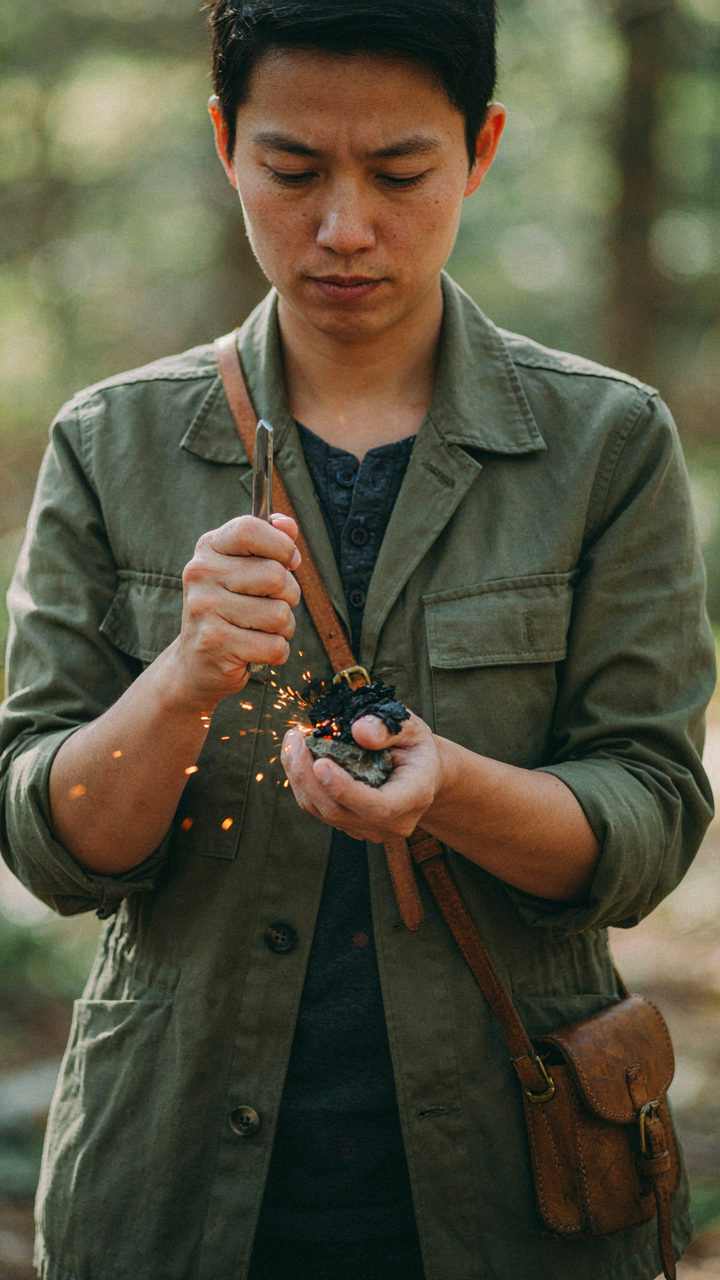
Fire Building Without Modern Tools
You want to feel competent in nature because you suspect modern life has made you fragile. That’s the real motive. Here’s the mechanism: fire building without a lighter is a direct feedback loop. You fail or succeed in minutes. No ambiguity. The skill connects to survivalism, a field obsessed with redundancy and self-reliance. Your group’s redundancy increases when multiple people can generate fire using friction, flint, or char cloth. Teach this before the trip. Bring materials. Practice once, then enforce the rule: no lighters on trip two.
Friction fire takes forty minutes minimum to master. Most people quit before the coal forms. Bow drills and hand drills work, but hand drills require calluses and rhythm most people lack. Flint and steel is faster to teach. Char cloth catches sparks reliably. The real play: someone in your group becomes the fire maker. Others watch. Next trip, two people own it. This compounds competence and kills the dead weight dynamic where one person manages logistics while others consume.
Wandering With Constraints, Not Agendas
The advice to “explore without agenda” is incomplete garbage. You need structure or wandering becomes aimless walking. Here’s what works: set a time boundary and a compass direction. Pick two hours. Pick north. No map. No trail. Your group explores that quadrant. You find water, rock formations, plant density shifts. You notice things a marked trail erases. Navigation by observation replaces navigation by sign.
The constraint forces attention. You can’t zone out because you need to track landmarks to return. One person leads. Rotate leaders each hour. Each leader makes micro decisions: do we follow the creek or the ridge? Do we climb this hill? The mechanism is decision density. High-frequency, low-stakes choices over two hours build spatial reasoning and group trust faster than any icebreaker. End the wandering at a specific landmark. Share what each person noticed. Most won’t have seen the same things, even walking the same terrain.
The Echo Of The Camp Fire: Sustaining Connection Post Trip

Bringing Wilderness Lessons Into Daily Life
You’re worried the trip will fade and you’ll slip back into your old patterns. That’s the real fear here, and it’s justified. Behavioral psychology calls this “context dependency”—your brain treats the campfire version of you as a separate person from the office version. The insights you had around the fire don’t automatically transfer home. You need a deliberate bridge.
Document one specific shift that happened during the trip. Not the feeling. The behavior. Did someone speak up who usually stays quiet? Did the group make a decision without checking phones? Did a conversation go deeper than normal? Write it down within 48 hours of returning. This becomes your reference point. Then identify one micro-habit you can replicate in your regular environment that recreates the conditions that made that shift possible. Small friction removal or time protection works faster than motivation.
Building Real Gaps Between Trips
The standard advice says “stay connected between trips.” That’s lazy. Staying in constant contact actually erases the thing that made the trip valuable in the first place. Scarcity created depth. Abundance creates noise.
Plan the next trip immediately. Concrete date, even if it’s six months out. This removes the post-trip ambiguity and gives your brain permission to reset. Between trips, you interact with these people in their normal roles. You text occasionally, not obsessively. The gap isn’t coldness. It’s protection. When you reconvene, you’ll have accumulated actual differences in your lives to discuss. You’ll have separate experiences to bring back. Schedule the next date before the current trip ends so the commitment exists before the post-trip energy dip hits.
The Real Obstacle Isn’t The Wilderness, It’s Your Addiction To External Validation
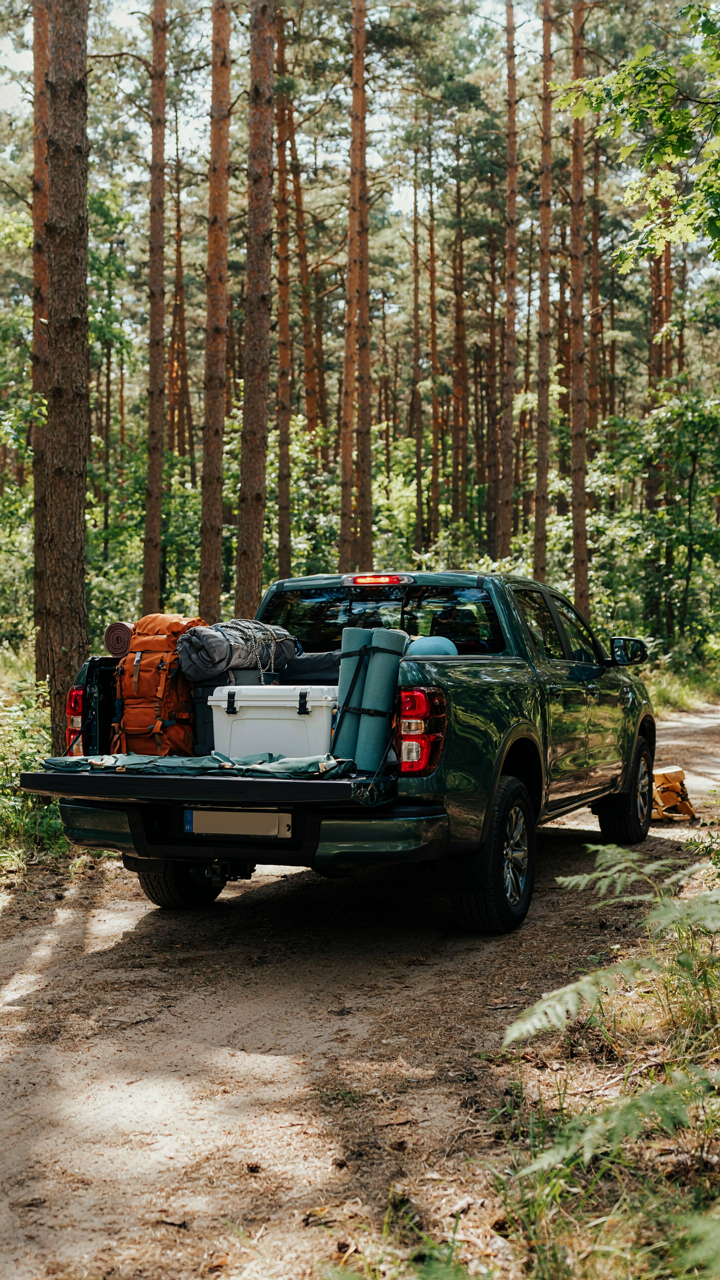
You don’t need a perfect itinerary or the right gear. You need to stop caring what your friends think about your idea and just propose it. Most camping trips never happen because someone waits for consensus instead of making the call. Text your crew today with a specific date and location. Stop seeking permission. The difference between people who camp and people who talk about camping is that one group stopped asking for approval and started packing the truck.