
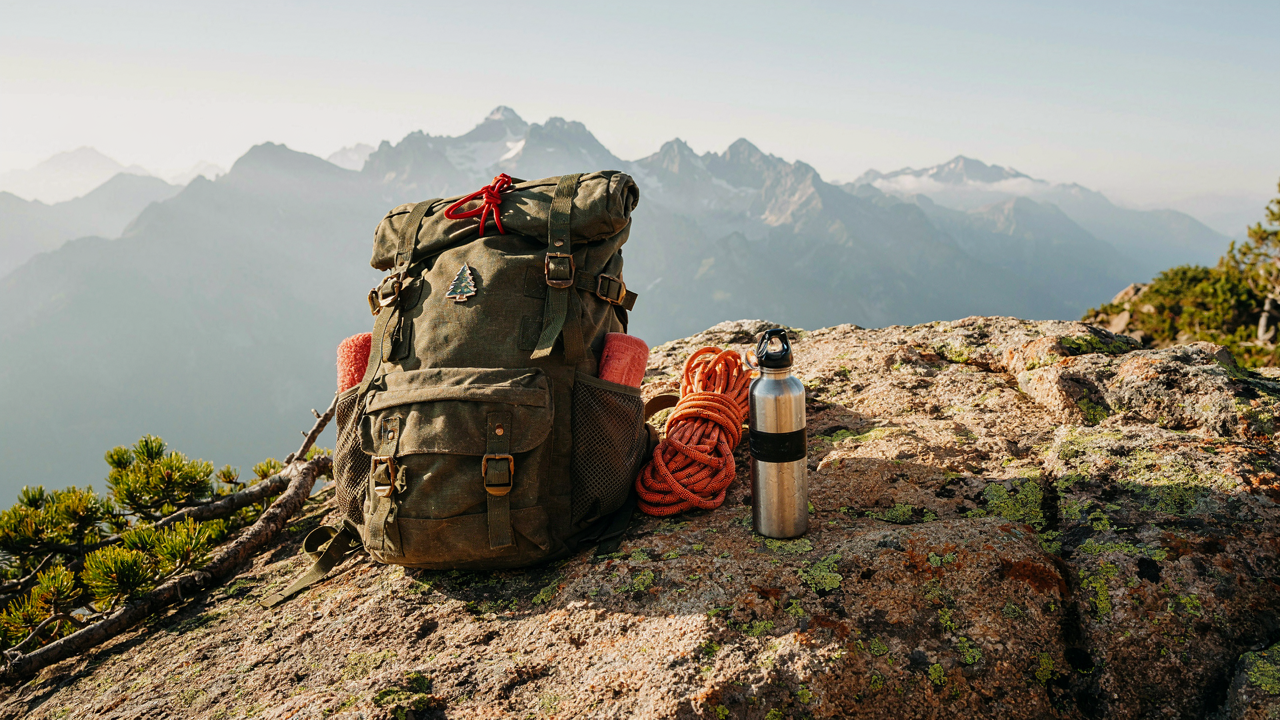
Beyond The Leash: Deconstructing Canine Instincts For Dog Camping
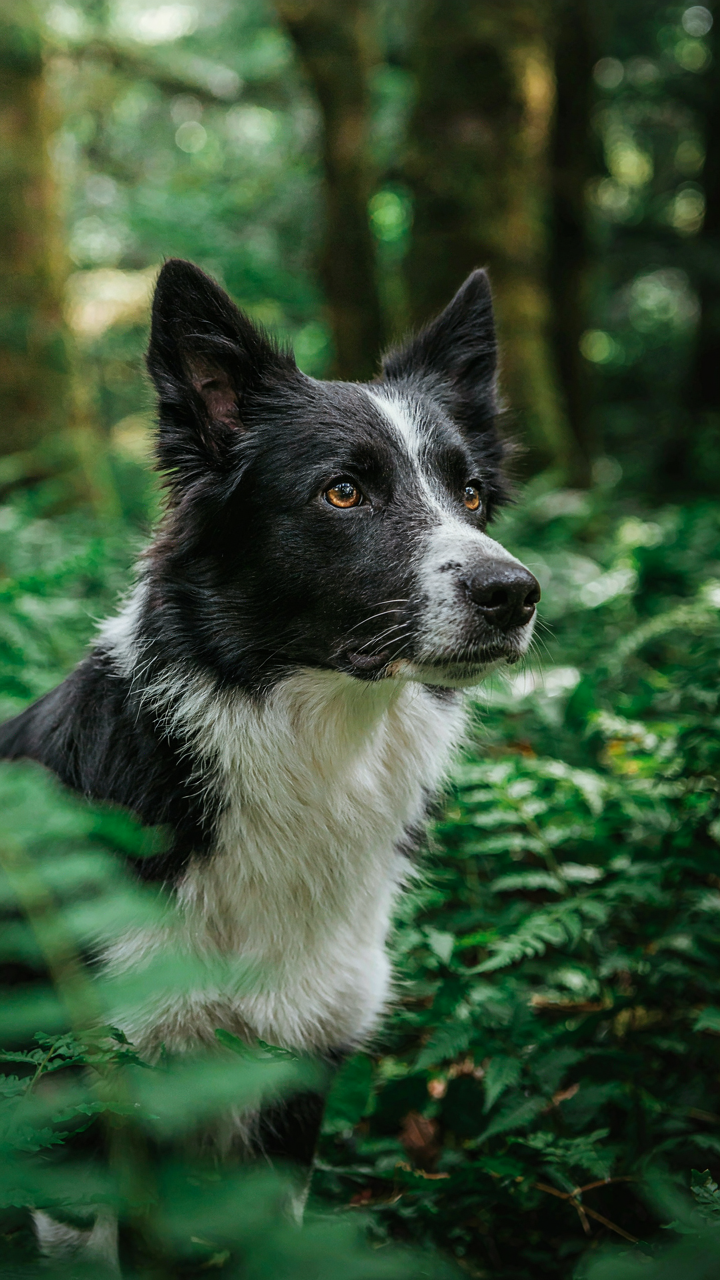
The Predator Beneath The Pet
You want to believe your dog is civilized. That’s the real problem here. The truth: domestication rewired behavior, not erased it. Your dog carries prey drive and territorial defense like inherited code. Biology doesn’t care about your hiking plans. Understanding this gap between what your dog looks like and what your dog actually does is the only way to camp without disaster.
Prey drive operates like a stimulus-response circuit in ethology, the study of animal behavior. A trigger appears, the mechanism fires. Squirrels, rabbits, and birds don’t require your dog to think. Your dog’s brain routes directly to chase. Territoriality works differently but serves the same outcome: your dog marks, monitors, and defends space. Both instincts activate on the trail. Both bypass the obedience training you thought stuck. The dog you trained in your backyard and the dog in unfamiliar wilderness are neurologically different animals because novelty overrides learned behavior.
What Your Dog’s Body Is Actually Saying
Most camping guides tell you to watch for a stiff tail. That’s incomplete. Real body language reads like a sequence, not a snapshot. A dog’s ears, mouth position, weight distribution, and tail tell you the order of what comes next, not just the current mood. Miss the sequence and you miss the window to interrupt.
Forward ears plus open mouth plus weight shifted forward means your dog is about to chase or advance. Flat ears with pulled-back mouth corners means shutdown or surrender. But the real tell nobody mentions: a dog that suddenly goes silent and still after being vocal or active is experiencing prey lock. Your dog has locked onto something and crossed into predatory focus. No treat, recall command, or leash pop breaks that state once it triggers. Prevention is the only tool. Move your dog’s attention before the lock engages. Interrupt the gaze. Change direction. Call your dog’s name during the approach phase, not after the commitment phase.
The Minimalist Dog Camping Gear Arsenal: Ditch The Gimmicks
What Actually Works On The Trail
You want to feel prepared, which means you’re tempted to buy every dog-specific gadget marketed at you. Stop. The mechanism is simple: every extra item you pack increases weight, complexity, and the chance something breaks when you need it. Minimalism in dog camping isn’t about deprivation. It’s about ruthless function over novelty.
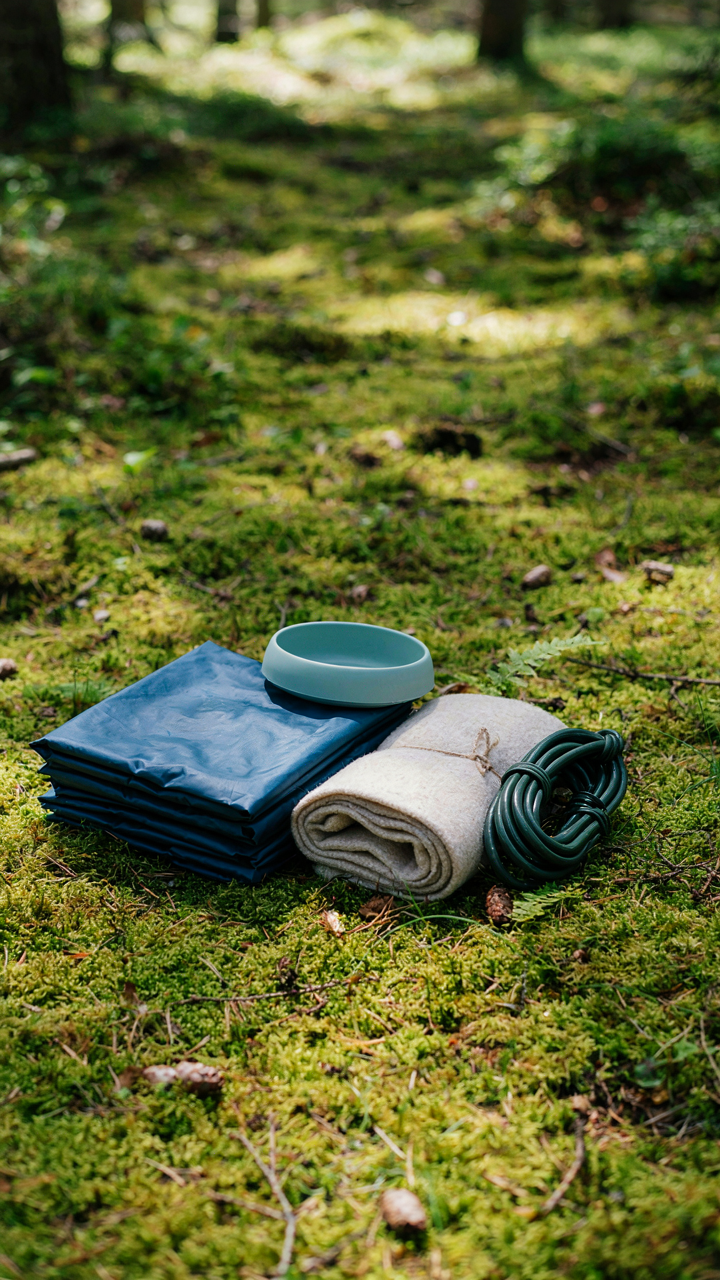
Most dog owners pack redundant gear because outdoor companies have convinced them that specialized equals better. A dog doesn’t need a branded camping bed when a tarp and a blanket work identically. Strip your load to items that serve multiple purposes and handle actual trail conditions.
- Collapsible water bowl: Folds flat in a pack pocket. Doubles as a food dish. Weighs ounces. Solves two problems without bulk.
- 30-foot biothane rope or long line: Lets your dog range safely without tangling in brush. Handles wet conditions better than cotton rope. Single item replaces a tie-out and a leash.
- Fleece blanket or wool camp blanket: Insulates your dog at night, protects sleeping pads from dirt, works as a ground tarp in a pinch. Dry weight matters less than versatility.
- Quality leash rated for your dog’s weight: One leash handles hiking, camp security, and water crossings. Buy once, use everywhere. Don’t split function across three cheaper versions.
- First aid basics in a small pack pouch: Vet wrap, antiseptic wipes, tweezers for thorns or porcupine quills. Medical tape. Nothing fancy. Real emergencies are rare, but preparation is cheap.
The rule: if an item doesn’t reduce risk, lighten load, or serve two purposes, it stays home. Your dog cares about food, water, shelter, and your presence. Everything else is you managing anxiety through shopping.
Why The Market Wants You Confused
Dog camping gear companies profit from your fear of looking unprepared. They’ve created entire product categories that solve problems that don’t exist at scale. A dog doesn’t need a specialized camping tent when it sleeps fine in a corner of yours. Marketing has separated “dog camping” from regular camping and convinced you they require different equipment.
The truth: 90 percent of dog camping problems are solved by the same gear any competent camper already owns. A dog needs shade, water access, and wind protection like any living thing in the backcountry. These don’t require branded solutions. When gear companies design dog-specific products, they optimize for shelf appeal, not trail performance. Waterproof dog backpacks fail in sustained rain. Lightweight dog tents sag under snow. Expensive heated beds drain batteries fast and malfunction when damp. You pay more for worse outcomes because the packaging looks credible.
The mechanism is straightforward: companies design for the consumer buying on anxiety, not the dog that needs to survive. Your dog will camp better with your attention and basic supplies than with a closet of unused specialty gear. Stop buying peace of mind and start learning what your dog actually needs when weather turns rough or distance stretches long.
The Expeditionary Canine Protocol: Training For The Wild
Pre Trip Conditioning Builds Real Capacity
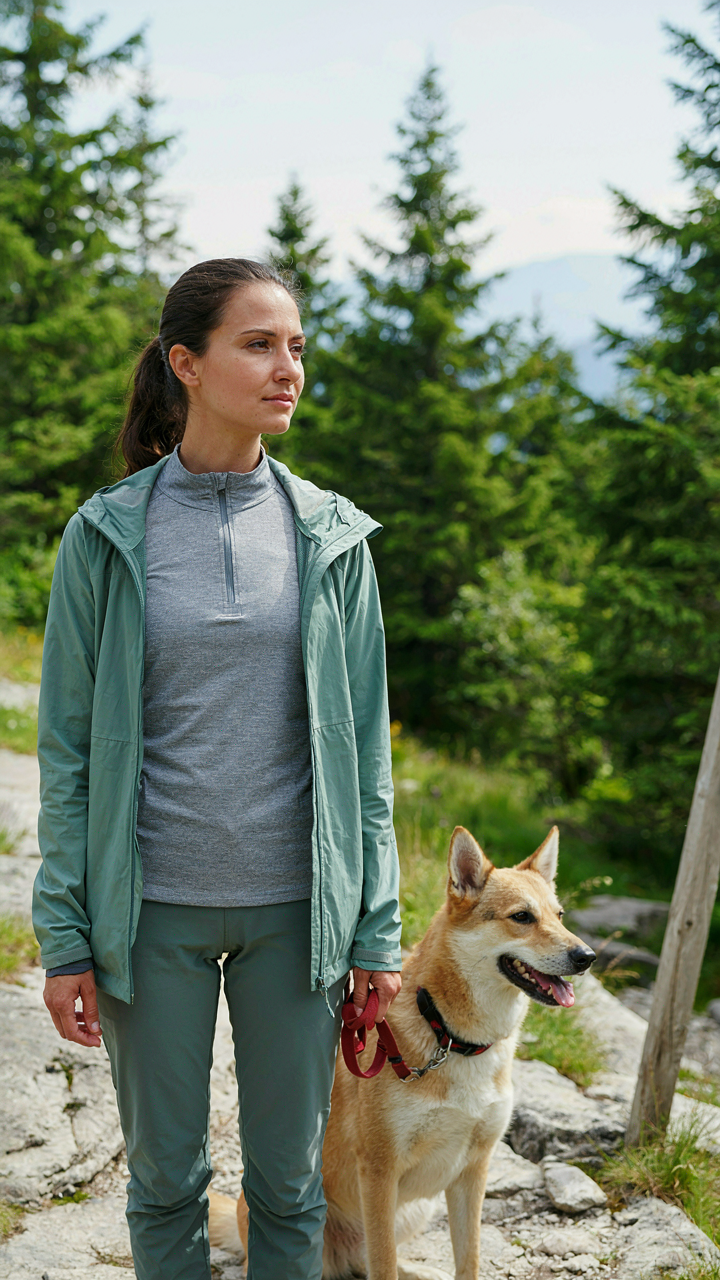
You want your dog to handle the wilderness without embarrassing you or dying. Here’s what people miss: conditioning isn’t about making your dog “tougher.” It’s about building actual physiological adaptation, borrowed from endurance sports science. In athletics, we call this progressive overload—gradually increasing demand so the body adapts. Your dog’s cardiovascular system, muscle endurance, and paw pad resilience all need time under load before you drag them ten miles uphill.
Start conditioning eight to twelve weeks before your trip. Run or hike your dog on progressively longer outings, adding distance and elevation gain week by week. Watch for lameness, excessive panting, or refusal to move—these signal you’ve exceeded current capacity. Feed quality protein and monitor weight to maintain muscle without excess body fat. A lean, muscled dog handles miles better than a heavy one. The mechanism is simple: tissue adapts to stress only when stress increases gradually and recovery occurs between sessions.
Command Reinforcement In High Distraction Environments
Most camping training fails because people drill commands at home in silence, then expect the dog to execute when a deer bolts thirty feet away. That’s not how nervous system arousal works. High-distraction environments flood your dog’s brain with novel stimuli, making learned commands vanish unless you’ve specifically trained under those conditions. The dog isn’t disobeying—it’s neurologically unavailable.
Bring your dog to parks with activity and unpredictability. Practice recall, sit, and leave it while joggers pass, other dogs approach, and sounds occur around you. Reward compliance with high-value treats only available during these sessions. Repeat this weekly in escalating environments: crowded parks, then trailheads, then actual campsites with ambient noise. On the trail, your dog won’t obey commands it hasn’t practiced under real chaos. Establish a reliable recall command before entering the wilderness—it’s the only tool between your dog and a fatal decision.
The Trail Thermodynamics: Optimizing Your Hiking Dog For Comfort
How Dogs Actually Shed Heat
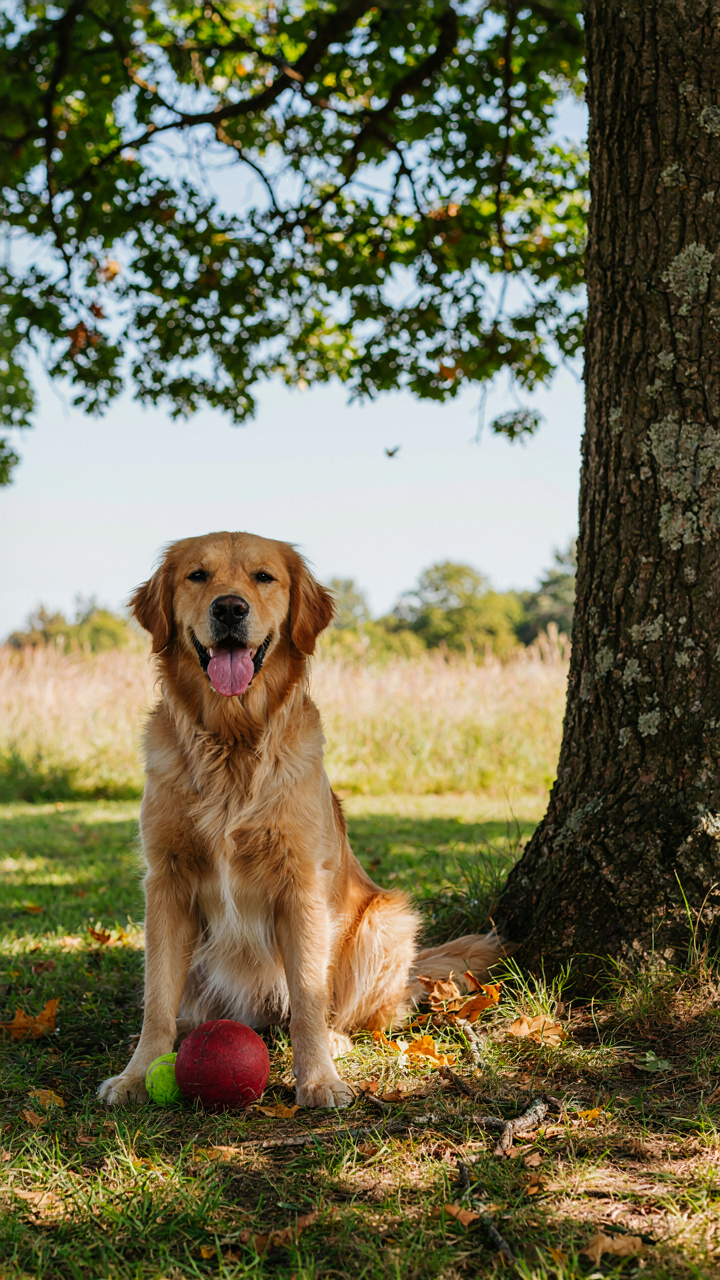
You care about this because overheating kills dogs faster than most owners realize, and you want proof you’re not negligent. Here’s the mechanism: dogs regulate temperature through panting and limited sweating on paw pads. Borrow from thermodynamics—think of your dog’s body as a heat engine that must dissipate output to stay operational. Most dogs have no sweat glands except between toes, making panting their primary cooling tool. On trail, a dog working hard generates internal heat faster than panting can release it, especially in humid conditions or with dense coat coverage.
The real problem isn’t temperature alone—it’s the gap between internal heat production and external dissipation rate. A dark-coated dog absorbs solar radiation while generating metabolic heat from exertion. Panting pulls air across the nasal mucosa and lungs, but this system fails under combined heat load. Breeds with flat faces (Bulldogs, Pugs) dissipate heat poorly because airway geometry restricts panting efficiency. Your job isn’t to keep the dog cool—it’s to reduce heat production and increase dissipation opportunity by controlling pace, timing, and exposure.
Fuel, Water, And The Work Equation
A hiking dog burns calories at a rate tied directly to terrain difficulty and body weight, not just distance. More elevation and rougher ground mean exponential calorie burn. A 50-pound dog burns roughly 1.5 to 2 times its resting metabolic rate during moderate hiking, and 3 to 4 times during steep climbing. Water loss accelerates with panting intensity, creating a cascade: dog works hard, pants more, loses water faster, blood volume drops, heart works harder to circulate thinner fluid, overheating accelerates. You need to interrupt this chain before it starts.
Feed a substantial meal 3 to 4 hours before hiking, not right before—digestion diverts blood flow away from muscles and creates internal heat. Offer water frequently on trail in small amounts, not one large dump that bloats the stomach and triggers vomiting. On hot days, stop in shade every 20 to 30 minutes of hiking for water and rest. Calculate expected calorie burn against your dog’s reserve capacity—a lean, conditioned dog tolerates longer trails than an overweight or untrained one. Reduce mileage in heat, shorten pace going uphill, and build conditioning over weeks before attempting difficult terrain.
RV Camping With Dogs: Small Space, Big Rules
The Pressure Cooker Problem
You want to believe an RV is just a smaller house where your dog adapts automatically. It isn’t. The real mechanism is confinement anxiety, not disobedience. In behavioral psychology, what matters isn’t the space itself but the dog’s perception of escape routes and control. An RV removes visual depth cues and traps air circulation patterns that ground a dog’s nervous system. Your dog isn’t being difficult. Their stress response is firing because the environment violated their baseline spatial expectations.
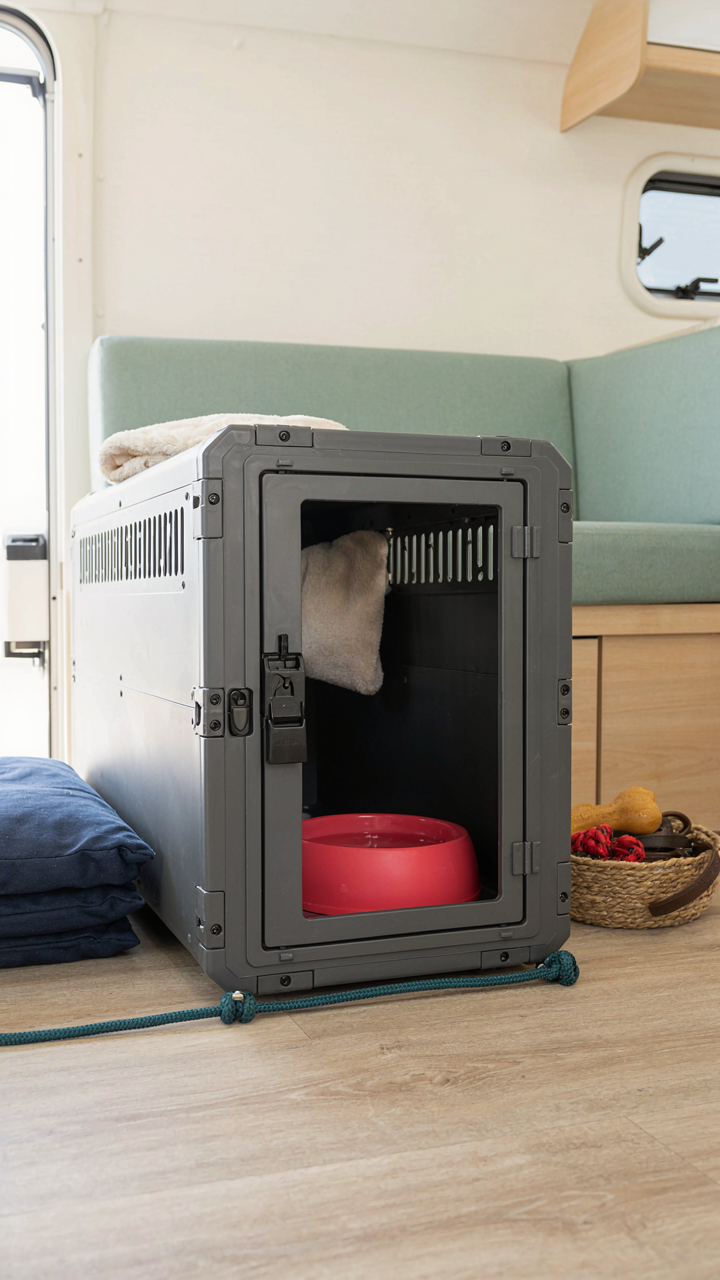
The fix starts before the engine runs. Establish a dedicated zone in the RV where your dog sleeps, eats, and has a water bowl within reach. This zone becomes their territory anchor. Introduce this space during a parked, stationary trial run before any trip. Let them associate it with safety, not confinement. Dogs need predictability. A marked area gives them one.
Environmental Design, Not Just Comfort
Treating an RV like a house with furniture rearrangement misses the point. Think in terms of naval vessel design: confined spaces need redundant systems and clear functional zones. Your dog needs ventilation, darkening capability, and a non-slip floor surface. Poor ventilation causes heat stress and stale air that amplifies anxiety. A window cover or thermal blind controls light and temperature swings that unsettle traveling dogs. Non-slip flooring prevents the constant micro-corrections that exhaust a dog’s nervous system during acceleration and braking.
Stock a travel crate that fits your RV layout and keep it assembled and accessible. Position it where your dog can see you while moving. Secure water bowls with spill guards designed for marine use, not pet store knockoffs. Your dog drinks more when traveling due to stress and dry air circulation. Secure all loose items that shift during stops. A sliding water bottle hitting your dog’s crate generates trust damage that takes weeks to reverse.
Emergency Preparedness For Camping With Dogs: Beyond The First Aid Kit
What Actually Kills Dogs In The Wilderness
You want this section because you’re afraid of looking unprepared if something goes wrong. The real mechanism is this: most dog deaths in camp happen not from dramatic injuries but from preventable cascades—dehydration leading to heat stress, a small wound turning septic, or hypothermia that starts as mild wetness. Like triage in military medicine, prevention beats reaction. The dog that dies at camp usually had multiple failure points you could have stopped upstream.
Your first aid kit treats symptoms after they exist. Real preparedness stops the chain reaction before it starts. A dog overheating doesn’t need bandages—it needs you catching the panting before it becomes collapse. A cut paw doesn’t need emergency surgery if you prevent infection at hour one. The difference between a manageable situation and a dead dog is often just knowing which small thing to do first.
Temperature Extremes And Hydration Cycles
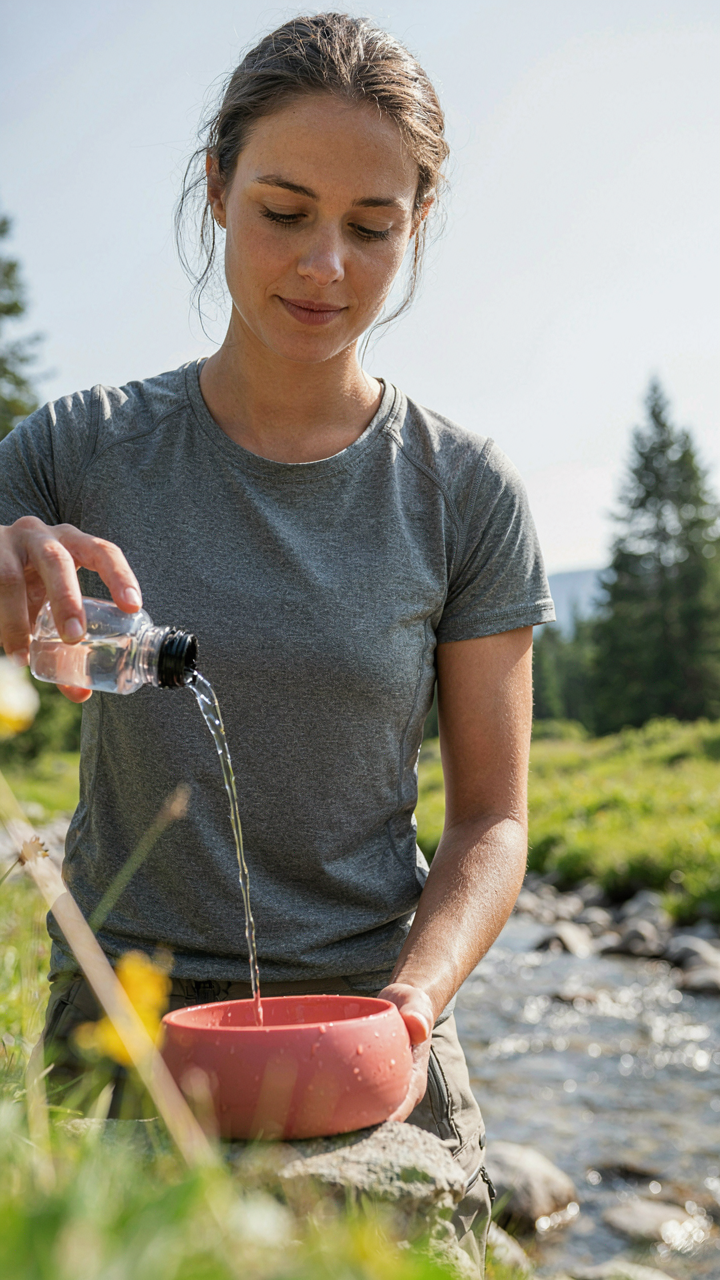
Heat kills faster than cold because you see cold coming. A dog overheating in a sleeping bag at night or during midday hiking doesn’t signal the problem until the damage is internal. Bring twice the water you think you need and drink the dog first during rest breaks. Never assume a dog will self-regulate—many won’t stop running until they collapse. Check gum color every two hours in warm weather. Pink means okay. Pale or bright red means stop everything and cool the dog now.
Cold exposure at night is simpler to prevent: your dog sleeps where you sleep, or in an insulated shelter. Wet fur loses heat eighteen times faster than dry fur. Before bed, dry the dog completely if it’s been in water or heavy dew. A damp dog in a tent below forty degrees will lose core temperature steadily. Bring a fleece layer or sleeping pad for the dog. The dog shivers when it’s too late—you’re looking for lethargy or reluctance to move as the earlier signal.
Wounds, Infections, And The Twenty Four Hour Window
A small cut that looks fine at camp can turn gangrenous by day three if bacteria establish in the wound. Clean every cut with clean water immediately, even tiny ones from thorns or rocks. Flush for thirty seconds minimum. Pat dry with clean fabric, apply antibiotic ointment, and cover if the dog will leave it alone. The infection window closes hardest in warm, wet environments—which is most camp conditions. You have roughly twenty-four hours to control the bacterial load before your dog’s immune system starts losing ground.
Limping usually means the paw pad, not the bone. Pull the foot apart gently and look between the toes and under the sole. Ticks, foxtails, or embedded stones hide there. Remove them and apply ointment. If the dog refuses weight on the limb after removal and rest, stop hiking and get out. A torn pad or sprained joint that worsens over miles becomes a real emergency fast. The concrete move: inspect all four paws every single evening and address problems that night, not tomorrow morning.
Parasites And Seasonal Threats
Ticks transmit disease slowly—the danger is time, not the tick itself. A tick needs roughly twenty-four hours to transmit Lyme disease or other pathogens. Check the dog’s entire body every night, focusing on the armpits, groin, and ears. Remove ticks by gripping the head with tweezers and pulling straight out. Drown the tick or seal it in a bag. Never crush it on the dog’s skin. In warm months with high humidity, do this check twice daily if you’re in tick country.
Giardia spreads through contaminated water and hits dogs hard with diarrhea, vomiting, and weight loss that accelerates over days. Never let the dog drink from stagnant pools, slow water, or anywhere upstream from visible animal activity. Carry enough clean water or filter aggressively. A dog with giardia at camp needs to eat bland food and stay hydrated—but treatment requires a vet once you’re home. The prevention protocol is mandatory: your dog drinks only from your water supply.
Post Trip Debrief: Integrating Camping Lessons Into Dog Travel

What Actually Worked And What Didn’t
You want to believe this trip proved you’re a competent dog owner, but that’s not why you’re reading this. You’re scared you missed something that will bite you on the next trip. The mechanism is simple: memory decays fast. You need a written record of specific failures, not feelings about the experience. Document what happened within 24 hours while details are still sharp. Note exact behaviors, timing, what triggered them, and what your dog ate or drank before they occurred. This isn’t nostalgia. It’s data collection.
Separate what went wrong from what felt wrong. Your dog panicked at the creek crossing, so water immersion matters for next time. You felt annoyed when he barked at dawn, but he slept through the entire night without incident. One is a real problem. One is your expectation misalignment. Write both down anyway, then ignore the second category entirely when planning future trips. The goal is to identify the three actual friction points from the entire experience, not to litigate every minor inconvenience.
Behavioral Patterns Require Three Reinforcements
Behavioral psychology calls this the “spacing effect”—knowledge retention depends on spaced repetition, not intensity. One intense camping trip teaches your dog almost nothing permanent. The behaviors that worked well need reinforcement before they fade into random responses again. If your dog stayed calm during setup, recreate that exact scenario in your yard twice before the next trip. Use the same gear arrangement, same commands, same timing. Your dog doesn’t generalize well from a single context to the broader concept.
Start reinforcement within two weeks of returning home while the neural pathways are still responsive. A 15-minute practice session mimicking one specific challenge from the trip works better than two hours of generic obedience training. If he struggled with leash discipline around wildlife, practice that exact scenario in a controlled environment where you can reward the correct response immediately. Don’t wait for the next camping trip to correct it. That’s how bad habits calcify. Build the reinforcement protocol into your regular weekly routine for at least three cycles before considering the behavior locked in.
Mastering Dog Camping: Your Guide To Intentional Adventure
The Mindset That Changes Everything
You want to feel like you’ve got this under control. The real mechanism is this: most people treat camping with a dog as logistics management instead of a system design problem. You’re not optimizing for comfort or fun. You’re optimizing for the variables that actually determine whether your dog stays calm, your trip stays on schedule, and you don’t end up exhausted. This requires shifting from reactive problem-solving to anticipatory structure.
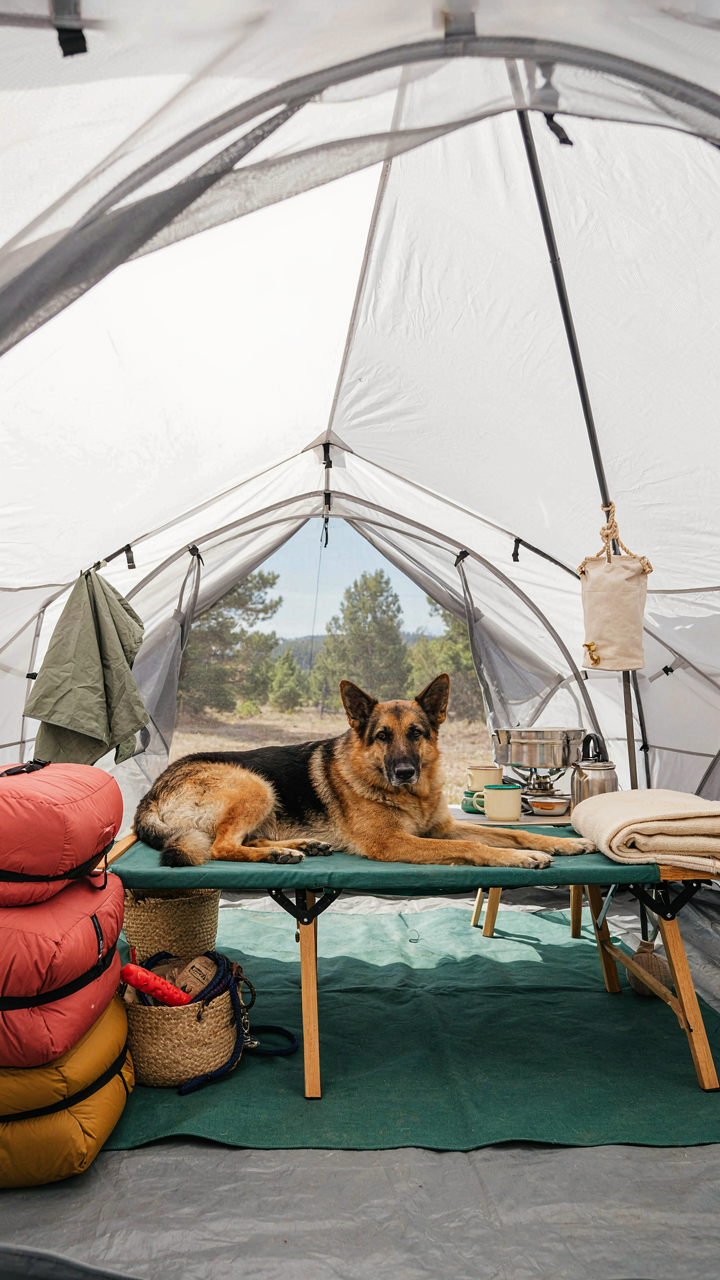
The difference shows up immediately in camp setup. People who plan the dog’s role first build everything else around it. They know where the dog sleeps, where it eats, which zones are restricted, and what triggers restlessness. They test these systems at home before the trip. This isn’t overthinking. This is the only way to actually relax in the field because you’ve already solved the hard problems on your terms, not the dog’s.
The Real Patterns Nobody Admits
The advice about “bringing your dog’s routine camping” is incomplete. Your dog’s routine at home depends on environmental cues that don’t exist in the wilderness. Noise, darkness, unfamiliar smells, and proximity to other animals all reset what your dog will tolerate. What you actually need is a new routine built for the camping context.
The pattern most people miss is this: establish a single task your dog performs reliably at camp, then build contingency layers around it. Common choice is a “place” command where your dog goes to its bed on signal. You practice this for two weeks before the trip until it works on every surface and in every weather condition. This one reliable behavior becomes your reset button. When your dog gets overstimulated, anxious, or starts problematic behaviors, you execute the command and restore calm. Everything downstream from that works better.
The Obstacle Isn’t Your Dog; It’s Your Unwillingness To Lead
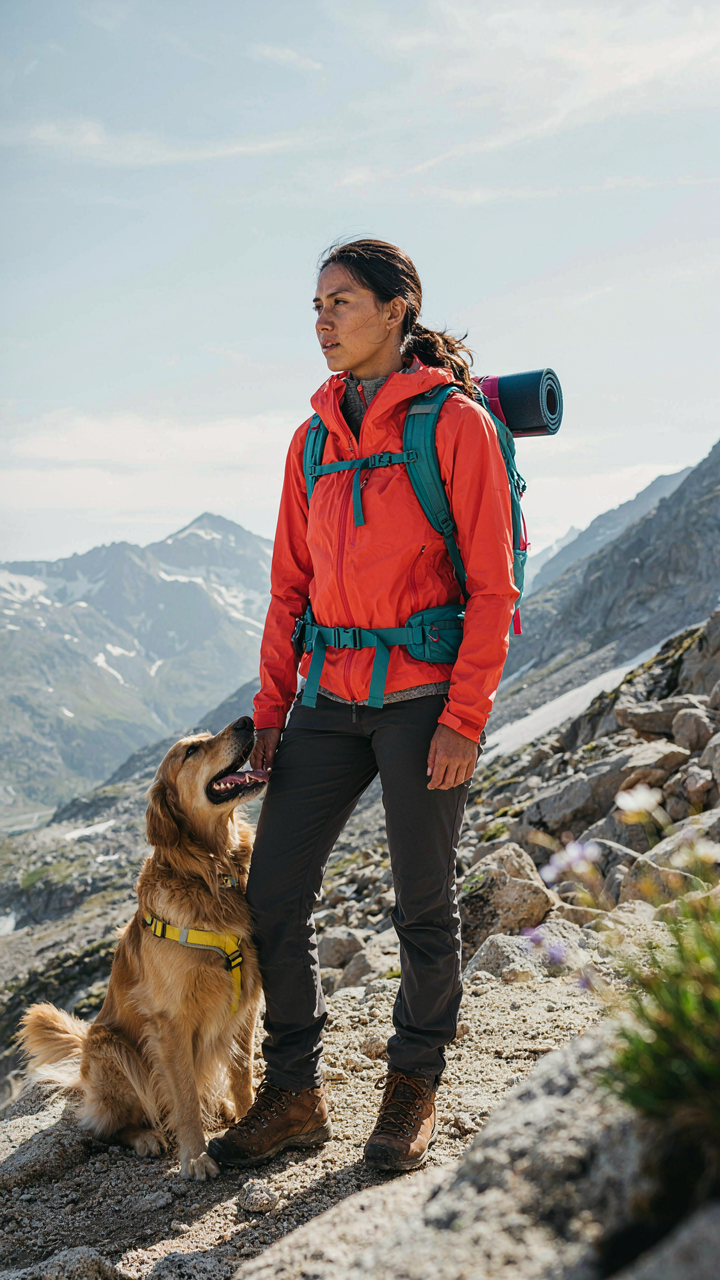
Your dog doesn’t care about your excuses. It doesn’t care that the trail looks hard or the weather might shift. Your dog cares that you decide. Every camping trip you skip, every hike you rationalize away, you’re teaching your dog that comfort matters more than exploration. Pick a trail this weekend. Not next month. This weekend. Book it now. The only thing separating you from a dog that lives instead of exists is one decision you refuse to postpone.