
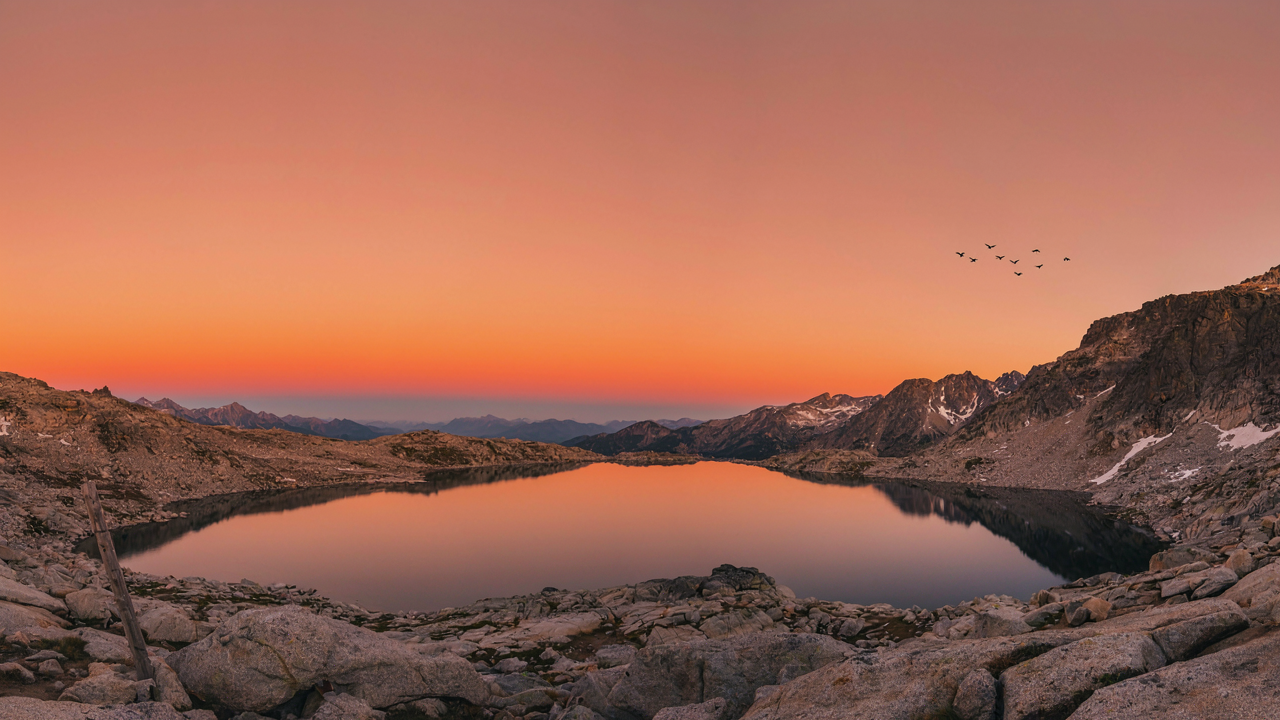
The Instagram Fallacy: Why Your “Best Sunset” Isn’t

The Consensus Trap Crushes Real Experience
You care about this because you’re afraid you’ll miss the “correct” sunset and look stupid telling friends about it later. Here’s the mechanism: Instagram creates artificial scarcity by flooding the same five locations until they become visual currency. Santorini, Bali, Maldives—these spots dominate because they’re already dominated, not because physics makes their sunsets superior. The algorithm rewards repetition, so the same angles get recycled until they feel like the only valid choice. You’re not chasing beauty. You’re chasing proof that you were somewhere others recognize.
The real problem is supply economics at work. Tourism boards and travel influencers have created artificial bottlenecks around predetermined spots. This concentration doesn’t reflect sunset quality—it reflects marketing saturation. Ten thousand other people will be at that clifftop tomorrow, all shooting the same frame, all competing for the same light. The scarcity you feel is manufactured. It doesn’t exist anywhere except in the collective agreement to show up at the same place.
What The Camera Never Captures

The lens lie is simple: a sunset looks the same in a photograph whether you traveled five hours or five minutes to see it. This means your effort has zero correlation with the image quality you’ll post. What Instagram can’t monetize is the actual experience—the cold air, the silence before the light shifts, the peripheral awareness of where you are in space. These elements don’t compress into a rectangle.
The disconnect between image and experience creates a false hierarchy. You optimize for something the camera will catch anyway, ignoring everything the camera misses. The best sunsets aren’t the ones with the most dramatic colors. They’re the ones where you can actually stand still for twenty minutes without competing for ground space or waiting for strangers to move. Pick a lesser-known vantage point with sight lines to the horizon and minimal foot traffic. Document less, notice more. End the session by watching without filming.

Atmospheric Optics: The Unseen Architect Of Amazing Sunsets
Why Air Makes Color Happen
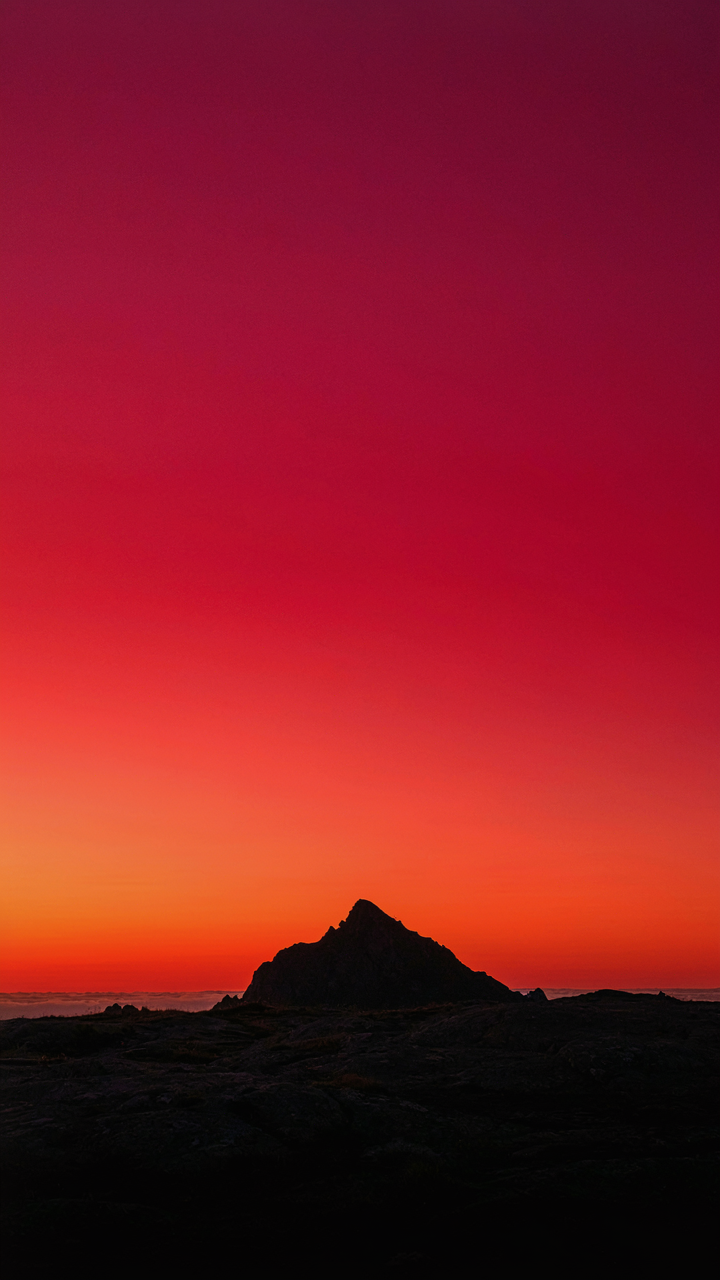
You want to know which viewpoint has the best sunset so you can post it and prove you have taste. But the real answer isn’t the location. It’s physics. Rayleigh scattering, a concept from optics, is the mechanism that turns any patch of sky into color. When sunlight enters the atmosphere, shorter blue wavelengths scatter off nitrogen and oxygen molecules far more than longer red wavelengths do. As the sun drops toward the horizon, light travels through a thicker slice of atmosphere, scattering away the blue entirely and leaving reds, oranges, and magentas behind.
The best viewpoint isn’t the highest or most famous spot. It’s the one where your line of sight to the horizon crosses the maximum thickness of air without obstruction. A mountain peak facing west into clear air beats a crowded city overlook every time. The color intensity depends on atmospheric density at your elevation and the sun’s angle, not on sentiment or Instagram metrics. Pick a location where you face an unbroken horizon and you’ll see the mechanism work before your eyes.
When Dust And Pollution Make Better Sunsets
The common advice is that clean air makes the best sunsets. This is wrong. Aerosols amplify spectacle. Dust particles, sea salt, pollution, and water droplets act as scattering surfaces that multiply the light-bending effect beyond what clean air alone can produce. Cities and coastal areas with higher aerosol loads often display more dramatic color saturation than pristine mountain valleys. These particles enlarge the scattering cross-section, turning subtle gradations into vivid bands of color. This is why industrial cities and ports frequently host stunning sunsets that rival natural wilderness.
The mechanism explains why Santorini’s sunsets outperform most Icelandic locations despite Iceland’s reputation for natural purity. Santorini’s caldera traps dust and sea spray, creating ideal aerosol density. Similarly, sunsets in Bangkok, Delhi, and Los Angeles often exceed those in rural areas not because of the cities themselves, but because their atmospheric particle load acts as a pigment amplifier. To maximize what you see, choose a viewpoint where prevailing winds carry aerosols toward your position during sunset hours, not away from it.
The Altitude Advantage: Unlocking Superior Views
Mountain Vistas Cut Through The Noise
You want the view nobody else has access to. That’s the real reason you’re reading this. The mechanism is simple: elevation removes obstructions. Physics calls this line of sight, and it applies directly to sunsets. Higher ground means fewer buildings, trees, and atmospheric layers between you and the horizon. The light travels through less polluted air, so colors saturate instead of diffusing.
Mountains force you to arrive early and stay late, which filters out casual tourists. Ridgelines and peaks positioned perpendicular to your line of sight create natural framing without requiring you to compose the shot. You don’t get a clean sunset view from a mountain by accident. You get it because topography does the work for you.
Urban Rooftops Capitalize On Reflection
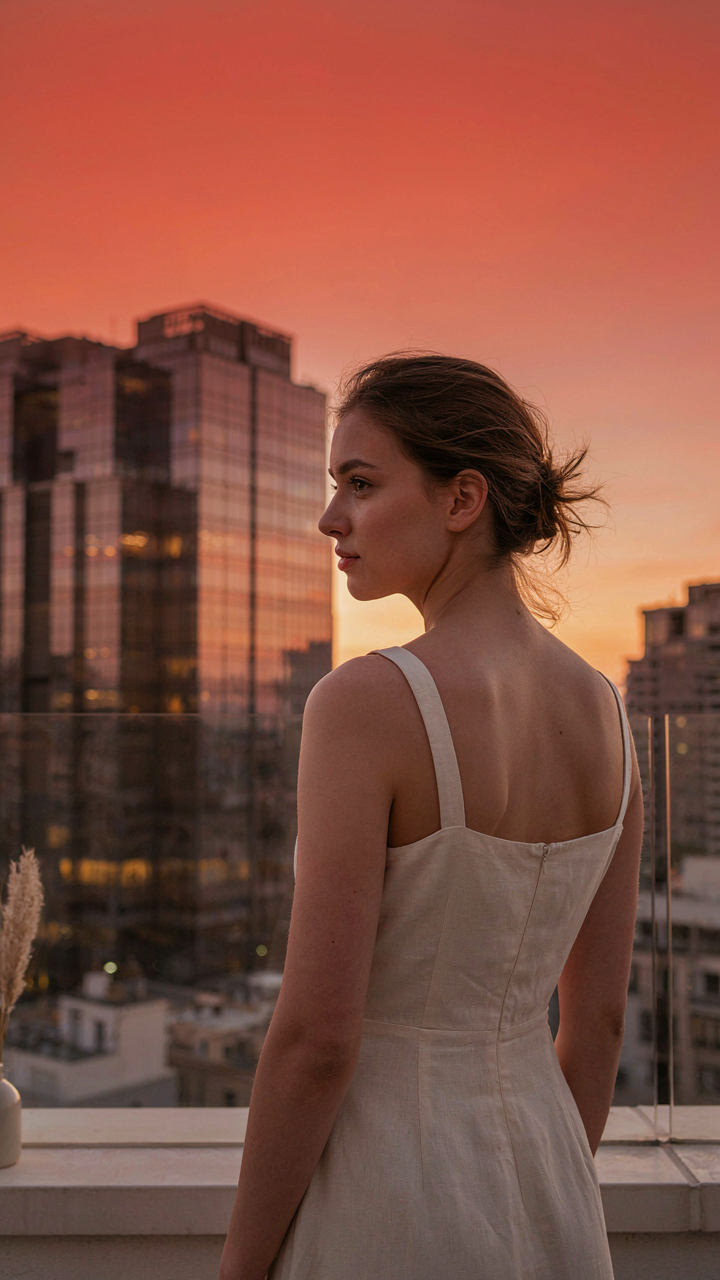
The common advice says rooftop bars offer city views during sunset. That’s incomplete. What they actually offer is light amplification through built structure. The mechanism comes from urban physics: concrete, glass, and steel reflect and refract light differently than natural terrain. This extends the visible color window by 10 to 15 minutes past what ground level captures.
Rooftop positioning matters tactically. A bar facing west with tall buildings to the north and east creates a light funnel during golden hour. The sunset doesn’t move, but your angle to surrounding structures determines whether you see reflection or shadow. Scout your rooftop location before booking. Arrive 45 minutes before sunset to secure sightlines unobstructed by other visitors.
Coastal Illusions: Why Water Transforms Light
How Ocean Reflects And Bends Light
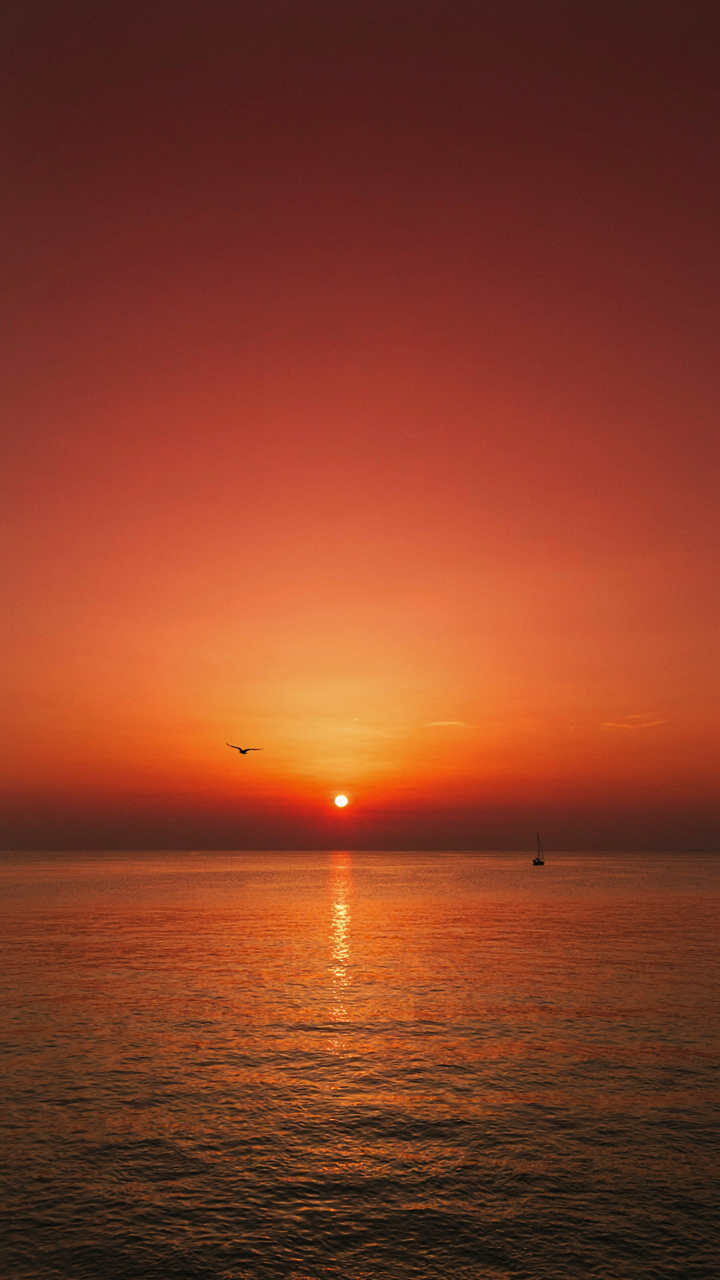
You want to know why water makes sunsets look better than they actually are. Physics explains it: refraction and reflection operate as opposing forces at the water’s surface. Light bends when it hits water at an angle, scattering wavelengths differently than air does. The ocean acts as a mirror and a prism simultaneously, amplifying color intensity while spreading it across a wider visual field than land offers.
The mechanism is straightforward. When the sun sits low, its rays travel through more atmosphere, filtering out blue wavelengths and leaving reds and oranges. Water’s surface then bounces these filtered rays back at you while also bending them through its depth. This double-layer amplification doesn’t happen over mountains or forests. You’re not seeing a better sunset over water. You’re seeing the same sunset reflected, refracted, and concentrated into your line of sight. Position yourself perpendicular to the sun’s angle on the water, not parallel to the shore.
Uluwatu’s Cliff Edge Geometry
Uluwatu works because the viewer stands elevated above the mirror surface, not beside it. The limestone cliffs rise two hundred meters above the Bali strait, creating a vantage point where reflected light travels upward to reach your eye. Most sunset spots place you at water level, where glare dominates and detail disappears. The cliff height compresses the visual distance between you and the reflection, intensifying color saturation and eliminating the atmospheric haze that weakens sunsets at sea level.
The specifics matter more than the sentiment. Uluwatu’s cliffs angle toward the west, blocking wind and stabilizing air temperature around your position. Stable air reduces atmospheric distortion. The water beneath reflects unobstructed light because the strait’s depth prevents sediment from clouding it. Time your visit between April and September when the sun sets directly over water rather than behind landmasses. Position yourself at the cliff’s edge thirty minutes before sunset, not at the moment the sun touches the horizon. Early positioning lets your eyes adjust to the changing light spectrum.
The Geographical Anomaly Protocol: Finding The Unobvious Best Sunset
When Altitude Trumps Location
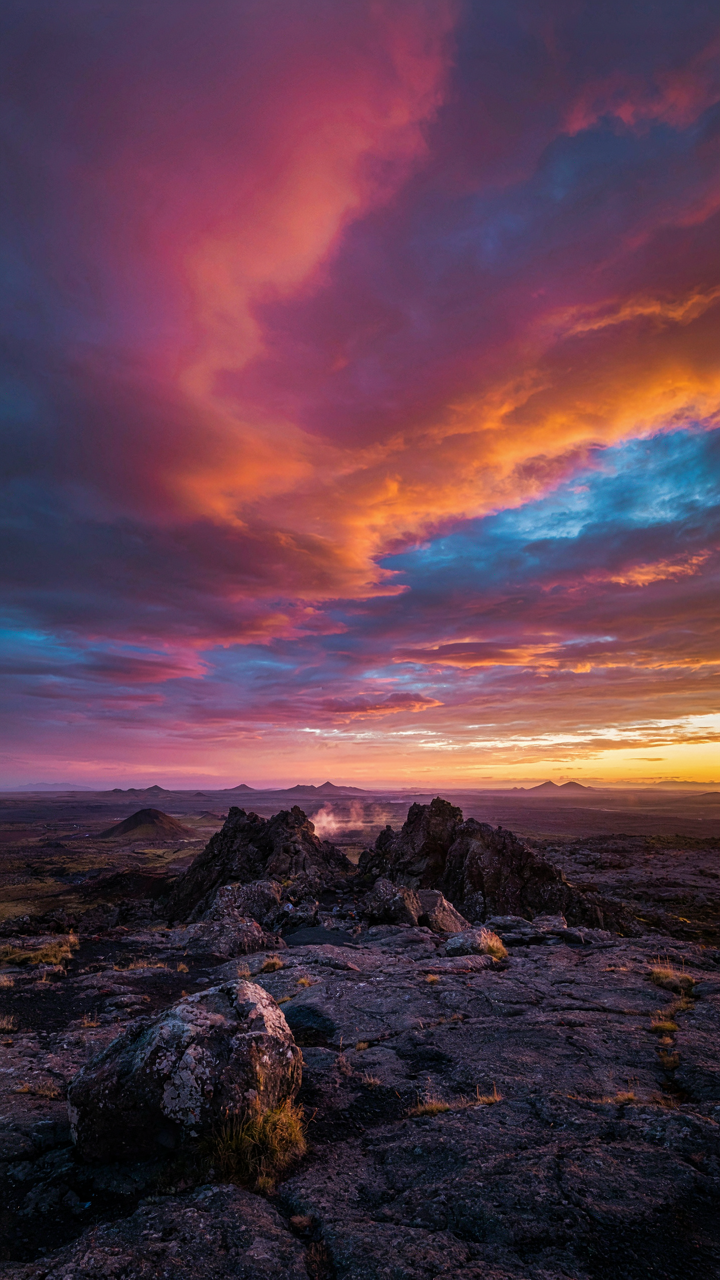
You want to believe that famous viewpoints are famous because they’re objectively best. They’re not. You’re drawn to them because everyone else is, and that validates your choice. The real mechanism is borrowed from meteorology: microclimates create localized atmospheric conditions that have nothing to do with latitude or proximity to water. A ridge 800 feet higher than the adjacent valley traps moisture differently, bends light differently, and produces color saturation that coastal spots never touch. High-altitude locations beat sea-level ones because of atmospheric density and particulate distribution, not because of some vague “better view” narrative.
Topography acts as a filter for atmospheric interference. Volcanic plateaus, escarpments, and ridgelines positioned perpendicular to prevailing winds create turbulence patterns that scatter light wavelengths selectively. The best sunsets rarely happen at the most photographed coordinates. They happen where geology forces air masses into collision zones. Research elevation maps and wind patterns for your region, not Instagram tags. The protocol is simple: identify ridgelines above 5,000 feet within accessible range, cross-reference with local wind direction data, then visit during low-pressure system timing for maximum atmospheric clarity.
The Overlooked Quadrant Method
Everyone scans obvious landmarks on maps. Nobody systematically works through the invisible half. The sweet spots live in the gaps between tourist infrastructure, where topography creates natural sight lines that guidebooks never mention. You find them by studying contour lines on topographic maps, not by reading travel blogs. Look for valleys that open westward with elevated terrain to the east, creating natural amphitheater acoustics and wind funneling that keeps dust and haze at predictable distances.
The protocol requires actual map work. Pull a topographic map of your target area and mark all ridgelines, escarpments, and natural bowls that face sunset direction. Filter for accessibility and proximity to infrastructure, then physically visit three candidates during different atmospheric conditions. Document cloud patterns, visibility distance, and color spectrum from each location. The best sunset viewpoint for your needs isn’t famous because it requires this friction to find it. That friction is the entire mechanism that keeps it good.
Temporal Dynamics: The Secret Window For Best Sunset In Bali Indonesia
When The Sun Path Shifts
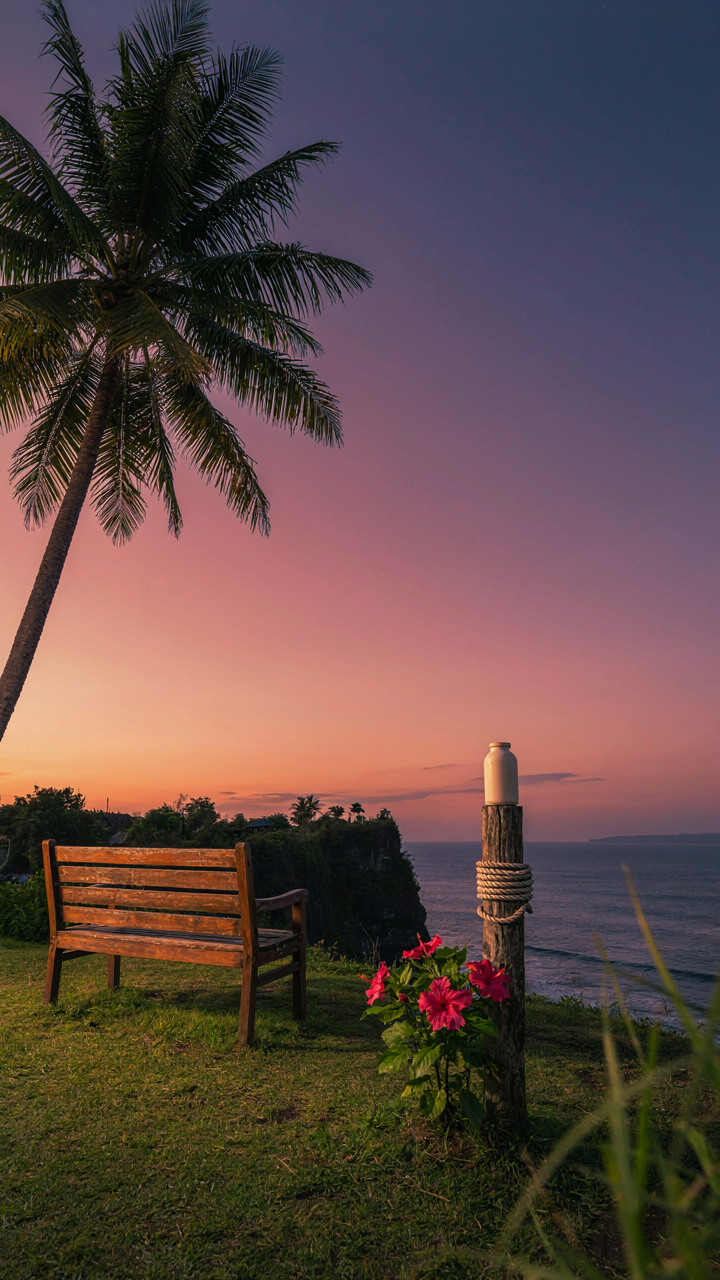
You want to know the exact moment to show up so you don’t waste the trip. That’s the real question underneath this section. The mechanism is simple: Bali’s latitude sits at 8 degrees south, which means the sun’s path across the sky changes predictably throughout the year. This isn’t random. Between March and September, the sun sets further north along the horizon. Between September and March, it shifts south. Miss the seasonal window and you’re chasing a sunset that won’t align with your chosen viewpoint’s geography.
Astronomy has a concept called “solar declination” — the sun’s angular position relative to the celestial equator. Apply that concept to viewpoint selection: a cliff facing northwest performs differently in June than in December. The altitude angle changes too. In Bali’s dry season (April to October), the sun descends at a steeper angle, creating sharper color gradients. The wet season (November to March) produces softer light due to atmospheric moisture and haze. Your viewpoint choice must account for both the date and the seasonal light quality it produces.
- March to September (Northern Descent): Sun sets progressively further north. Viewpoints like Tanah Lot capture optimal alignment during this window, with the sun dipping toward the ocean at the correct angle relative to the temple structure.
- September to March (Southern Descent): Sun path shifts south. Clifftop locations on Bali’s eastern coast (Uluwatu region) perform better during these months when solar angle matches the terrain’s pitch.
- April to October (Dry Season): Reduced atmospheric moisture creates crisp color separation between sky layers. Haze levels drop significantly, sharpening the visual contrast between orange, pink, and deep blue bands.
- November to March (Wet Season): Higher humidity and volcanic particles in the air diffuse light more evenly. This produces muted, pastel-toned sunsets rather than vivid gradients, but eliminates harsh glare on water.
- Golden Hour Duration: Bali’s equatorial position means golden hour lasts only 20 to 30 minutes year-round, not the 60 to 90 minutes found at higher latitudes. Timing precision becomes non-negotiable.
The specific date determines which viewpoint actually delivers. Booking a sunset viewing without cross-referencing the seasonal sun path against your chosen location’s orientation is guesswork dressed as planning.
The Light After The Sun Disappears
Most sunset hunters leave the moment the sun touches the horizon. They miss the actual best light. Twilight’s afterglow—the period between sunset and astronomical dusk—produces colors that don’t exist during the sun’s descent. The sky behind you (east-facing) turns deep purple while the western horizon holds pink and amber. This inversion creates dramatic contrast impossible to capture five minutes earlier.
In Bali, this window lasts approximately 25 to 35 minutes depending on season. The sky transitions through distinct phases: first, golden amber (immediately post-sunset), then coral pink (5 to 10 minutes after), then purple-blue (15 to 25 minutes after). Your camera or eye registers these as three separate sunsets stacked vertically. The viewpoint that seemed mediocre during the sun’s descent often becomes exceptional during twilight because the light quality changes the entire landscape’s visual weight. Stay through the afterglow or you paid for the show but watched the opening act.
Cultural Lens: Beyond The Viewpoint, The Experience

When Ritual Replaces Photography In Bali
You want the Instagram moment, but what you actually need is permission to stop performing for an audience that doesn’t exist. Bali’s sunset spots work because they’re embedded in existing daily rituals, not built as viewing platforms. The mechanism is simple: you’re not observing the sunset, you’re participating in something older than the concept of tourism.
Uluwatu Temple sits 70 meters above the Indian Ocean on a limestone cliff. Locals arrive before tourists to make offerings at dusk, timing their presence to the sun’s movement. Tanah Lot functions identically—the temple’s position wasn’t chosen for views but for spiritual significance that happens to align with golden hour. When you show up during these rituals instead of after them, you’re no longer a spectator collecting images. You’re a witness to something that continues whether you’re there or not.
History Becomes The Real View In Rome
The common advice says Castel Sant’Angelo or Gianicolo Hill gives you Rome’s best sunset. That’s incomplete. These spots show you the city’s form at dusk. What they miss is that Rome’s sunsets only matter because of what you’re actually looking at—2,000 years of architectural decisions made by people solving specific problems at specific times.
From the Janiculum Hill, the dome of St. Peter’s faces west, catching light that architects deliberately calculated into its 1500s design. The orange light hits travertine buildings that were chosen, not by aesthetics committees, but because that stone was available and durable. You’re not watching a sunset. You’re watching light reveal the exact choices previous civilizations made about permanence. Position yourself at the terrace near the equestrian statue, arrive 30 minutes before sunset, and you’ll see the light change the color of that travertine three times as the sun drops—that shift is the mechanism that makes Rome’s golden hour matter.
The Evolutionary Imperative: Why Sunsets Captivate
Your Brain On Light Shifts
You want to know this because understanding why you’re drawn to sunsets validates the trip, the time, the photo. Here’s the mechanism: your circadian rhythm evolved to track light transitions. Dusk signals a biological checkpoint. Your pupils dilate. Cortisol drops. The brain interprets the color shift from blue to red as a neurochemical event, not a visual one. Your ancestors survived by reading these transitions. A sunset wasn’t beauty. It was data about safety, temperature, and predator activity. Modern brains still fire the same way even though the threat is gone.
Most people frame sunsets as emotional experiences. Wrong framing. Sunsets trigger cascading hormone changes that feel like emotion but aren’t. The shift in light wavelength literally alters your endocrine system in real time. Your body doesn’t care if you’re on a cliff in Santorini or your apartment balcony. The mechanism activates regardless. Location matters only because optimal viewing angles preserve the full color spectrum longer, extending the neurochemical window. That’s why certain viewpoints feel more impactful than others. Your biology responds to the duration and intensity of the light transition, not the scenery.
Dopamine And Natural Grandeur
The reward chemical narrative about sunsets is incomplete. Dopamine fires not because beauty exists, but because your brain detects a rare, unrepeatable event. Neurobiology treats scarcity and novelty the same way. Every sunset is technically identical and technically unique. Your dopamine system doesn’t distinguish. It responds to the gap between prediction and reality. A sunset from an optimal viewpoint creates visual complexity your cortex didn’t fully anticipate, triggering a prediction error. That error releases dopamine.
The best sunset viewpoints exploit this mechanism by maximizing visual information density during the color shift phase. Elevation matters because it extends the window of visible color change. Water or reflective surfaces amplify wavelength perception. Unobstructed horizons prevent the brain from anchoring to static objects. You chase specific locations because they compress the neurochemical trigger into a shorter timeframe. The dopamine hit scales with information complexity. Visit the same viewpoint repeatedly, and the effect diminishes. Novelty is the protocol. Your nervous system demands new visual data to maintain the reward response.
The Real Obstacle Isn’t Finding The Perfect View, It’s Accepting That You Already Possess It

You don’t need to fly to Santorini or hike Machu Picchu to experience transcendence. The mechanism is simple: attention precedes awe. You’ve walked past dozens of perfect sunsets without noticing them. Today, stop scrolling the Instagram feed and watch the sky above your own neighborhood for five minutes. The best sunset viewpoint isn’t a location. It’s a decision to look.