
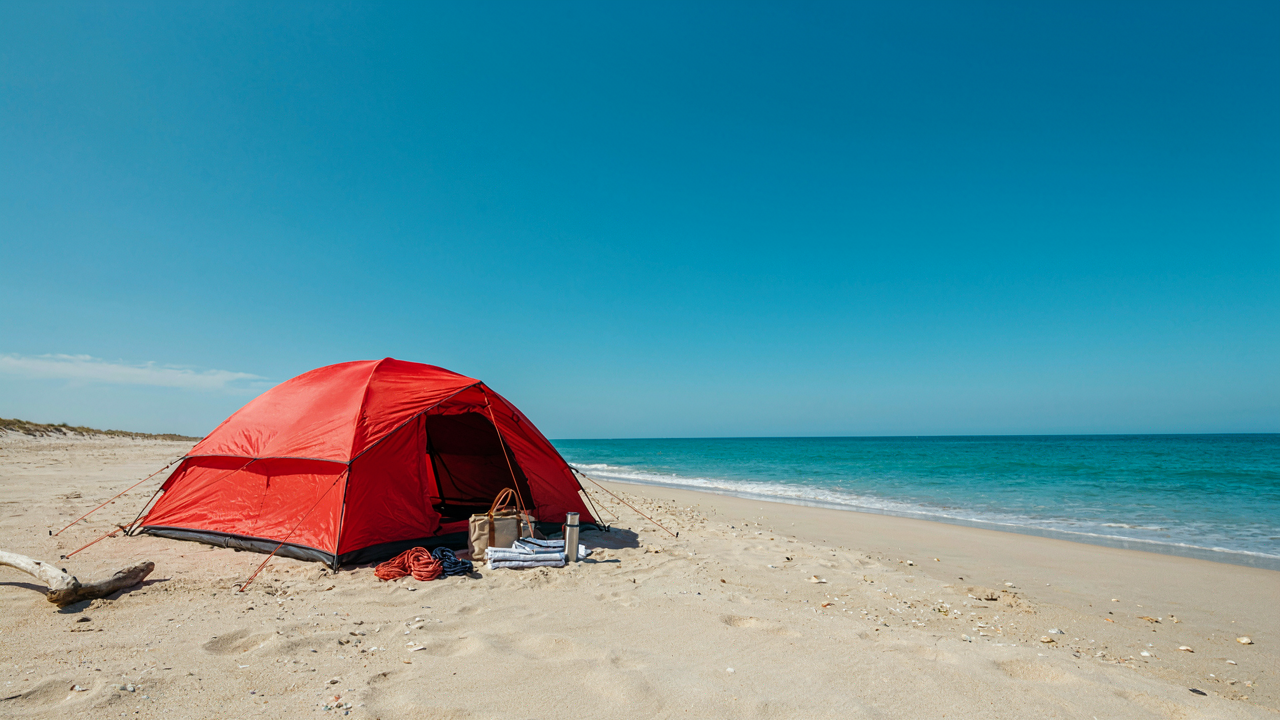
The Unromantic Realities Of Beachfront Camping
Salt Corrosion: Equipment Actually Breaks Here
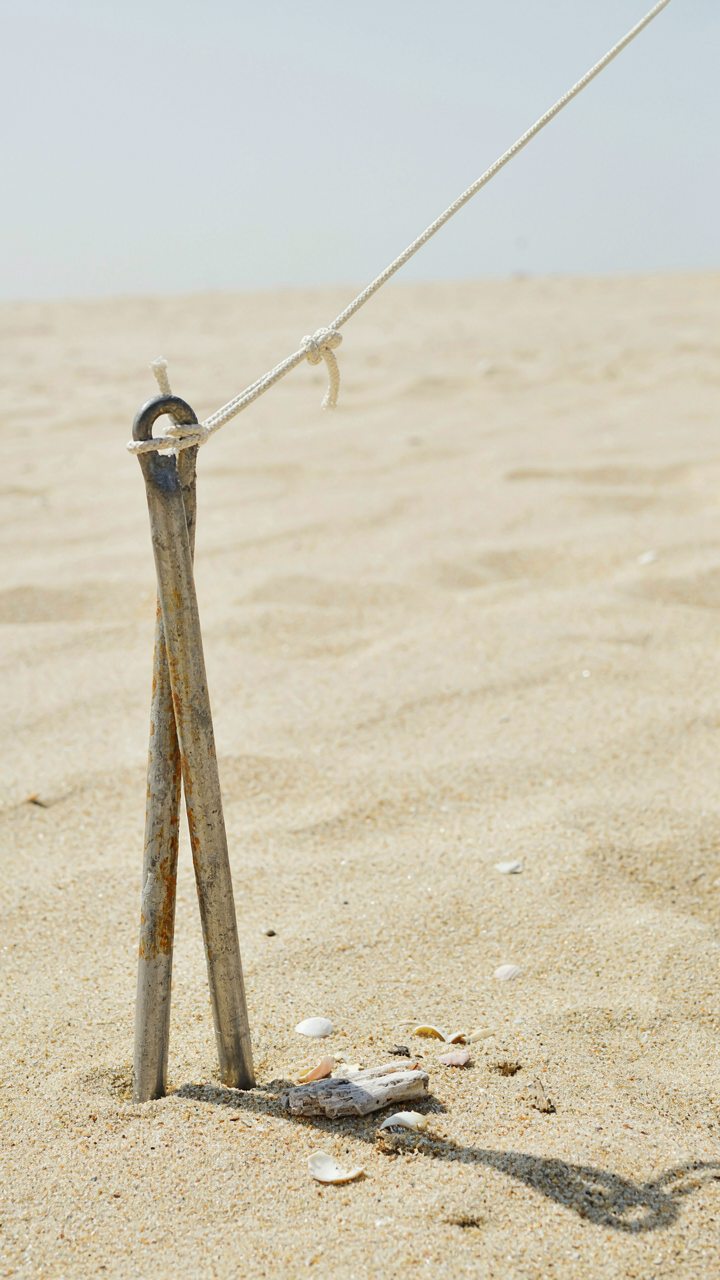
You want to believe your gear will last forever. It won’t, especially at the beach. Salt corrosion operates through electrochemical oxidation—the same mechanism that degrades metal infrastructure in marine environments. Steel rusts faster. Aluminum pits. Zippers seize. Your tent poles, stakes, and any exposed fasteners don’t have years left. They have months.
The common advice to “rinse everything with fresh water” is incomplete. Rinsing removes surface salt but doesn’t stop subsurface corrosion already underway inside fabric seams, under pole sleeves, or in screw threads. Bring dedicated tools: a microfiber cloth for daily wipe-downs, fresh water that you bring yourself, and a corrosion inhibitor spray rated for marine use. After each trip, disassemble what you can and dry it completely before storage. Salt doesn’t forgive laziness.
Wind As Weapon: Anchor Everything Down

Wind at the beach isn’t a variable you account for—it’s a force you defend against. Military doctrine calls this “establishing a perimeter.” Your campsite needs one. Standard tent stakes fail in sustained gusts because they rely on friction with sand, which offers zero resistance once the ground liquefies slightly under pressure or moisture.
Use deadman anchors, not stakes: bury a stick or sand anchor vertically, then tie your guy lines to the buried object. Your shelter becomes a geometry problem, not a hope. Position the tent door away from prevailing wind direction. Angle your windbreak or natural barrier to create a pressure gradient around your site. Test everything before dark. A collapsed shelter at 2 AM in 30-knot wind teaches expensive lessons.

Site Selection: Beyond The Pretty View
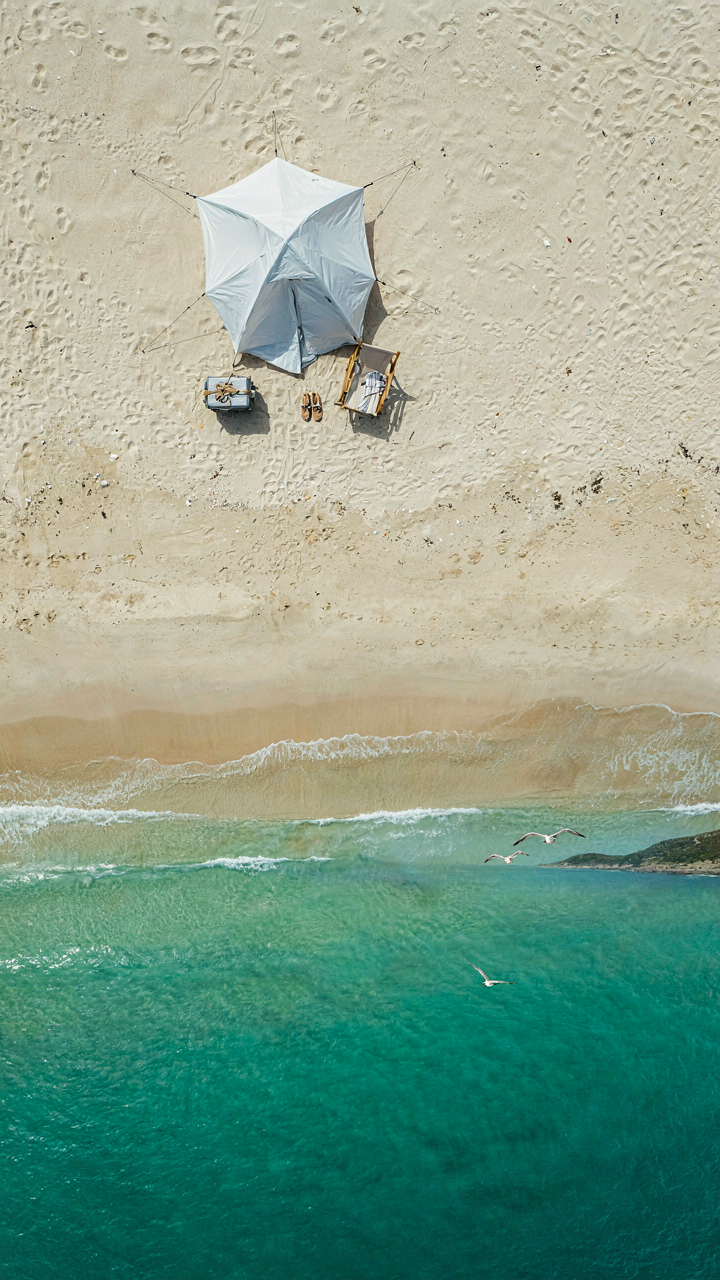
Read The Tide Before You Pick Your Spot
You want the Instagram angle. What you actually need is to not wake up flooded. Tidal mechanics determine whether your tent sits on dry sand or becomes a temporary lagoon, and most campers ignore this entirely until it’s too late. The ocean doesn’t care about your campsite preference. It follows a gravitational pull from the moon and sun that creates predictable rise and fall patterns you can calculate to the minute.
Get a tidal chart for your specific beach before arrival. NOAA provides free predictions for every major coastal area in the United States. Cross-reference the chart with your camping dates and identify the high tide window. Set up camp above the high tide line by at least 15 feet, using the chart’s range for that day as your baseline. Low tide appears spacious and inviting. That same beach shrinks dramatically when water returns.
Find The Wind Shadow That Actually Works
Microclimates are how meteorology explains localized atmospheric variation, and beaches create them through topology rather than altitude. A dune ridge, rock formation, or vegetation cluster blocks wind velocity and traps warmer air. This isn’t about finding shade. It’s about locating dead zones where wind speed drops from sustained to manageable. Most campers set up wherever looks open and spend the night fighting gusts that a 50-foot repositioning would have eliminated.
Scout your site 30 minutes before sunset to watch where wind pushes sand and salt spray. Notice which areas stay calm when the rest of the beach churns. Look for dunes on the inland side, dense vegetation, or natural rock barriers between you and open water. The sheltered pocket isn’t always the most visible spot. Plant your tent in the location where sand stays still, not where it looks convenient.
The Sand Warfare Protocol: Beach Camping Hacks
Anchoring Strategy: Applying Military Grade Stability
You want your tent standing after the first wind gust because collapsing gear means a failed trip. Military engineers borrowed the concept of load distribution across a wide base to prevent structural failure under stress. Sand offers zero friction, so you’re not fighting the ground to hold your tent down. You’re fighting physics.
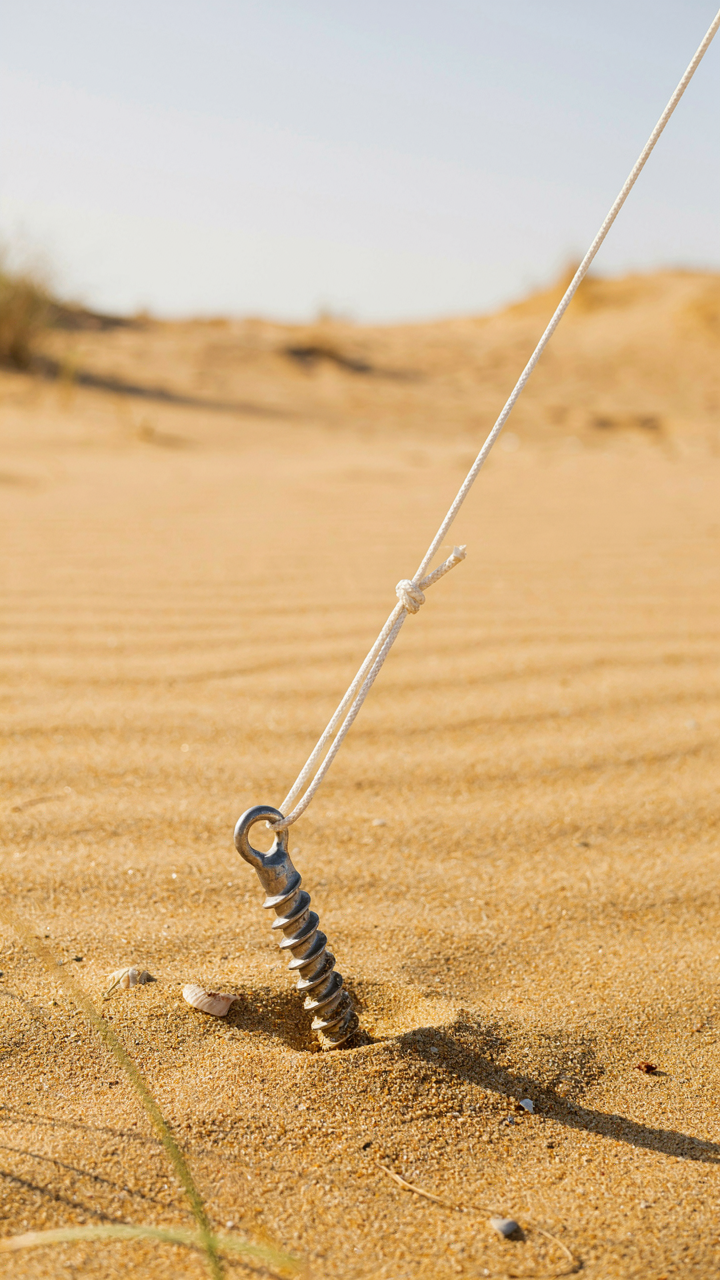
Standard tent stakes fail on beaches because they rely on friction and resistance. They pull straight out. The mechanism that works is displacement: you need stakes that move sand volume, not pierce it. Screw-style anchors spiral down and create a cone of compacted sand that resists upward pull. Bury them at 45-degree angles pointing away from the tent. This creates two forces working against extraction: the weight of sand above and the mechanical resistance of the spiral design.
Sand Mitigation: Protecting Gear From Abrasion
Sand gets into everything because it’s driven by wind and finds gaps you didn’t know existed. Most people bring tarps or footprints under their tents and think they’re done. That’s incomplete. Sand mitigation requires a three-layer defense that stops migration at entry points, not just underneath.
First, raise your gear off direct sand contact using cots or elevated storage. Sand particles abrade tent fabric, seams, and zippers through constant contact and wind movement. Elevating equipment removes that surface-to-sand interface entirely. Second, seal storage bags with compression or roll-top designs that require deliberate opening, not just proximity. Third, establish a threshold zone outside your tent where you brush off before entering. This isn’t fastidious. It’s the difference between sand in your sleeping bag and sand staying outside where it belongs.
Essential Gear: Only What Survives
Your Tent Fabric Needs To Outlast Your Trip
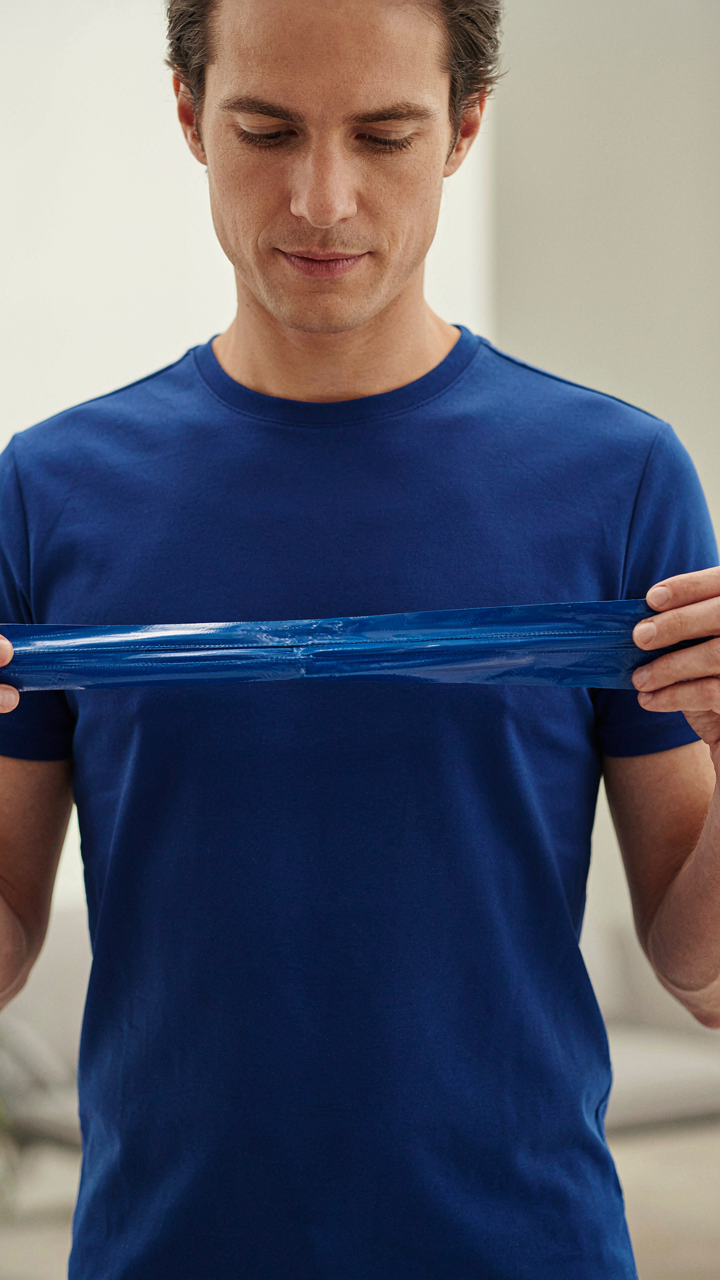
You want gear that looks expensive and performs. That’s not vanity talking, that’s the mechanism: most campers buy tents rated for freshwater camping, then wonder why salt spray corrodes zippers and fabric welds shut by day three. Fabric selection isn’t aesthetic. It’s material science applied to an environment that actively degrades most textiles. Salt air oxidizes metal, breaks down synthetic polymers, and accelerates mildew growth on cellulose.
Polyester dominates beachfront tents because it resists salt absorption better than nylon. Nylon absorbs moisture and holds salt particles in the weave, which creates a slow corrosion cycle. Polyester sheds water and salt spray more effectively. Your seams matter equally. Factory-sealed seams with polyurethane or silicone tape prevent salt-laden mist from penetrating the fabric bond. If seams aren’t sealed, saltwater migrates through the thread holes during spray events, even if your tent never touches the water directly. Check your tent’s specifications for seam tape type before purchase. Skip any tent marketed as “water resistant” without sealed seams on the fly sheet and floor perimeter.
Multi Use Gear Cuts Weight And Cost
Most beachfront campers pack redundant equipment. Common advice says bring a ground tarp, a rain fly, a footprint, and a poncho. That’s five layers of coverage for one body. The real strategy borrows from military load planning: gear efficiency means each item performs multiple functions without compromise on any single function. A heavy-duty silicone groundsheet protects your tent floor from salt-crusted sand and serves as your cooking surface mat, wind break, or emergency shelter extension.
Your camping knife becomes a sand anchor tool, food prep station, and rope cutter. Your cooler’s lid flips to become a cutting board or prep surface. A large stuff sack waterproofs your gear and converts to a sand anchor when filled with sand and secured with rope. Pack a microfiber towel that dries fast, wrings out completely, and doubles as a wind barrier or sunshade when clipped to your tent. Each item earns its weight by solving two problems instead of one. When you’re carrying everything on foot to your site, redundancy becomes the weight you didn’t plan to carry.
Water & Waste: The Logistics Of Survival
Freshwater Strategy And Conservation
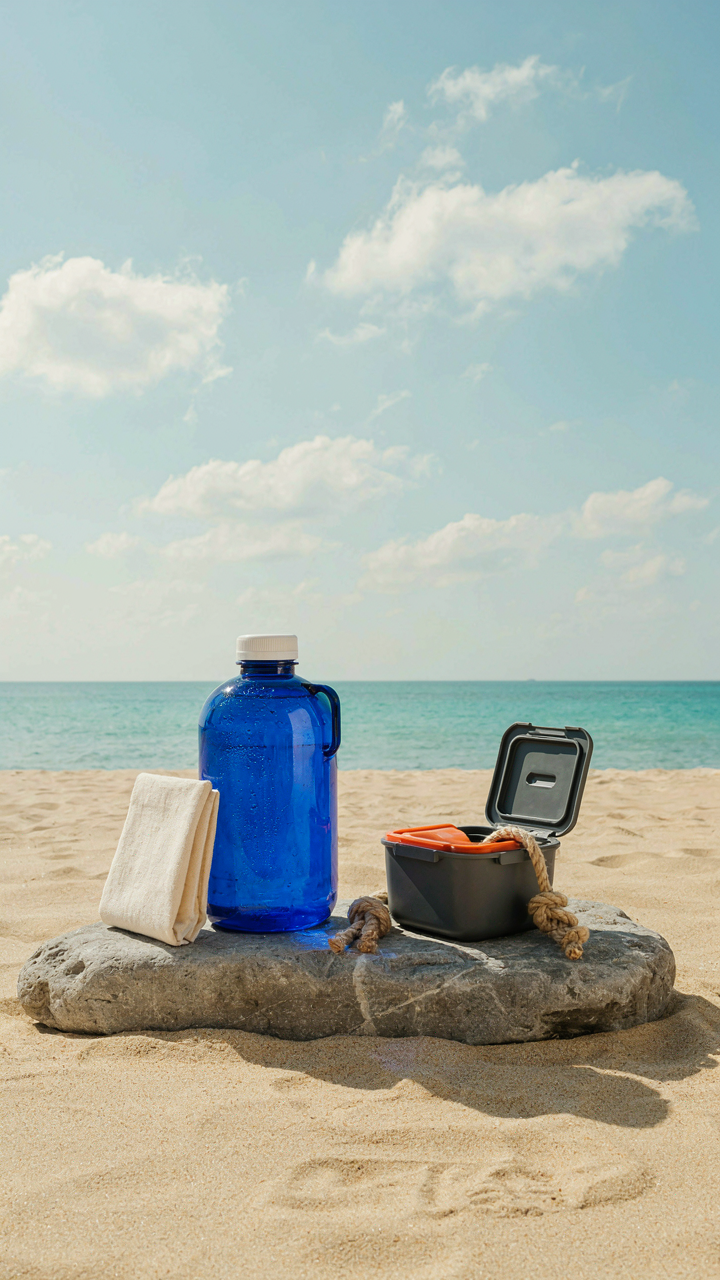
You want to believe you’ll find fresh water at the beach. You won’t. The mechanism here borrows from supply chain management: you control inventory through either redundancy or rationing, and beachfront camping demands both. Most campers underestimate consumption by 50 percent because they’re not accounting for cooking, cleaning, and the salt air dehydration effect that hits harder than inland camping.
Bring more water than your math suggests is necessary. A gallon per person per day is baseline. Add 30 percent for contingency. If the beach has a freshwater source, verify it before arrival by contacting local rangers or park management. Coastal freshwater sources are unreliable and often brackish. Your primary strategy is to arrive with full containers and supplement only if you locate verified sources. Never depend on finding water on-site.
Waste Disposal Without Compromise
The common advice on leave-no-trace beachfront camping is incomplete. It doesn’t account for tidal action, sand migration, or the fact that shallow burial doesn’t work where soil is predominantly salt and sand. The real mechanism is this: decomposition requires specific conditions, and beaches don’t provide them. You must remove or chemically process waste on-site, then pack everything out.
Use a portable waste containment system designed for marine environments. Pack human waste in sealed bags with enzyme-based treatment that breaks down solids. Food scraps go into bear-proof containers if wildlife is present, or sealed bags for removal. Never assume the tide will handle your waste. Never bury anything below the high tide line. Inspect your campsite at departure to ensure no debris remains, including micro-trash like bottle caps or food fragments. This is non-negotiable.
Coastal Cooking: Fueling The Campaign
Wind Resistant Stoves
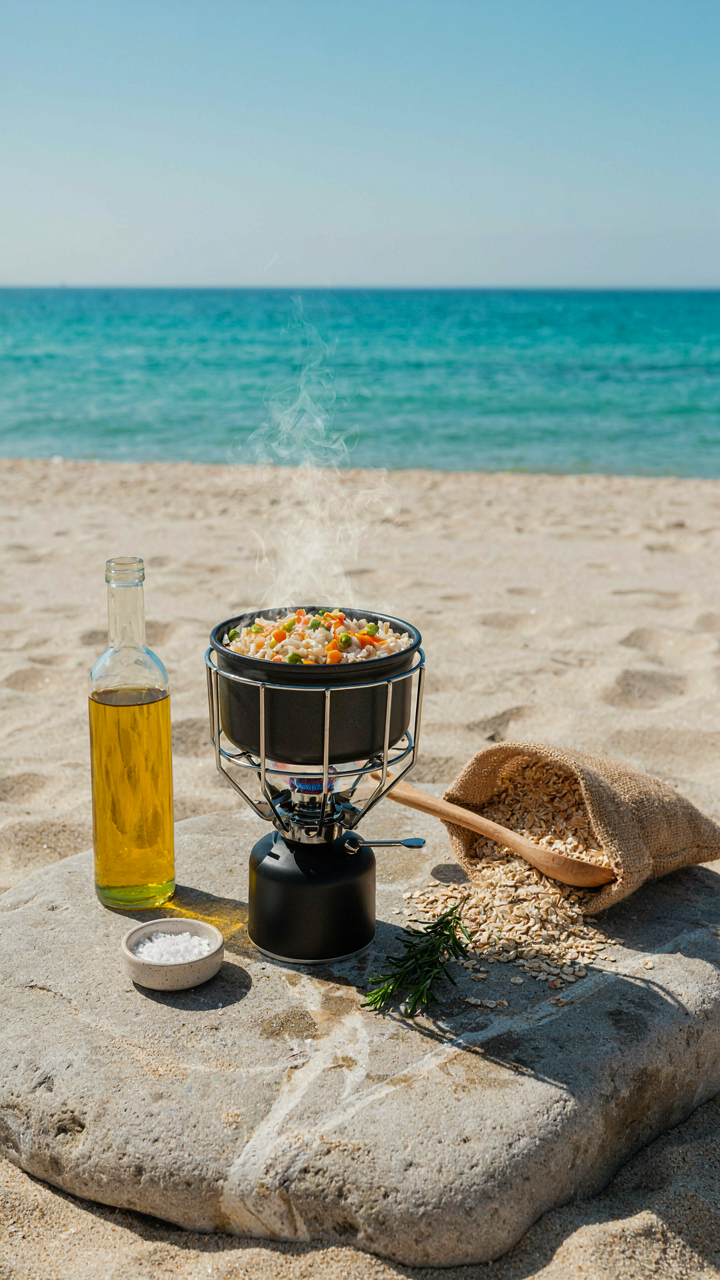
You want a stove that won’t fail when you need it most. Wind is the real enemy at the coast, and thermodynamics explains why: heat transfer works against you when air moves across your cookware. A standard open flame loses 40 to 60 percent of its energy to wind displacement before it reaches your pot. You need containment, not just flame.
Integrated canister stoves with wraparound windscreens work. The screen channels heat upward while blocking lateral air movement. Liquid fuel stoves perform better in cold and salt spray conditions than canister models, though they require priming and maintenance. Either way, test your setup on a windy day before the trip. A stove that dies mid-meal wastes time and calories you can’t afford to lose.
Simple Caloric Meals
Eating on the beach isn’t about culinary status. It’s about maintaining core temperature and energy for the physical work ahead. One-pot meals dominate for a reason: they minimize fuel consumption and cleanup time. Rice-based dishes, pasta with oil and salt, oatmeal with caloric toppings, and simple stews all work.
Calculate backwards from your activity level. Beach camping involves exposure, wind chill, and constant low-level physical exertion. You burn more calories than you think. Pack meals with visible fat content, not lean proteins. Olive oil, butter, nuts, and full-fat powdered milk belong in every meal. Cook once daily, eat twice. This rhythm conserves fuel and gives your body stable energy without the interrupt of repeated heating cycles.
The Coastal Combat Manual: Summer Beach Camping Tips

Burn Protection Without The Burnout
You want to avoid looking like a lobster because it signals poor planning to everyone around you. The mechanism is simple: UV radiation damages collagen and elastin in your skin through photochemical reactions. SPF numbers describe UVB blocking only, not UVA, which penetrates deeper and causes premature aging. Broad-spectrum protection blocks both. Reapply every two hours, or immediately after saltwater exposure, because salt accelerates breakdown of sunscreen compounds on skin.
Your tent location matters more than most realize. Position your shelter to catch morning sun but gain shade by noon when UV intensity peaks between 10 AM and 4 PM. Beach sand reflects 15-25% of UV radiation upward, meaning you’re exposed from below even under cover. White or light-colored tent fabric reduces interior temperature but offers less UV blocking than darker materials. Place your camp kitchen and lounging area in the shadow zone your tent creates, not in open sand.
Mosquito Warfare Without The Chemicals
Biology teaches us about host-seeking behavior in insects: they locate targets through carbon dioxide detection, heat sensing, and lactic acid recognition on skin. Block these signals and they move on. The common advice to avoid dawn and dusk is incomplete because coastal mosquitoes operate on tidal cycles, not time of day. Species near saltwater breed in temporary pools created by tidal flooding, so their peak activity follows water level changes, not sunset.
Your actual defense stacks layered barriers. Wear lightweight, long-sleeved clothing in light colors, which repels heat and makes you harder to track. Apply permethrin to fabric, not skin, which creates a contact insecticide barrier that lasts through multiple washes. DEET on exposed skin targets the sensory receptors mosquitoes use to find you. Mosquito nets over your tent entrance and sealed zippers eliminate entry points entirely. The protocol: treat fabric the day before camp, apply DEET thirty minutes before exposed time outdoors, and inspect tent seals before dusk.
Emergency Preparedness: When The Beach Fights Back
First Aid For Coastal Injuries
You want this section because you’re afraid of looking incompetent when something actually goes wrong. The mechanism is simple: salt water wounds get infected faster than freshwater wounds because salt creates an environment where bacteria thrive, and the beach removes your access to running water. This isn’t paranoia. It’s biology.
The coast creates specific injury patterns that differ from inland camping. Saltwater accelerates infection in cuts. Sand embeds deeper into wounds. UV exposure compounds burns. Dehydration accelerates faster near water due to wind and sun reflection. You need protocols, not generic first aid.
- Saltwater Wound Protocol: Flush with fresh water immediately, not salt water. Scrub away sand with a clean cloth. Apply antibiotic ointment. Cover with a waterproof bandage. Saltwater wounds require active management because bacteria colonize faster than land injuries.
- Puncture Wounds From Shells Or Rocks: Soak in hot water (as hot as you can tolerate) for 20 minutes to draw infection out. Tetanus risk is real. Know your vaccination status before you camp.
- Jellyfish Stings: Remove tentacles with a card edge or plastic tool, not fingers. Soak in vinegar if available for box jellyfish, but most species respond to hot water immersion instead. Cold makes venom worse.
- Severe Dehydration From Wind: Dehydration masks itself as fatigue or irritability before turning dangerous. Drink water before you feel thirsty. Electrolyte imbalance happens faster at the beach than inland because sweat evaporates so quickly you don’t notice fluid loss.
- Eye Irritation From Salt Spray: Carry saline solution or make your own with boiled water and salt. Rinse eyes regularly. Contact lenses fail at the beach because salt deposits build up on lenses and cause corneal abrasion.
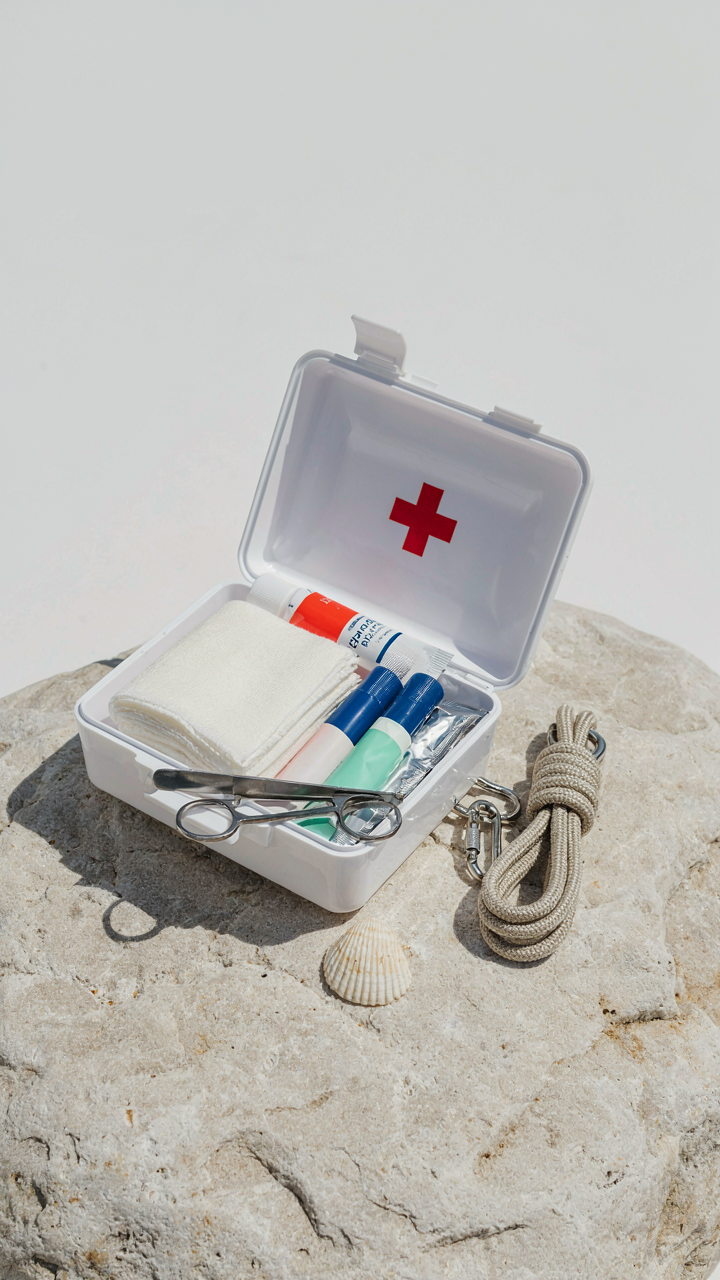
Pack a coastal-specific first aid kit before departure. Generic kits miss saltwater essentials like extra antibiotic ointment, vinegar packets, and sterile gauze rated for moisture-heavy environments. Your kit should live in a waterproof container separate from your main supplies. Check expiration dates on ointments and medications. Heat and humidity accelerate degradation. Restock after each trip.
Communication Failure And Backup Plans
Cell coverage dies at beachfront camps because water and sand don’t transmit signals the way land does. You’re betting your safety on a tower that might not exist where you are. Most campers assume their phone works and plan nothing else.
Satellite messengers work where phones fail because they bounce signals off satellites, not ground towers. A personal locator beacon or satellite communicator costs money you’d rather spend elsewhere. It’s also the only tool that actually reaches rescue if something goes wrong on an isolated stretch of beach. Test your device before you need it. Know the battery life. Understand the latency between sending a message and receiving acknowledgment. A two-hour delay in rescue response changes everything.
Establish a check-in protocol with someone onshore before you leave. Give them your exact location, your expected return time, and instructions for escalation. If you don’t check in by a specific time, they contact park rangers or coast guard directly. This works because it removes the assumption that you’ll call for help yourself. You won’t be able to if you’re injured or incapacitated. The protocol forces someone else into the decision-making chain. Write it down. Text it. Make it real before the emergency starts.
Post Campaign Protocol: Recovering Your Gear
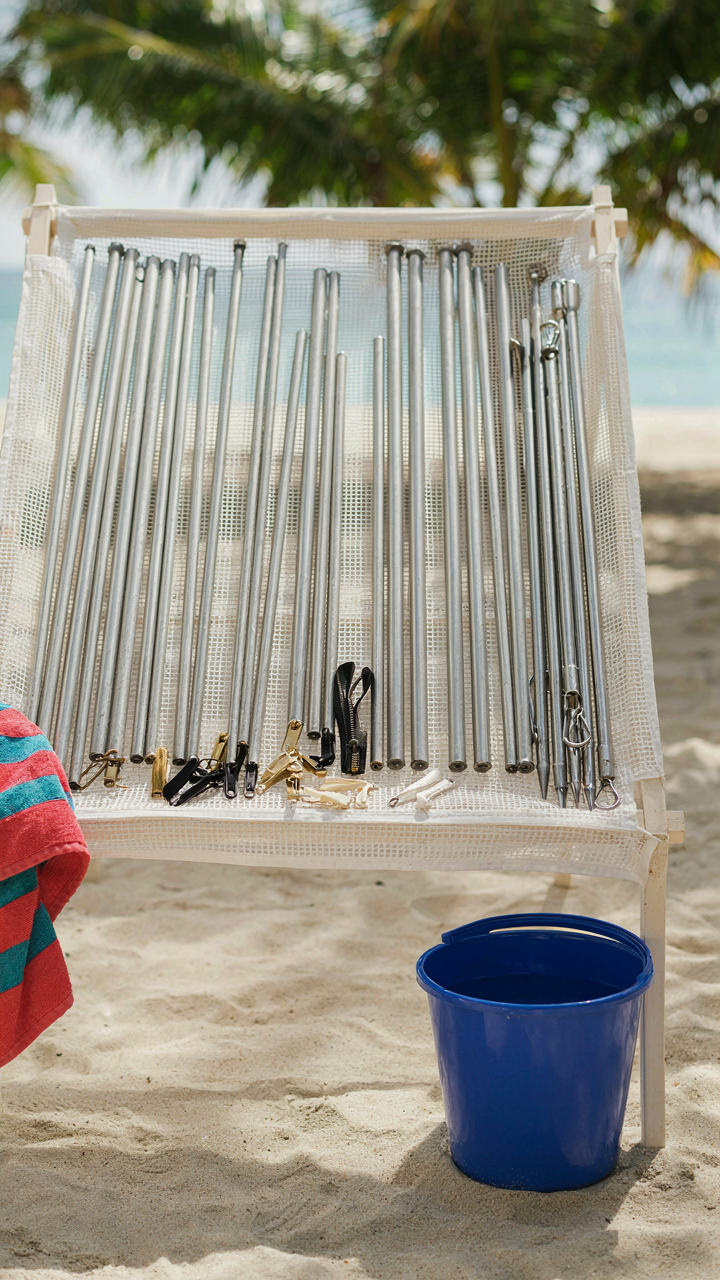
The Salt Rinse That Actually Matters
You want your gear to last so you don’t have to replace it, but nobody tells you the mechanism: salt spray doesn’t just sit on surfaces. It corrodes metal through electrochemical degradation, a process from materials science where moisture acts as the electrolyte between dissimilar metals. Your tent poles, zippers, and stake anchors form micro-batteries the moment saltwater touches them. Fresh water stops this reaction cold.
Rinse everything within 24 hours of breaking camp. Start with your tent fabric and poles, moving to stakes, cookware, and tools. Use a hose or bucket of fresh water and scrub salt residue off metal fittings with a soft brush. Pay attention to seams and crevices where salt crystals hide. Dry immediately afterward with a cloth or let air dry in shade, never direct sun on nylon fabric.
Storage Wins Before Rot Starts
Everyone says “store your gear dry.” That’s incomplete advice. The real problem is vapor migration: moisture moves toward cooler areas and condenses there, which happens even in “dry” spaces if temperature swings. Your storage location matters more than effort. Choose a climate-controlled closet over an uninsulated garage or shed where temperature and humidity fluctuate daily.
Pack gear only after it’s completely dry, minimum eight hours post-rinse in an aerated space. Use breathable storage bags or cotton pillowcases for tent components, never plastic tubs that trap moisture. Store sleeping bags uncompressed in large bags to prevent insulation breakdown. Keep stakes and metal hardware in a separate container with desiccant packets replaced monthly. Check stored gear every six weeks for salt residue or mold spots, re-drying any items showing early corrosion.
The Real Obstacle Isn’t The Beach; It’s Your Naive Expectation That Nature Will Accommodate Weakness
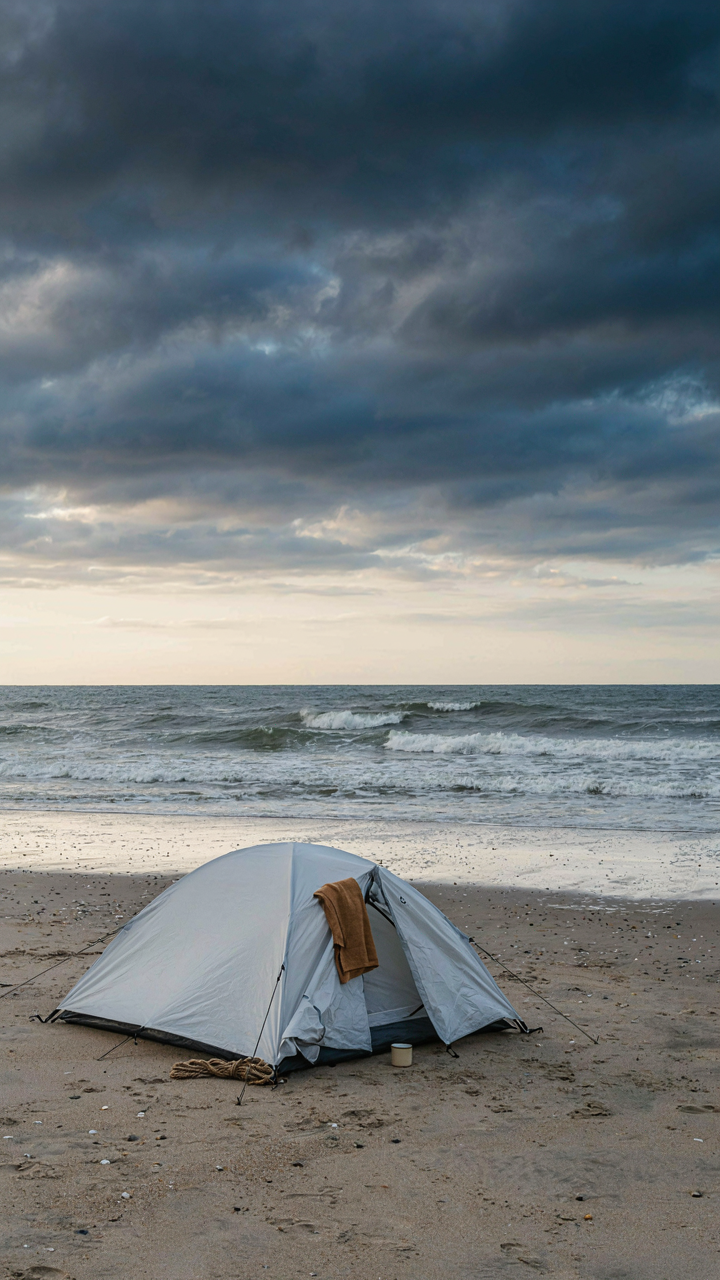
You don’t need a better guide. You need to stop treating the beach like a resort. Every uncomfortable moment you’ll face out there—the sand in your gear, the wind at 3 AM, the salt corroding your equipment—these aren’t problems to solve. They’re the actual experience. Start tonight. Pick a date two weeks out. Book a campsite. Stop researching and start failing small before you fail big. The beach doesn’t care about your comfort, and that’s exactly why you need to go.